|
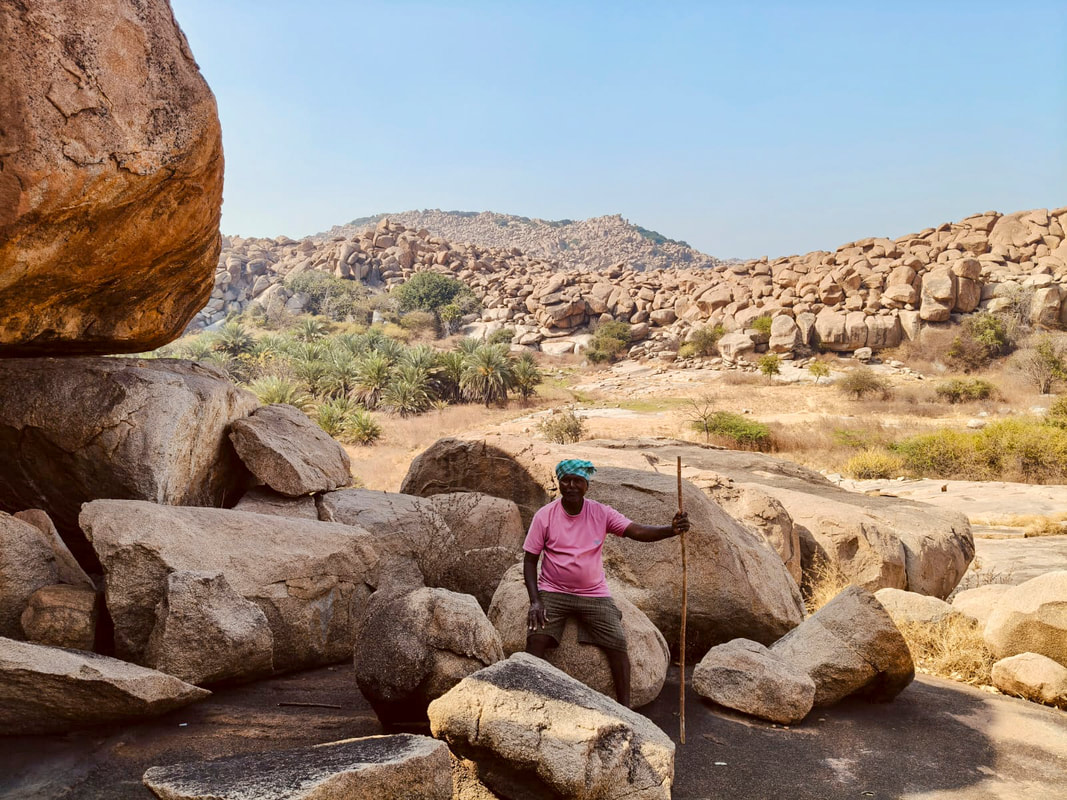
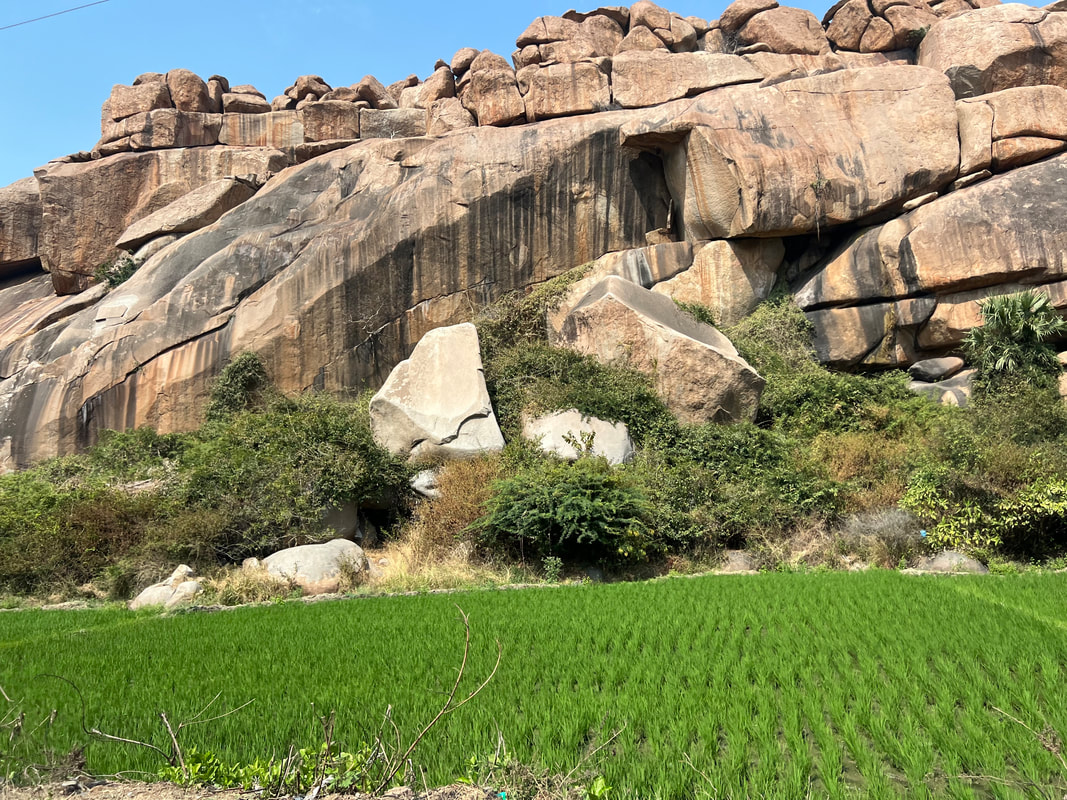
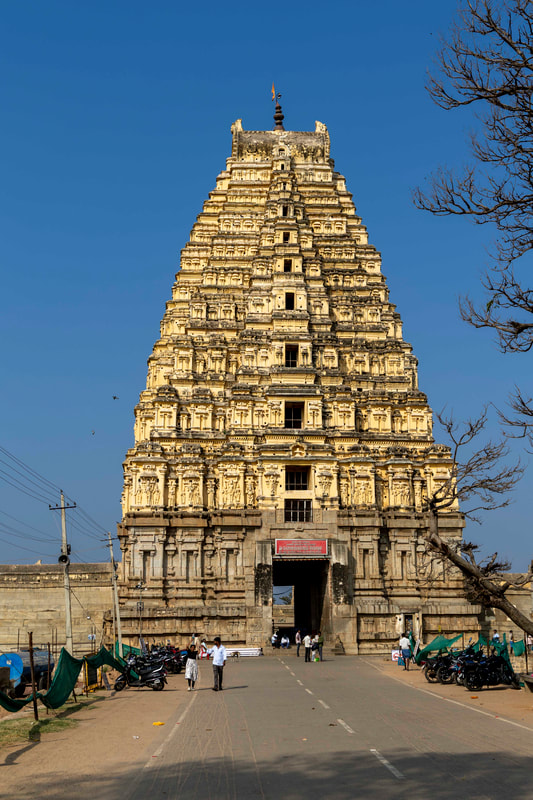
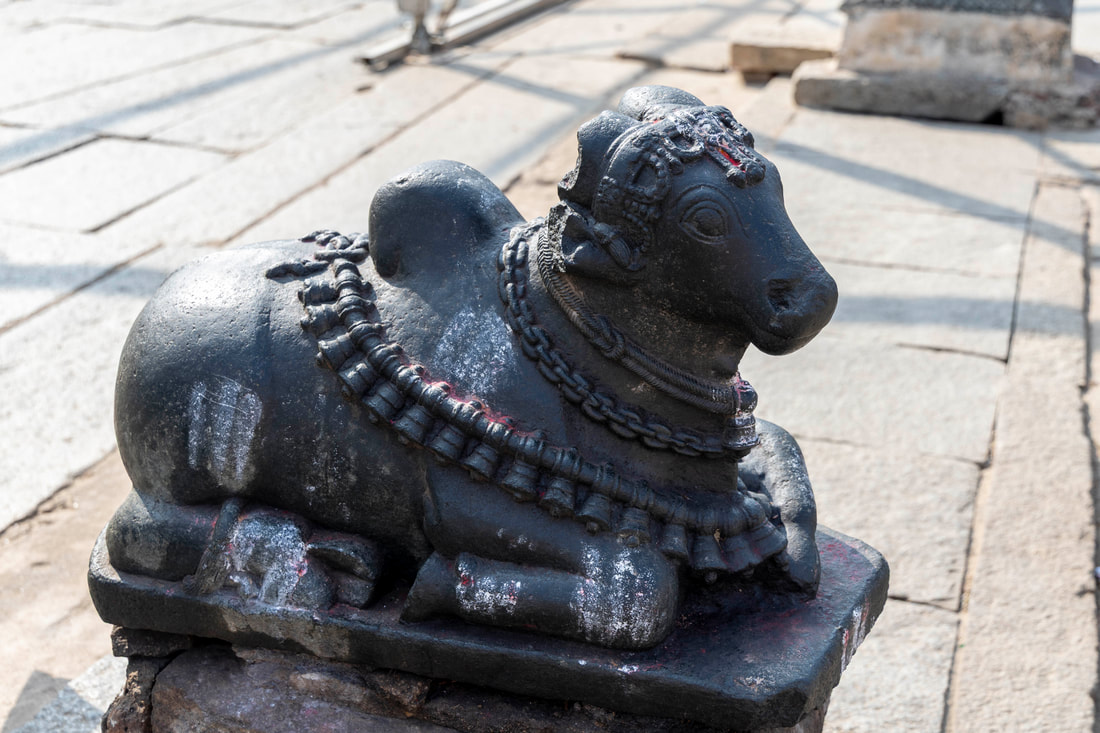
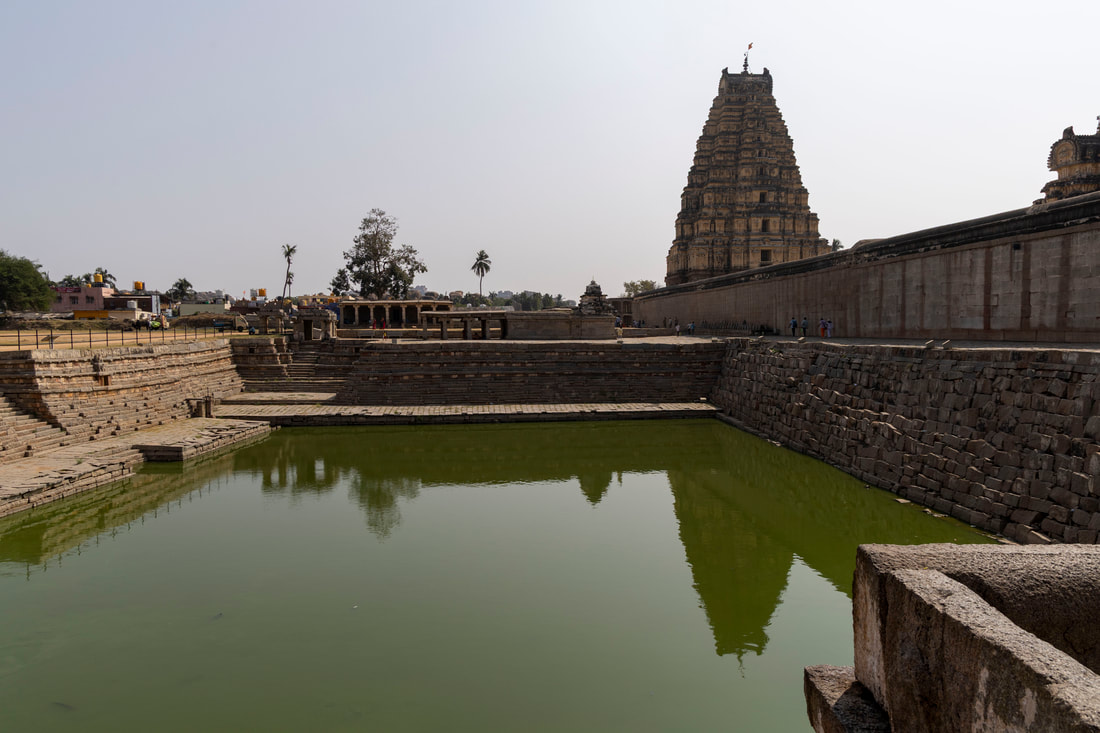
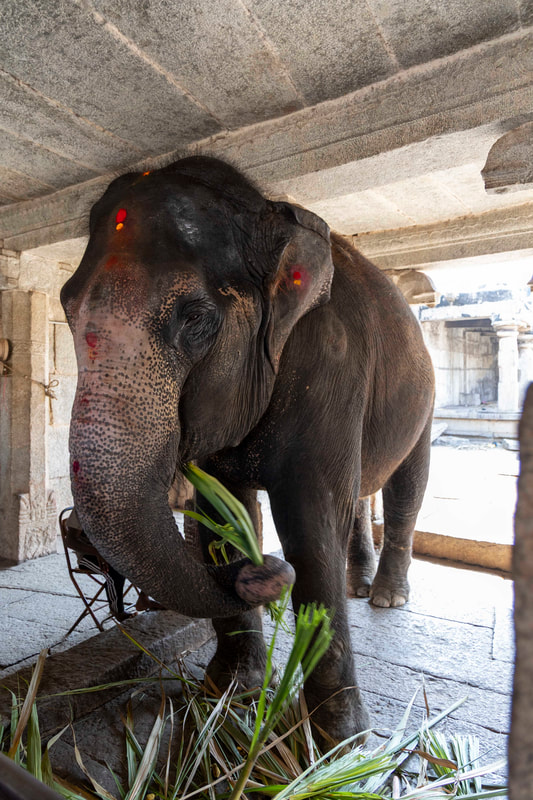
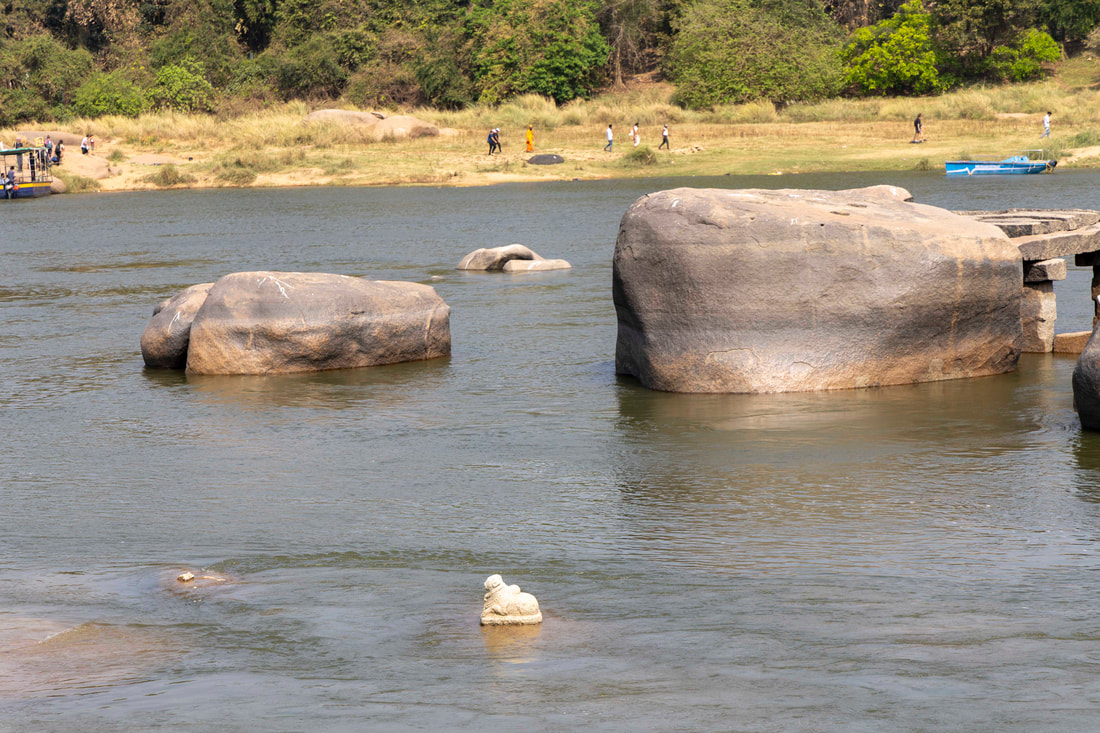
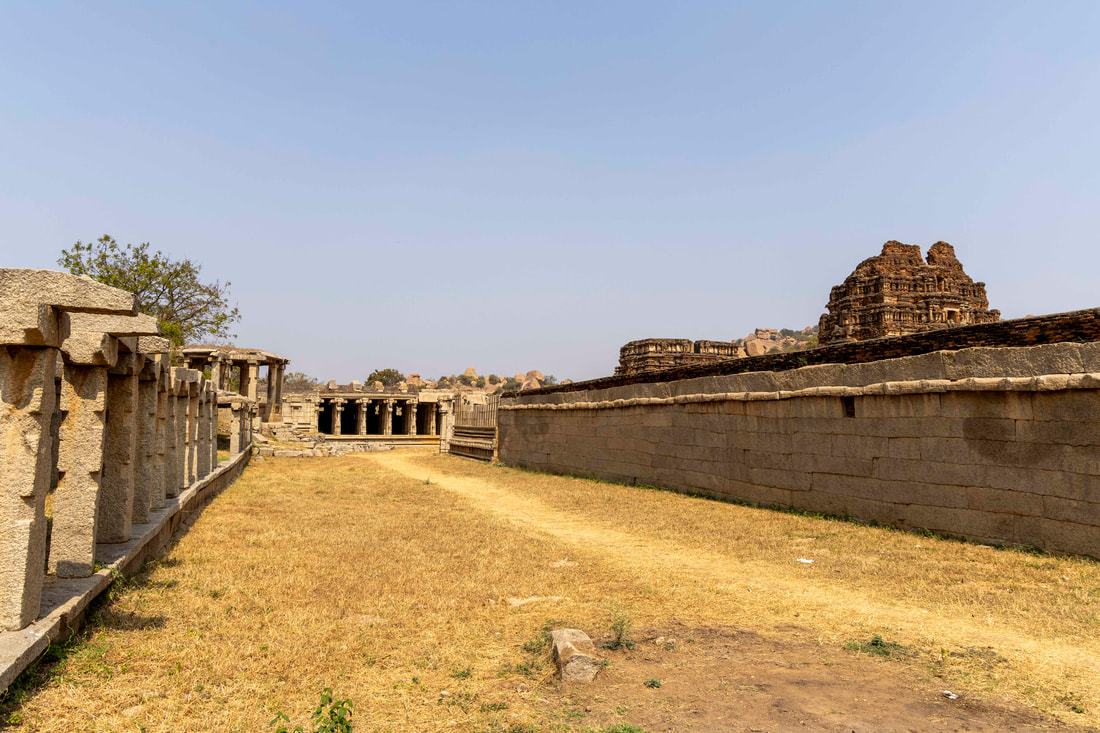
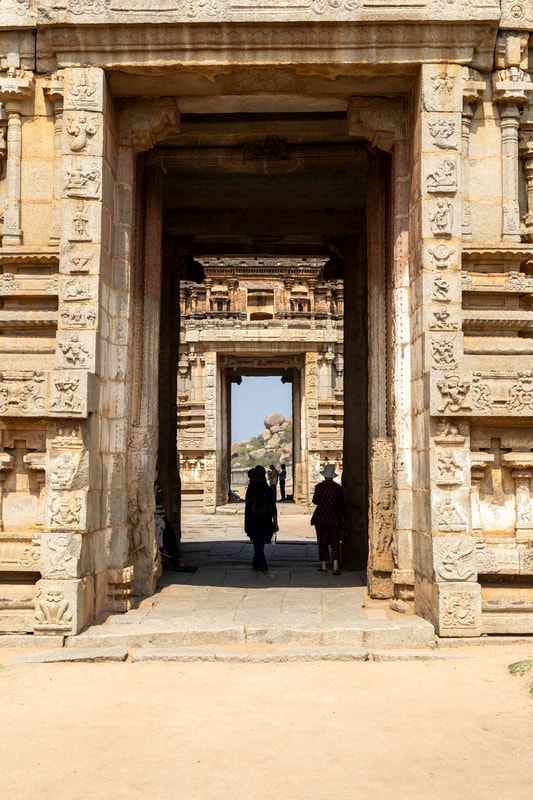
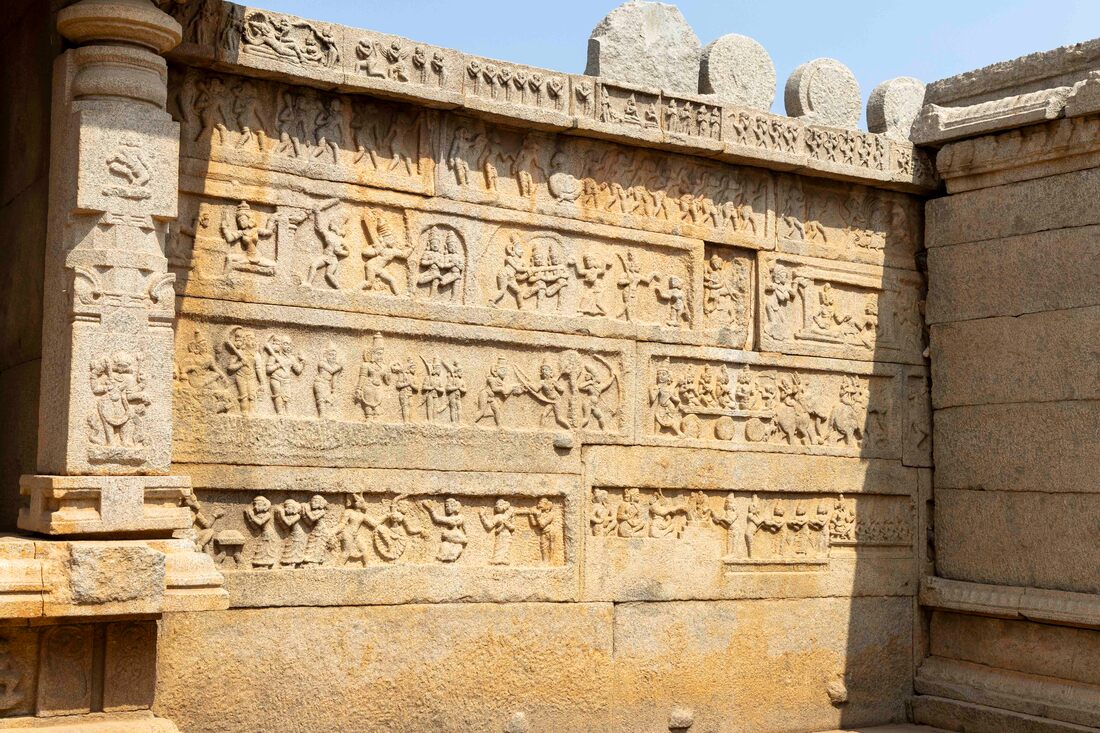
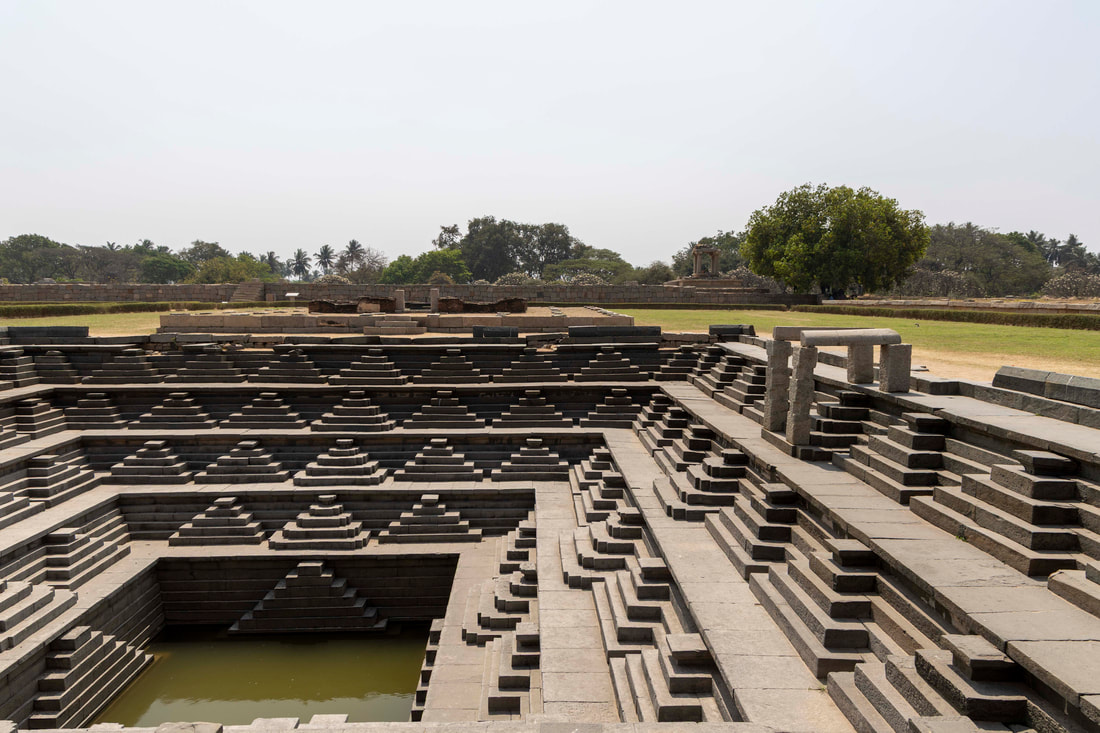
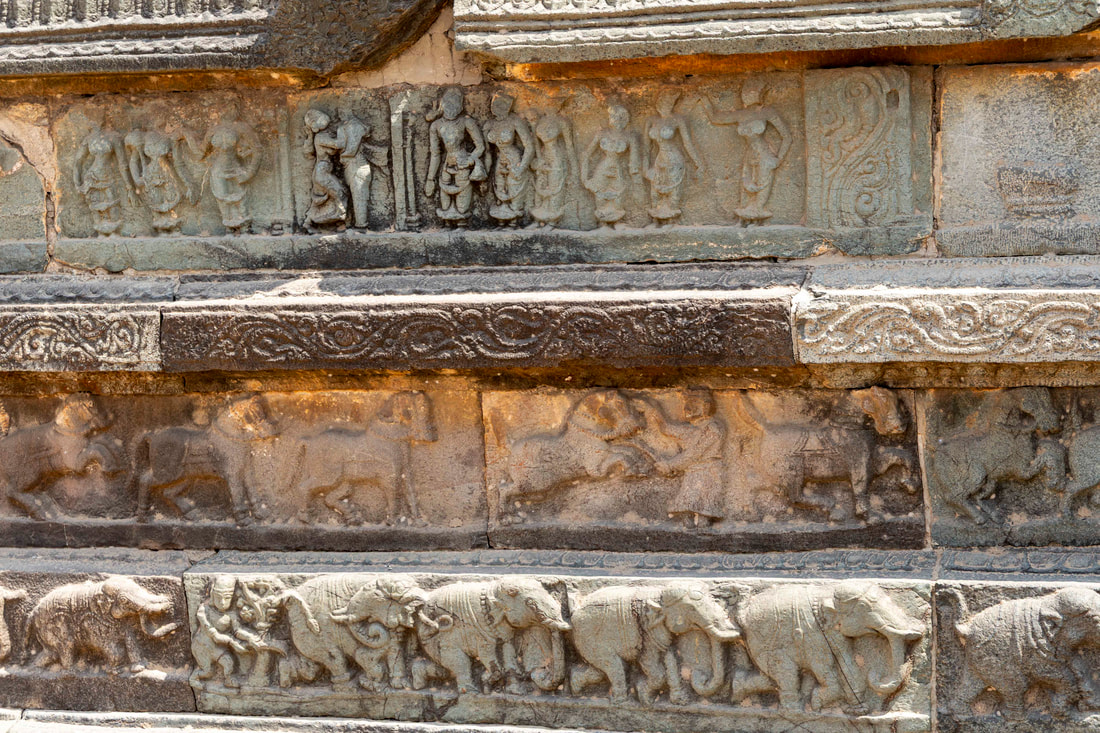
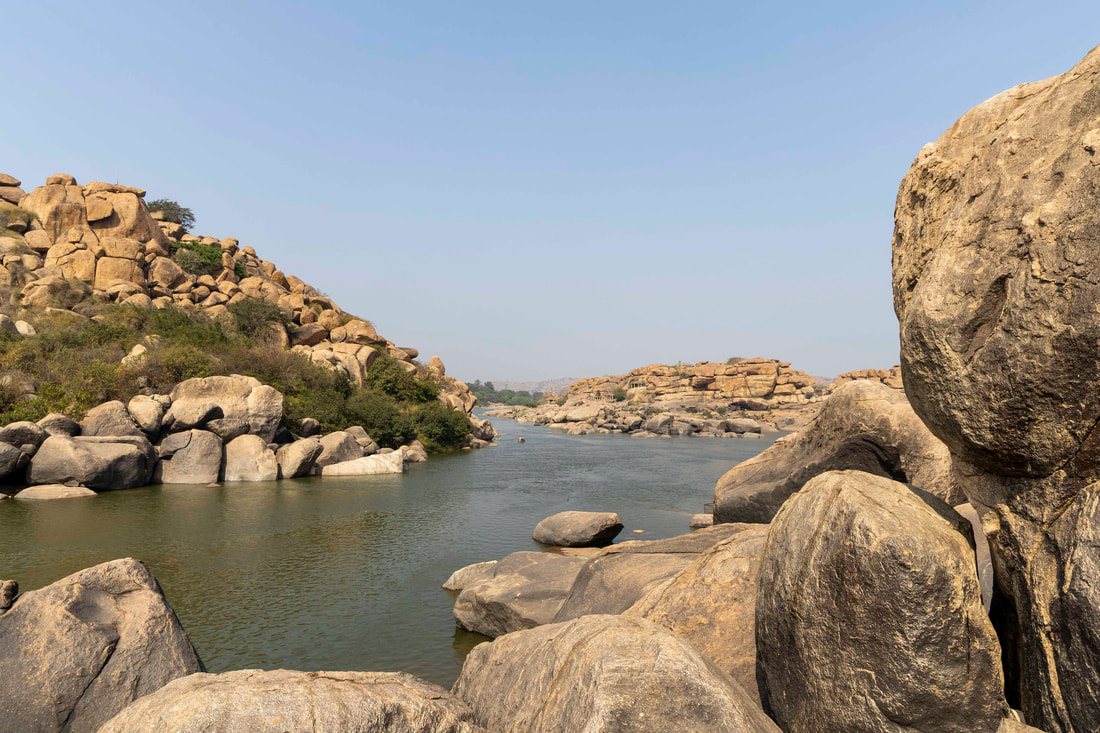
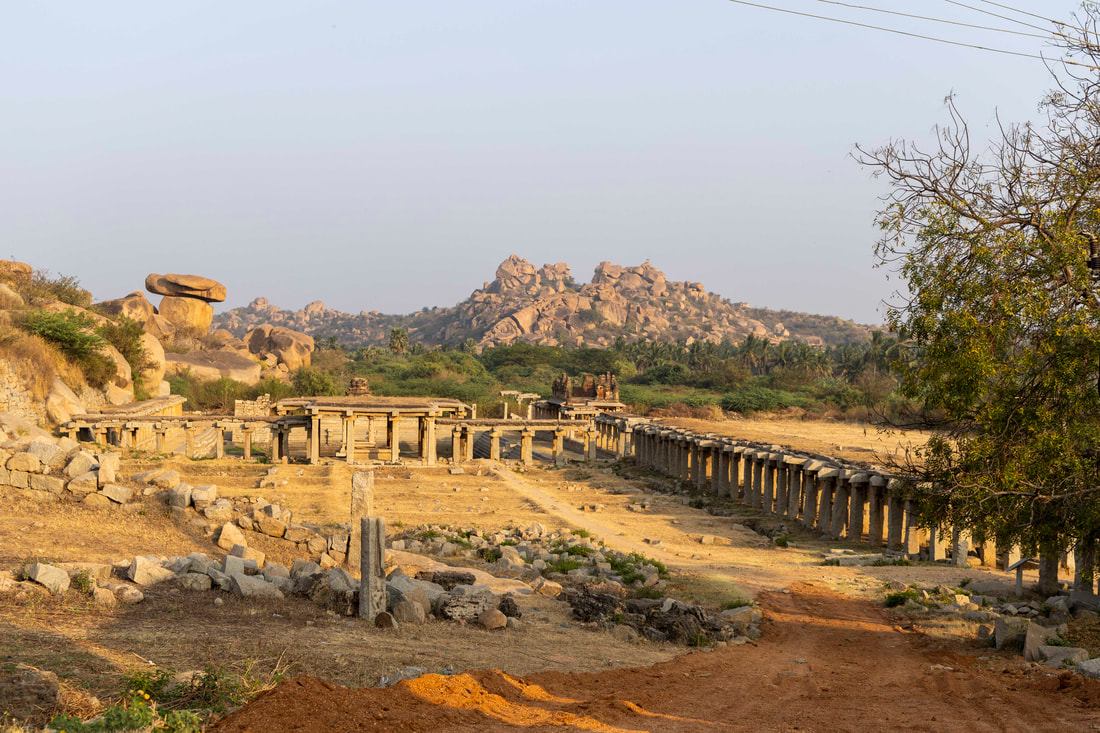
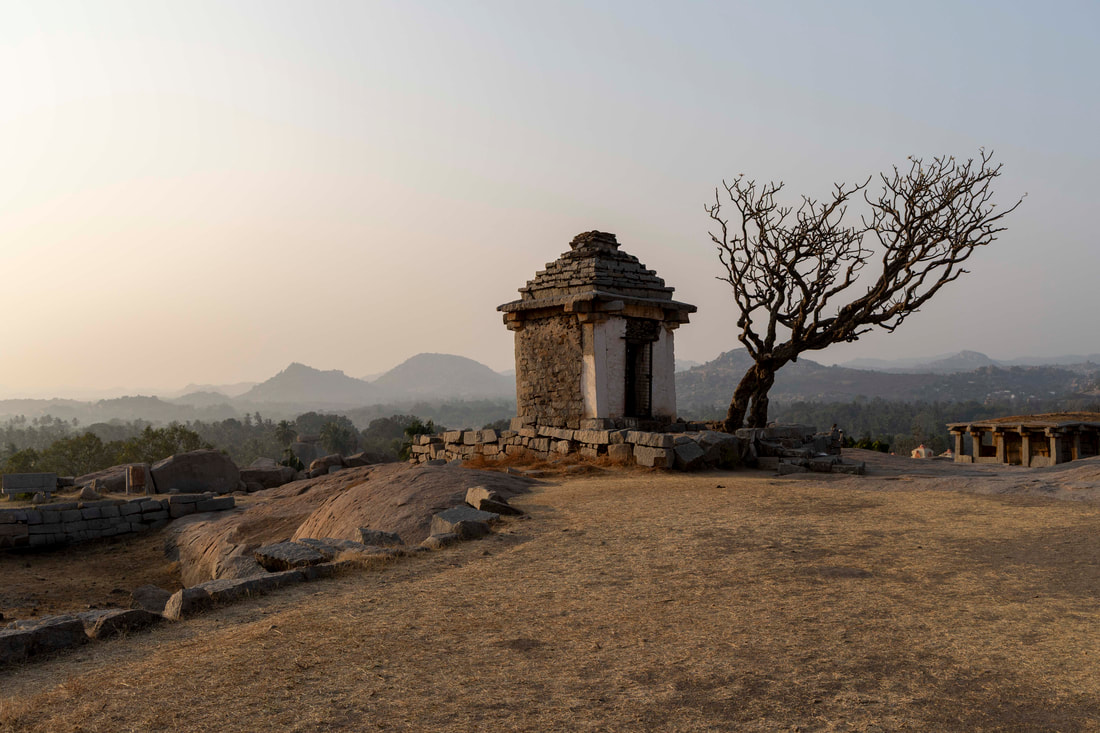
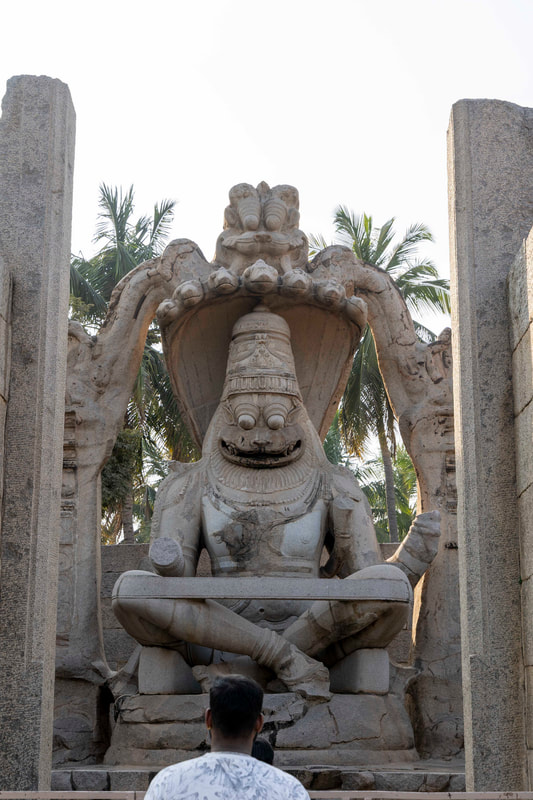
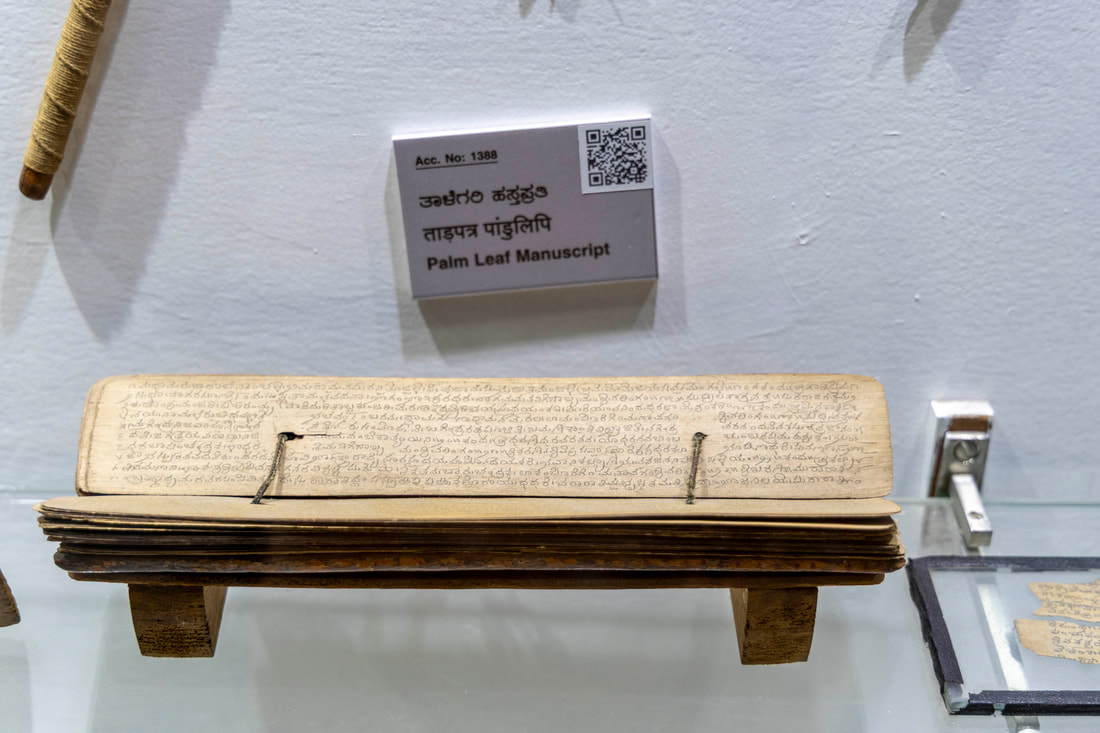
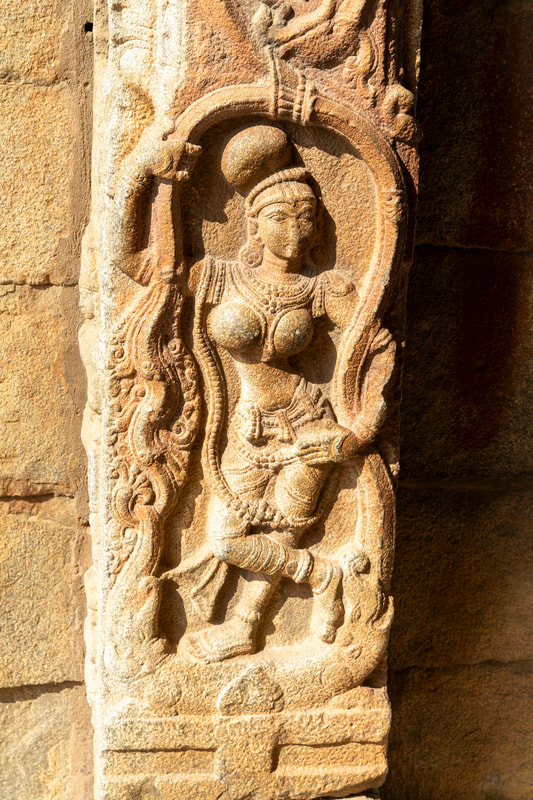
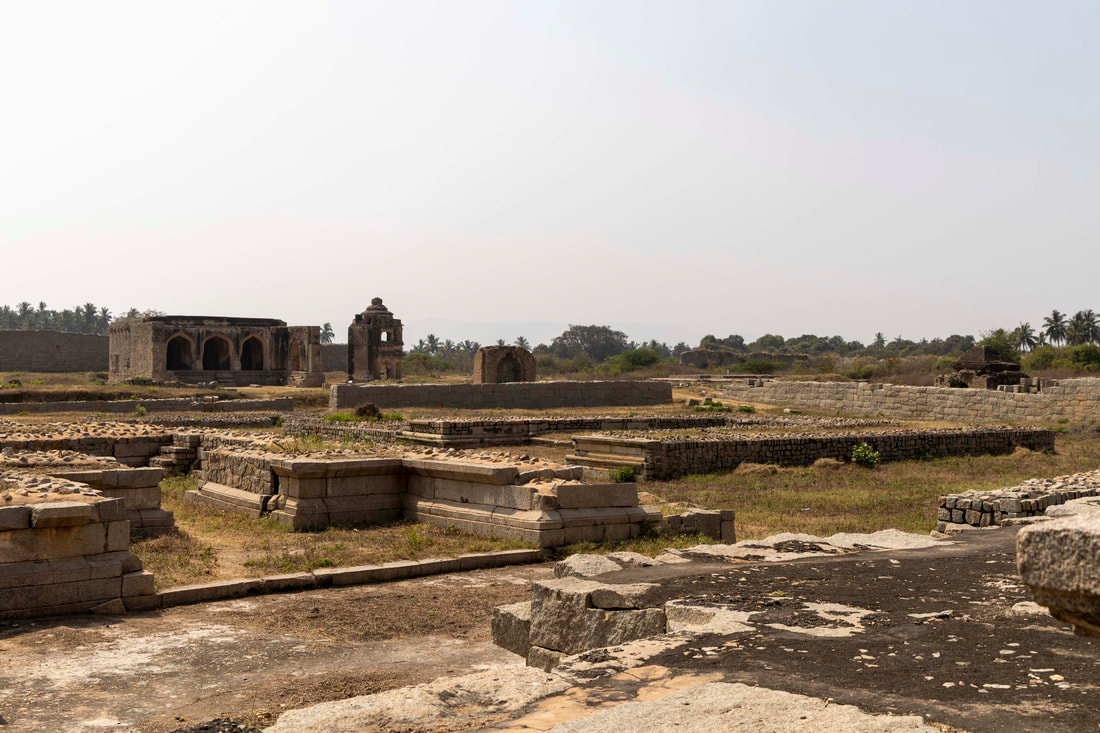
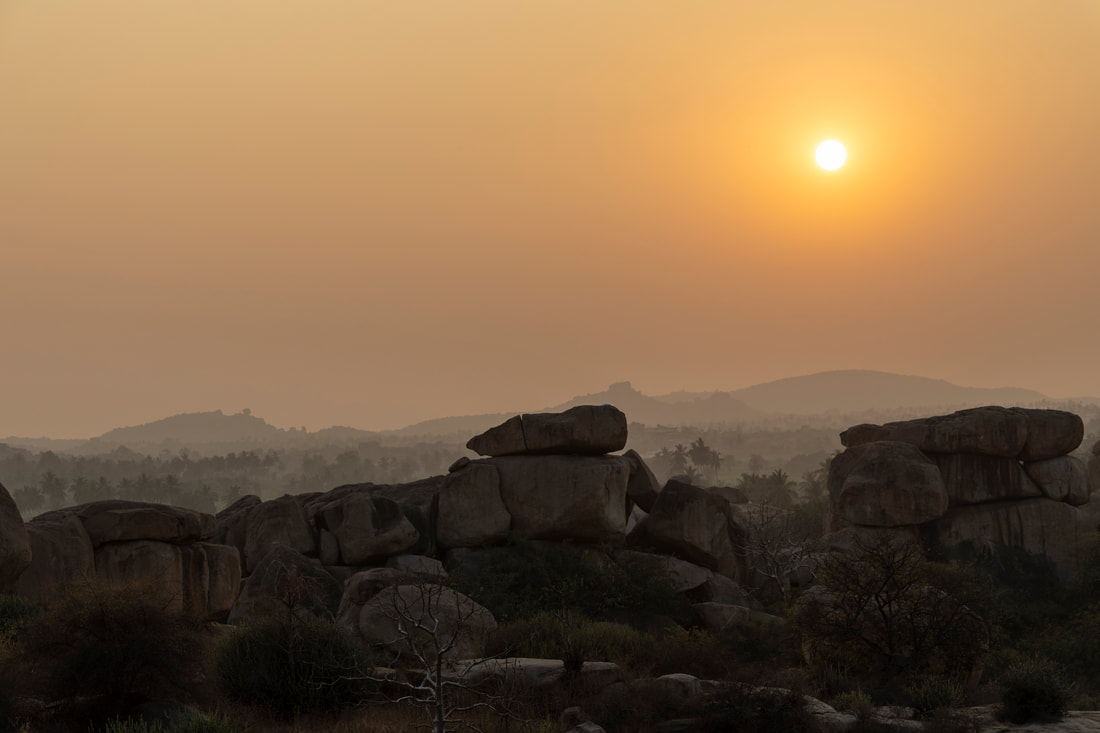
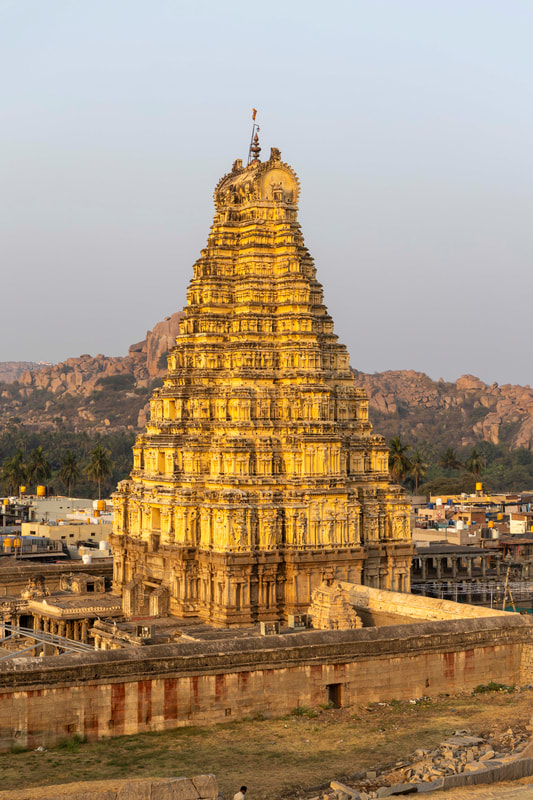
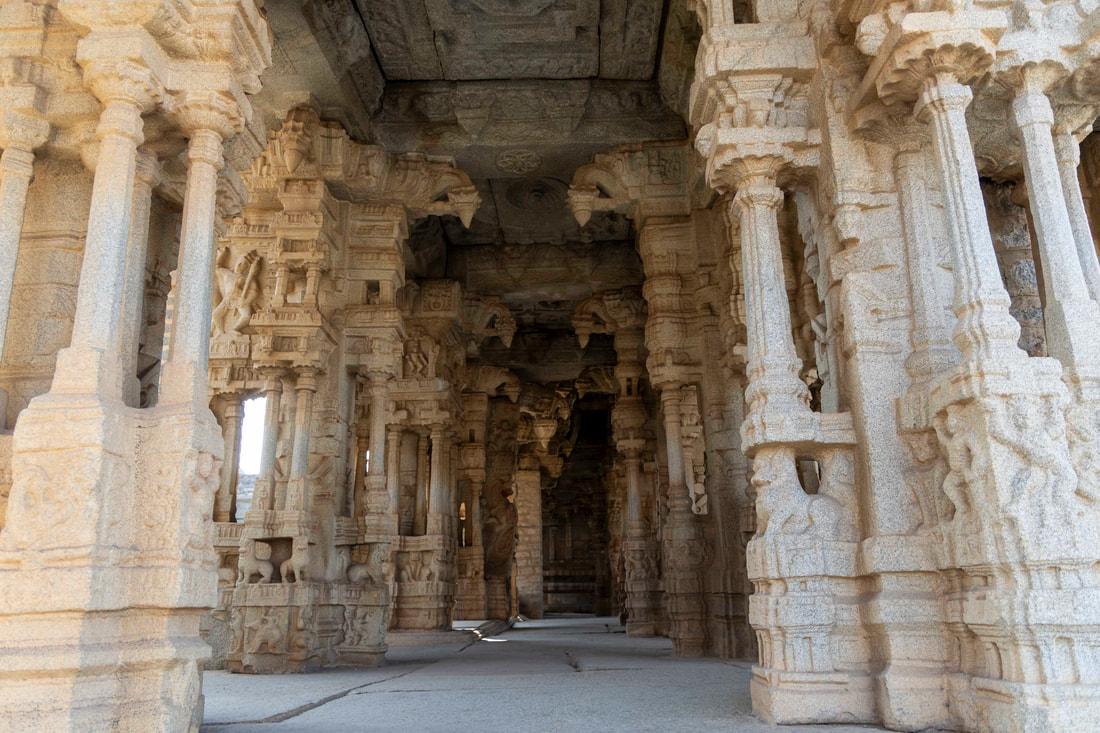
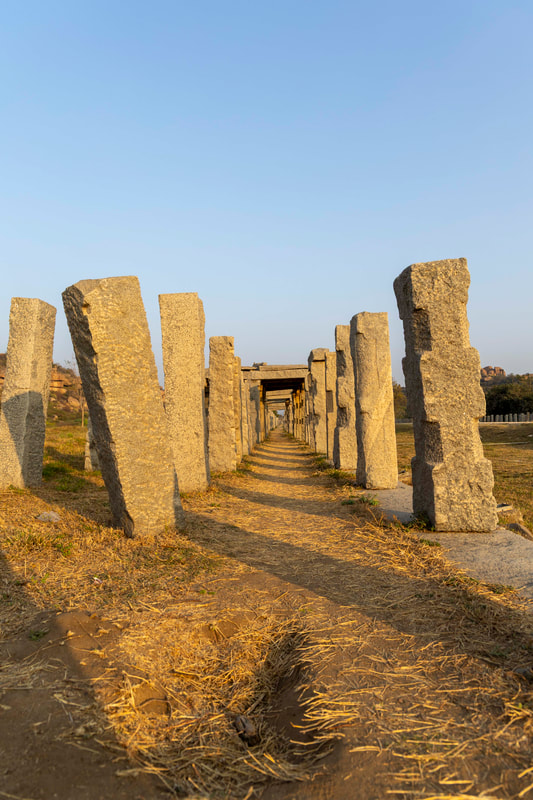
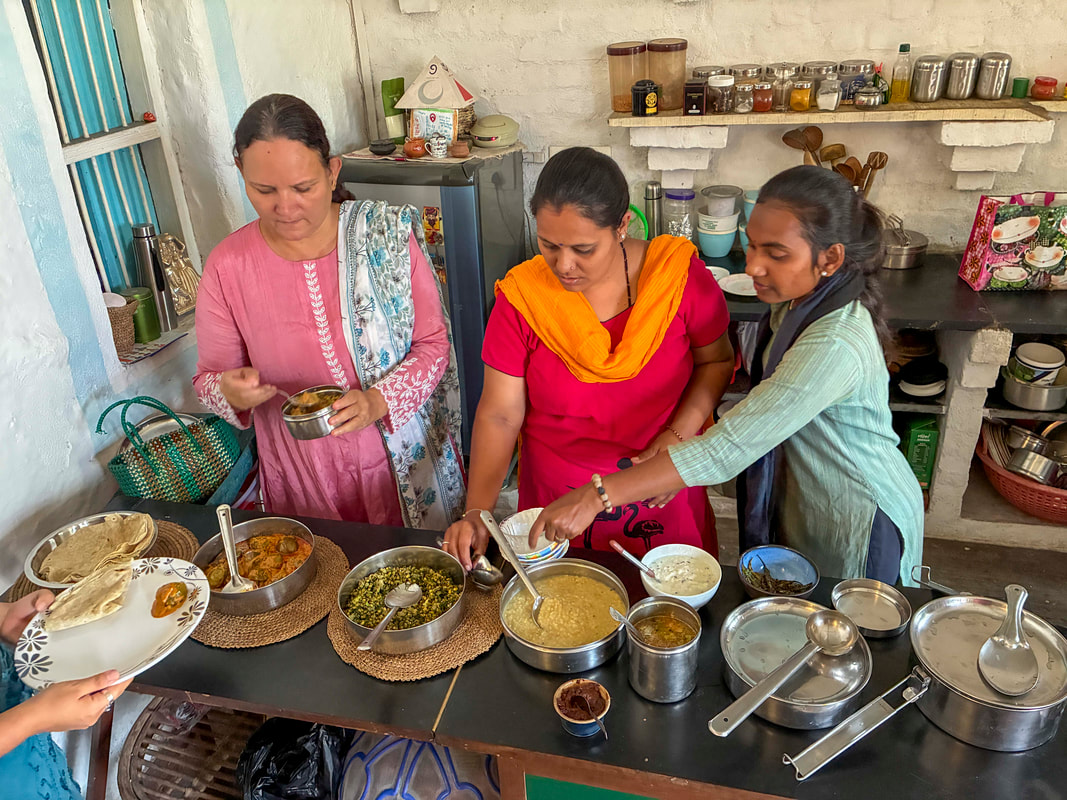
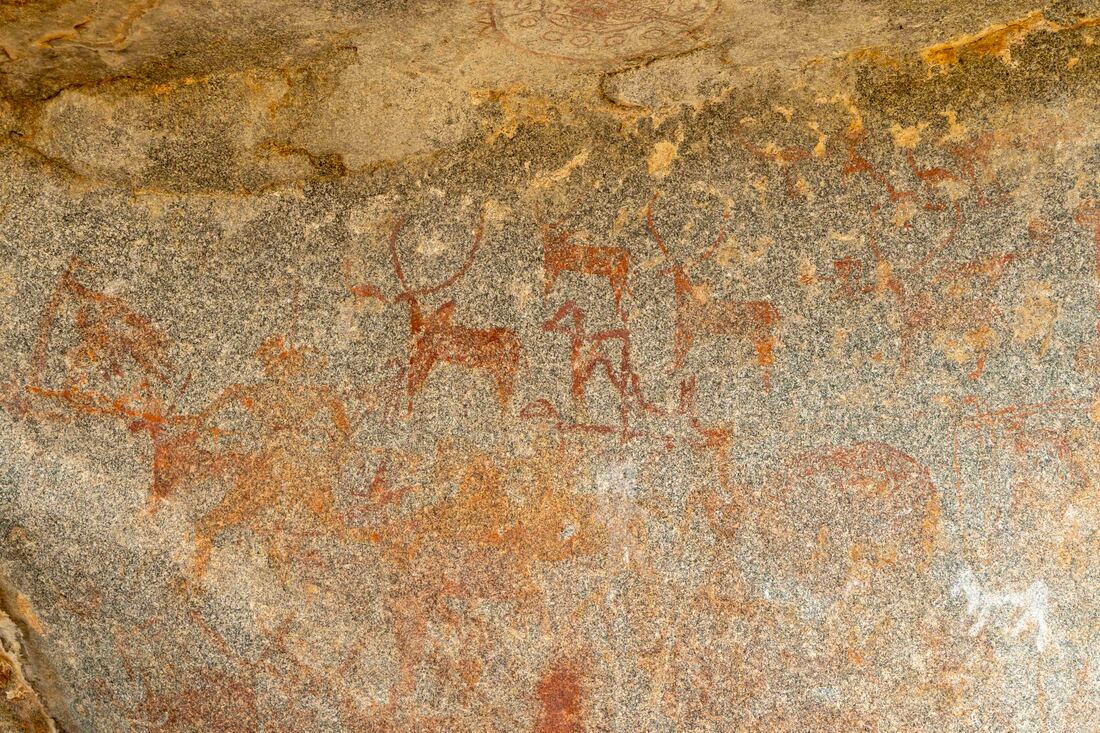
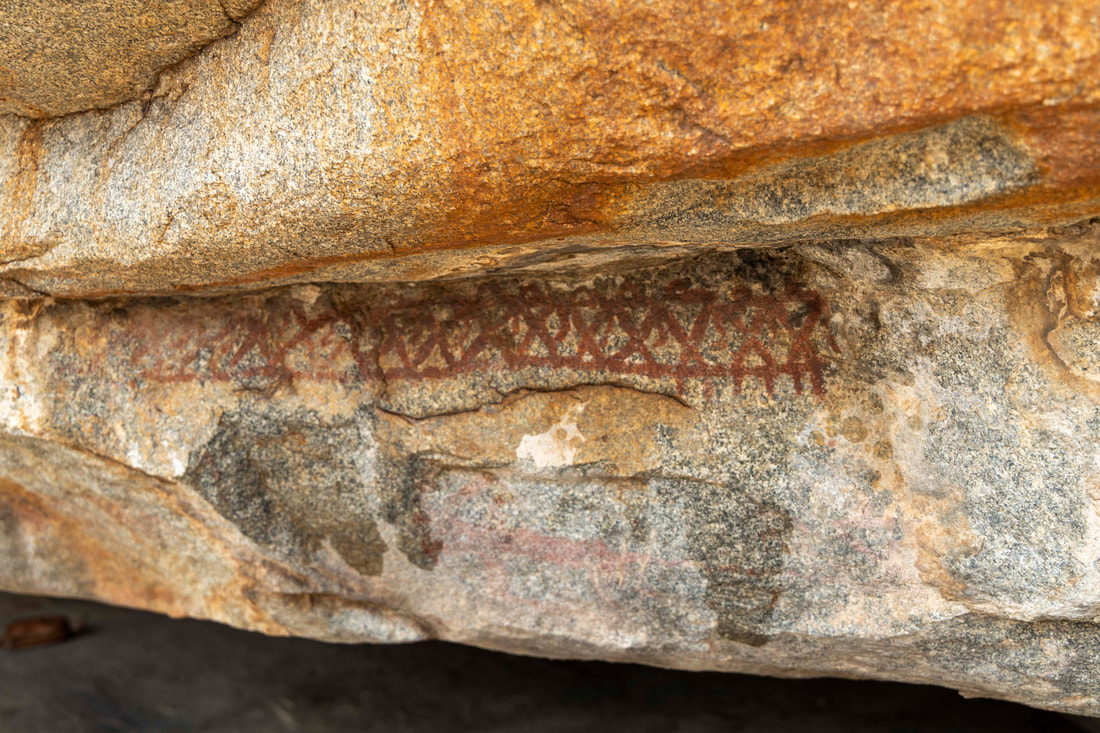
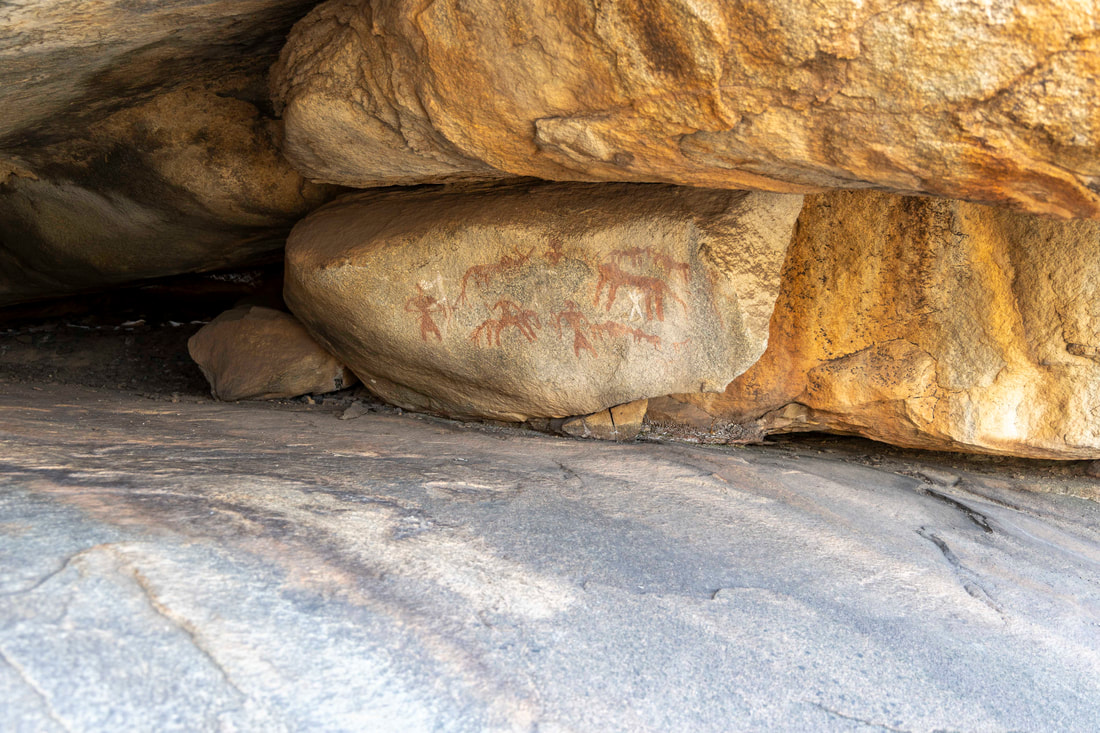
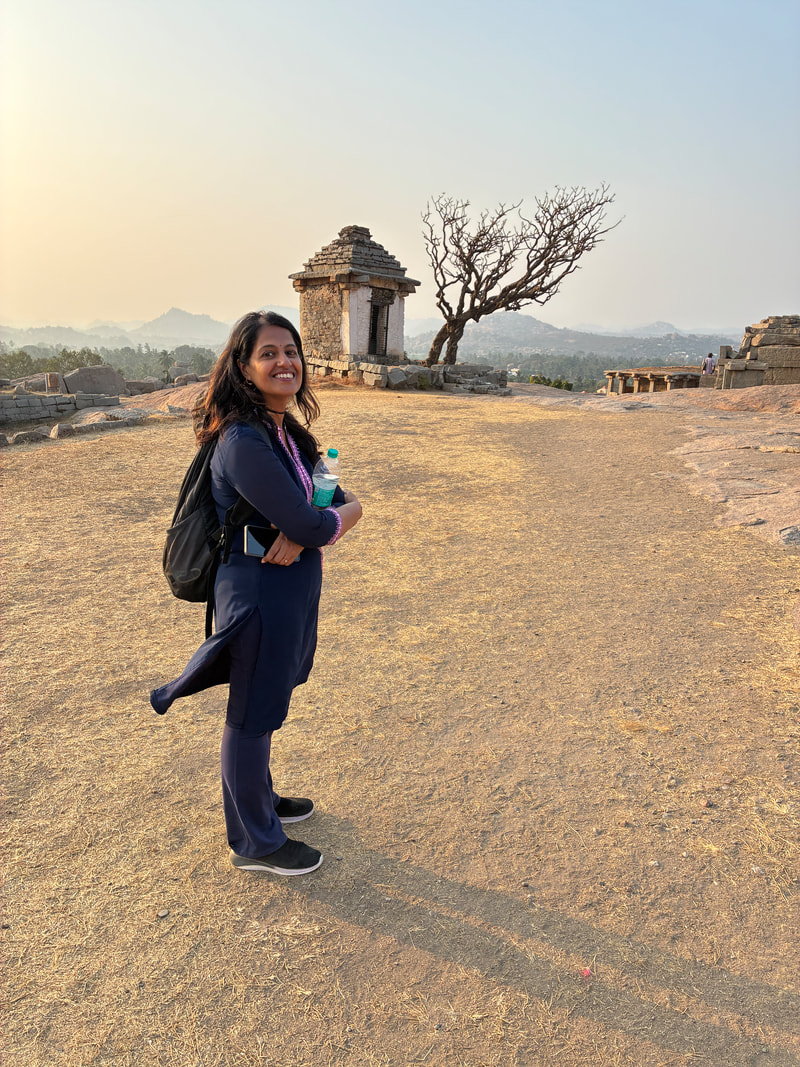
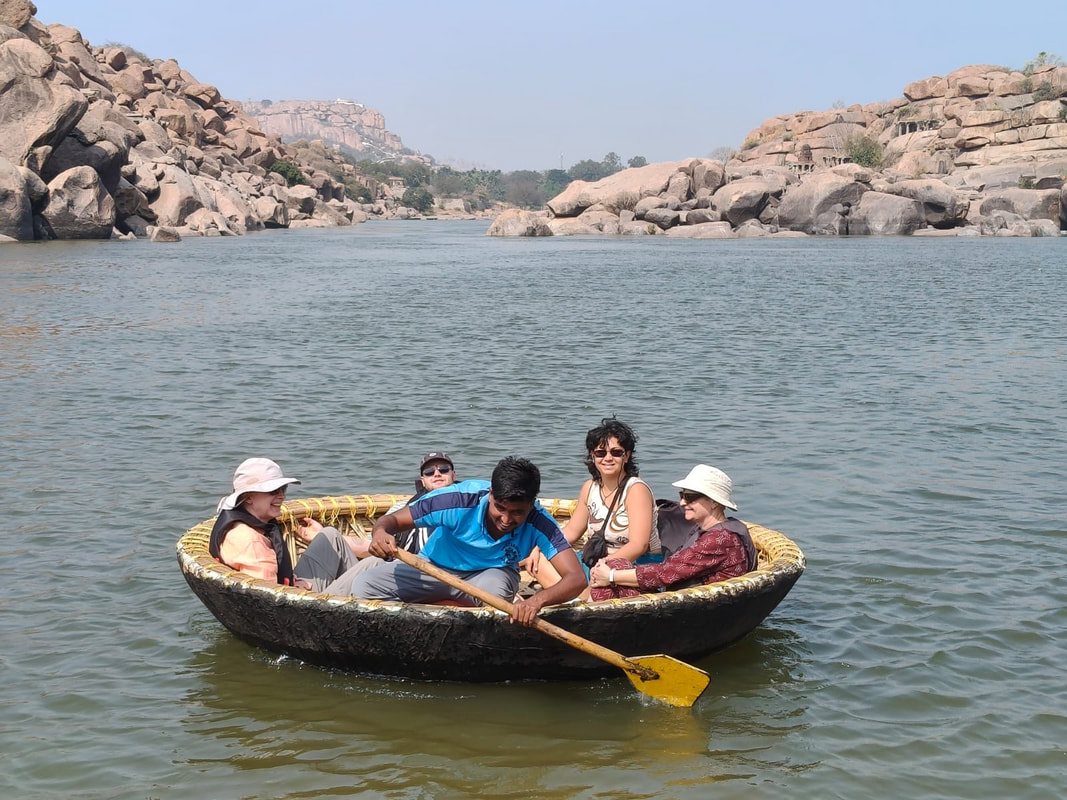
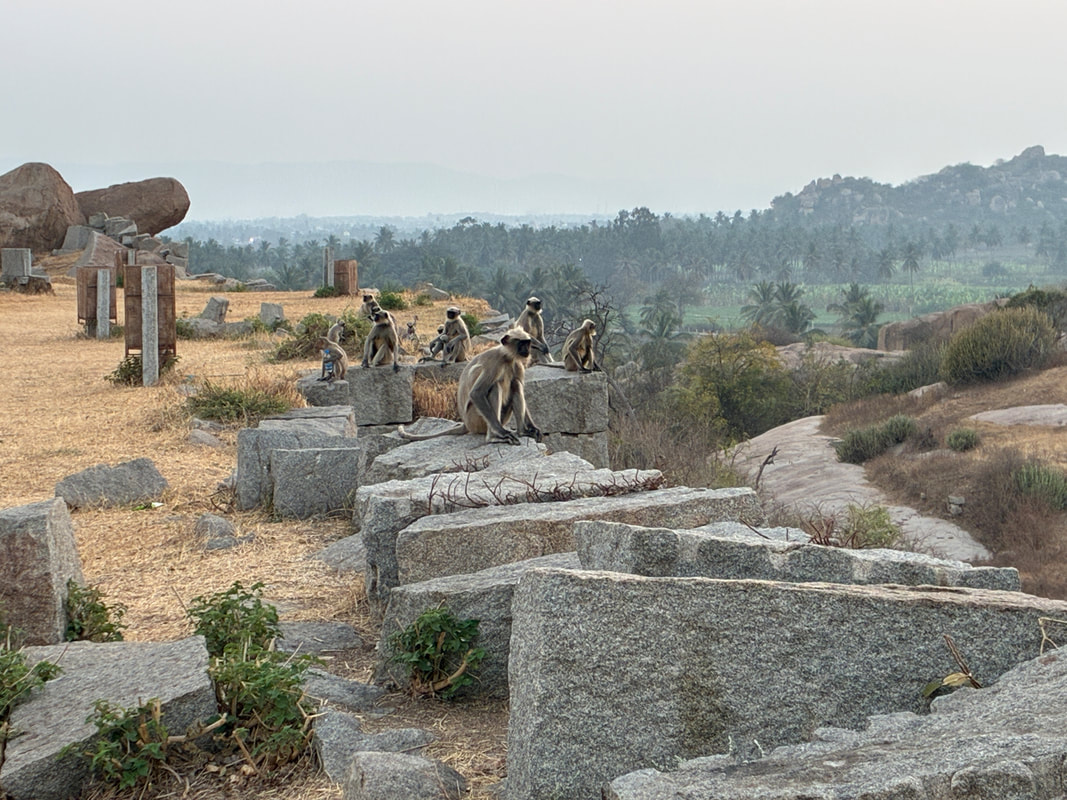
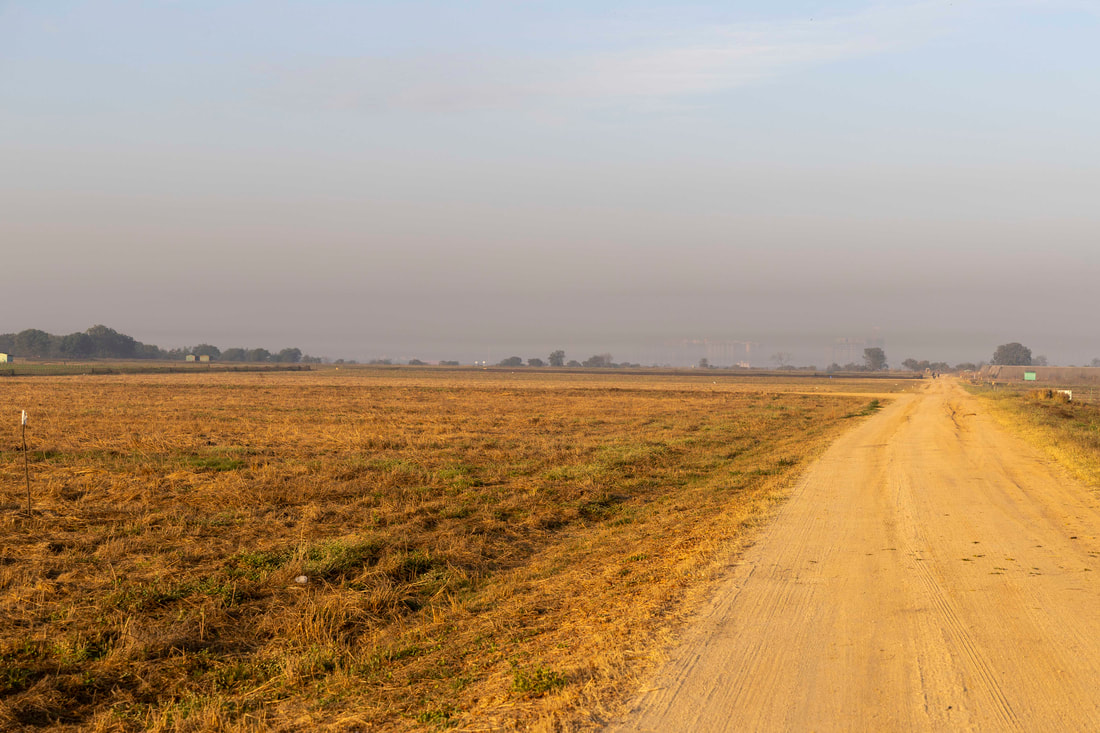
Hampi stand sehr hoch auf meiner Reise-Wunschliste - und ich war nicht enttäuscht. Wir waren drei ganze Tage dort mit einer tollen Reiseführerin und es ist sehr schwierig, Fotos auszusuchen, weil wir viel zu viele gute haben. Wir sind mit unserem Sohn, dessen Freundin, "unserem" Auto und Fahrer, gereist. Die Fahrt dauerte acht Stunden, mit den Pausen neun Stunden, und war ganz okay. Dasselbe gilt für das Homestay, in dem wir übernachtet haben: ganz okay. Hampi ist UNESCO Weltkulturerbe. Es war vom 14. bis zum 16. Jahrhundert das Zentrum des Vijayanagar-Reiches, einer der letzten grossen Hindu-Dynastien, bevor es 1565 zerstört wurde. Dieses Reich war sehr mächtig und reich, militärisch erfolgreich und kunstliebend. Die Landschaft besteht aus unglaublich geformten rost-orangen Granitfelsen, mit satt grünen Reis- und anderen Feldern dazwischen. Das Wasser kommt von einem grossen, ebenfalls fotogenen Fluss. Die Umgebung wirkt fast surreal und ist atemberaubend schön. Es gibt eine riesige Anzahl an Ruinen in verschiedenen Gebieten: Tempelanlagen, eine vergangene Stadt mit Palästen, bzw. deren Überreste, "Bazaars", also Strassen, die zu den Tempeln führten, etc. Zwei Tage lang haben wir diese Orte in Hampi besucht. Die junge Generation war einen Nachmittag lang bouldern (auch dafür ist Hampi berühmt). Anegundi haben wir am dritten Tag besucht. Es war die erste Hauptstadt des Reiches und ist heute ein kleines Dorf. Auch dort gibt es ein paar Gebäude aus alter Zeit, sie sind etwas weniger gut erhalten und renoviert. Wir waren in Anegundi von einem der Nachfahren der Herrscher-Dynastie eingeladen, in einem wunderschönen Haus, das er in der traditionellen Art renoviert hat (wir haben uns nicht getraut, Fotos zu machen). Das war eine interessante Begegnung. Danach durften wir bei einer Dorfbewohnerin zu Mittag essen und konnten so Alltagsküche geniessen (lecker!). Anschliessend haben wir Höhlenmalereien bestaunen dürfen; der Königs-Nachfahre konnte das für uns organisieren. Die Malereien sind in diesen Felsbergen versteckt und stammen aus dem Neolithikum (Jungsteinzeit). Diese uralten Zeichen unserer Vorfahren kombiniert mit der skurrilen Landschaft und der totalen Ruhe waren sehr beeindruckend. Wir haben hier wieder etwas für uns völllig Neues bereisen und bewundern dürfen. Indien ist so facettenreich! Hampi was very high on my travel wish list – and I was not disappointed. We spent three whole days there with a great tour guide, and it's very difficult to choose photos because we have far too many good ones. We travelled with our son, his girlfriend, ‘our’ car and driver. The journey took eight hours, nine hours including breaks, and was quite okay. The same goes for the homestay where we stayed: quite okay. Hampi is a UNESCO World Heritage Site. From the 14th to the 16th century, it was the centre of the Vijayanagar Empire, one of the last great Hindu dynasties, before it was destroyed in 1565. This empire was very powerful and rich, militarily successful and art-loving. The landscape consists of incredibly shaped rust-orange granite rocks, with lush green rice and other fields in between. The water comes from a large, equally photogenic river. The surroundings seem almost surreal and is breathtakingly beautiful. There are a huge number of ruins in various areas: temple complexes, a former city with palaces, or rather their remains, ‘bazaars’, i.e. streets that led to the temples, etc. We spent two days visiting these places in Hampi. The younger generation spent an afternoon bouldering (Hampi is also famous for this). We visited Anegundi on the third day. It was the first capital of the empire and is now a small village. There are also a few buildings from ancient times there, but they are not as well preserved and renovated. We were invited to Anegundi by one of the descendants of the former ruling dynasty, to a beautiful house that he had renovated in the traditional style (we didn't dare take any photos). It was an interesting encounter. Afterwards, we were invited to have lunch with a villager and were able to enjoy everyday cuisine (delicious!). Then we were able to marvel at cave paintings; the king's descendant could organise this for us. The paintings are hidden in these rocky mountains and date back to the Neolithic period. These ancient symbols of our ancestors, combined with the bizarre landscape and total tranquillity, were very impressive. Once again, we were able to travel to and admire something completely new to us. India is so multifaceted! Hampi figurait en tête de ma liste de destinations à visiter, et je n'ai pas été déçue. Nous y avons passé trois jours entiers avec une guide formidable, et il est très difficile de choisir les photos, car nous en avons beaucoup trop de belles. Cette fois-ci, elles viennent à la fin. Nous avons voyagé avec notre fils, sa partenaire, « notre » voiture et chauffeur. Le trajet a duré huit heures, neuf heures avec les pauses, et s'est bien passé. Il en va de même pour le séjour chez l'habitant où nous avons passé les nuit : tout à fait correct. Hampi est classé au patrimoine mondial de l'UNESCO. Du XIVe au XVIe siècle, il a été le centre de l'empire Vijayanagar, l'une des dernières grandes dynasties hindoues, avant d'être détruit en 1565. Cet empire était très puissant et riche, prospère sur le plan militaire et amateur d'art. Le paysage se compose de rochers de granit orange rouille aux formes incroyables, entrecoupés de rizières et d'autres champs d'un vert luxuriant. L'eau provient d'une grande rivière, tout aussi photogénique. Les environs semblent presque surréaliste et d'une beauté à couper le souffle. Il existe un grand nombre de ruines dans différentes zones : des temples, une ville disparue avec des palais ou leurs vestiges, des « bazars », c'est-à-dire des rues qui menaient aux temples, etc. Nous avons passé deux jours à visiter ces lieux à Hampi. La jeune génération a passé un après-midi à faire de l'escalade (Hampi est également célèbre pour cela). Nous avons visité Anegundi le troisième jour. C'était la première capitale de l'empire et c'est aujourd'hui un petit village. On y trouve également quelques bâtiments anciens, mais ils sont un peu moins bien conservés et rénovés. À Anegundi, nous avons été invités par l'un des descendants de l'ancienne dynastie régnante dans une magnifique maison qu'il a rénovée dans le style traditionnel (nous n'avons pas osé prendre de photos). Ce fut une rencontre intéressante. Ensuite, nous avons pu déjeuner chez une villageoise et déguster la cuisine locale (délicieuse !). Nous avons après pu admirer des peintures rupestres ; le descendant royal a pu organiser cela pour nous. Les peintures sont cachées dans ces montagnes rocheuses et datent du néolithique. Ces signes anciens laissés par nos ancêtres, combinés au paysage insolite et au calme absolu étaient très impressionnants. Nous avons pu découvrir et admirer quelque chose de complètement nouveau pour nous. L'Inde est tellement variée !
0 Comments
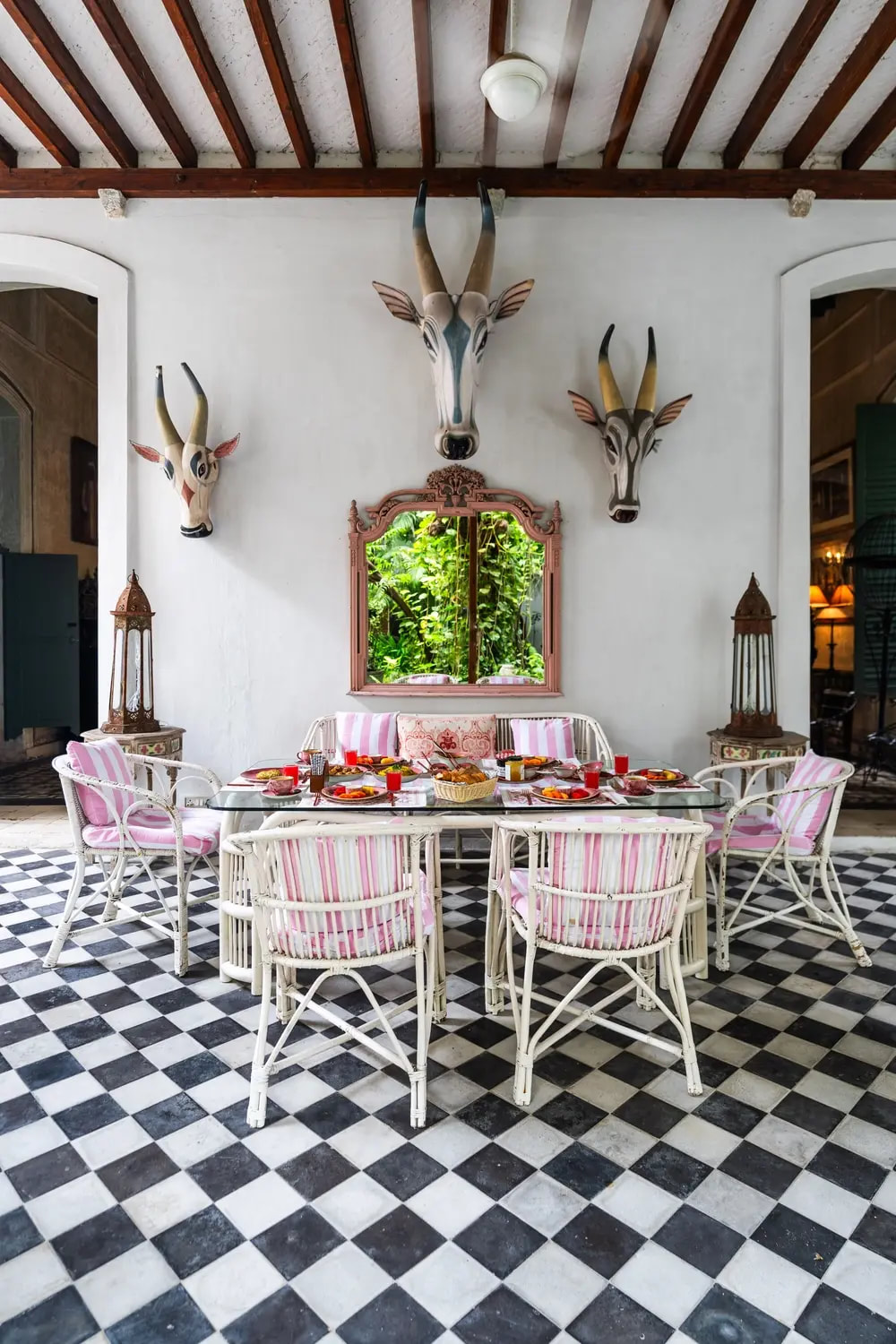
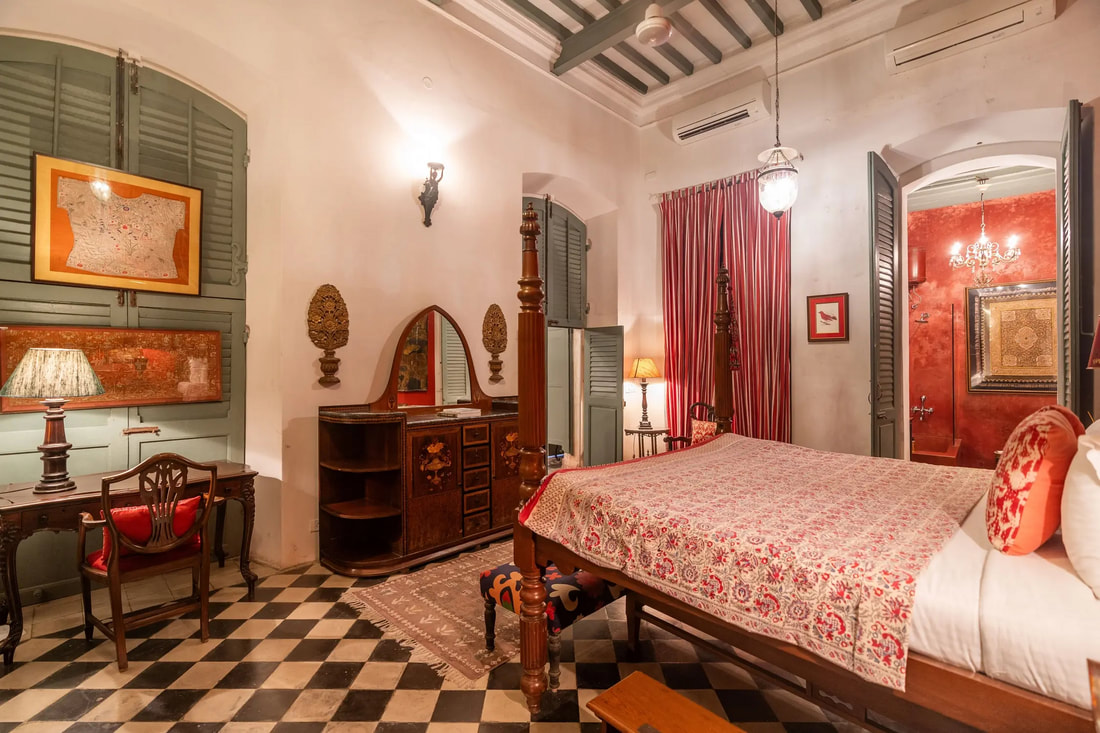
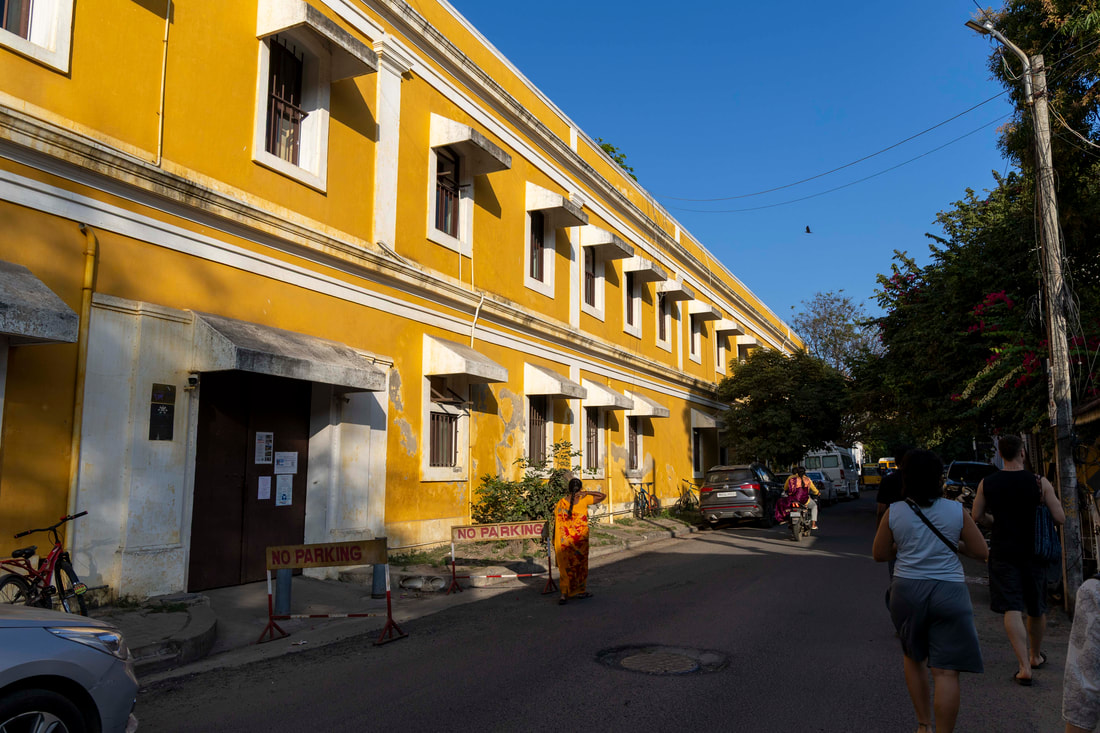
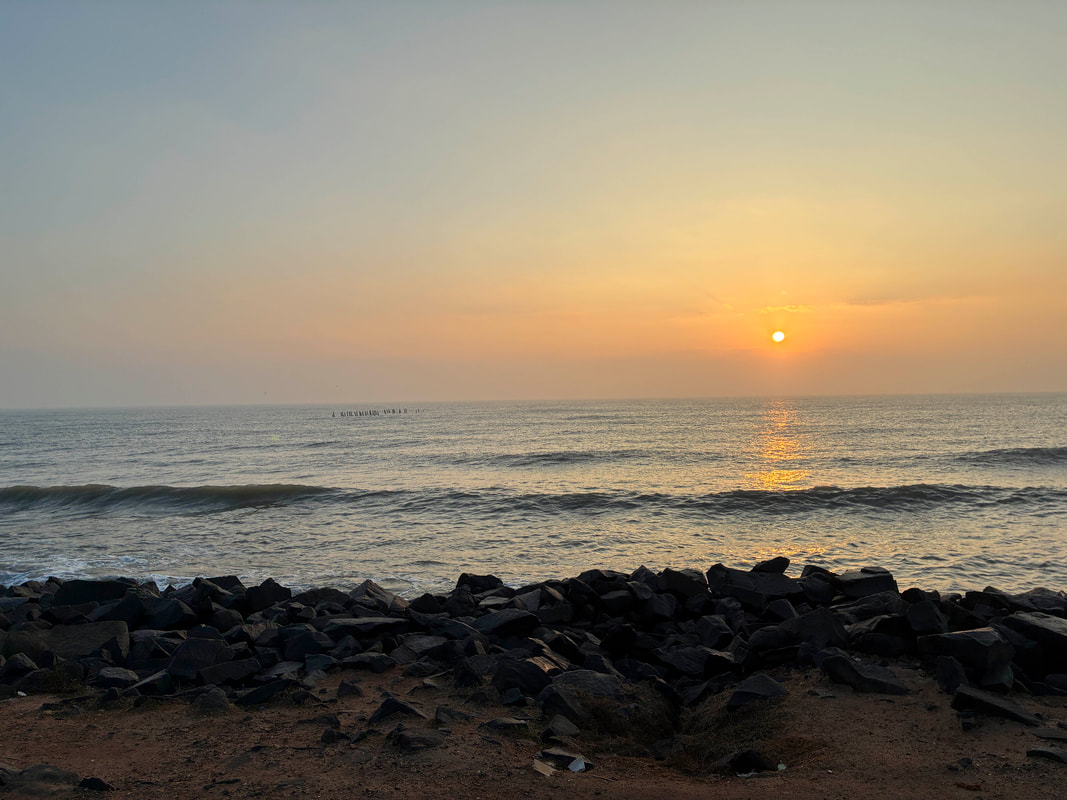
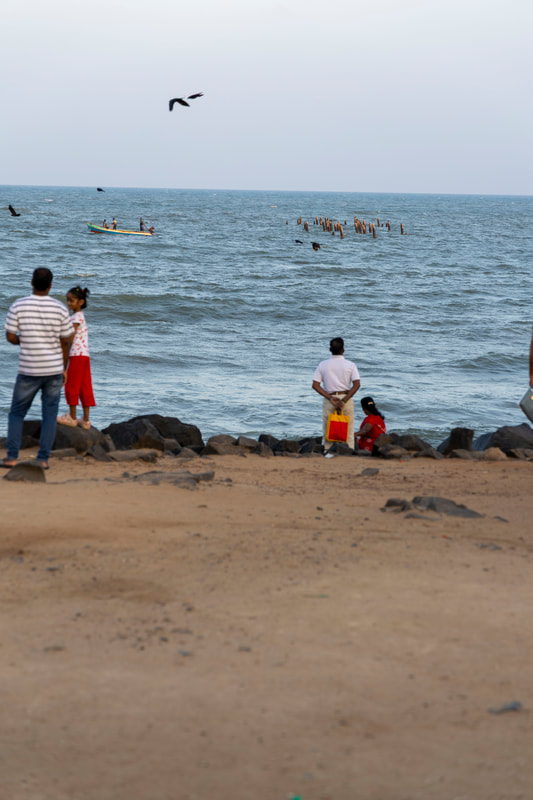
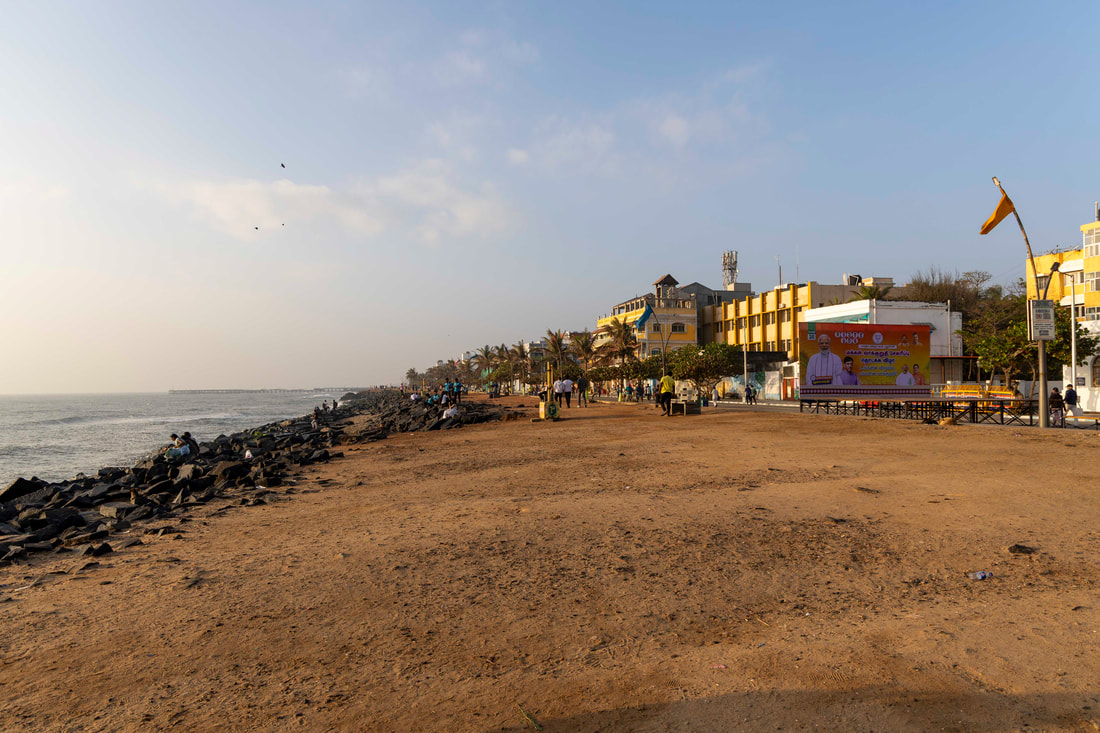
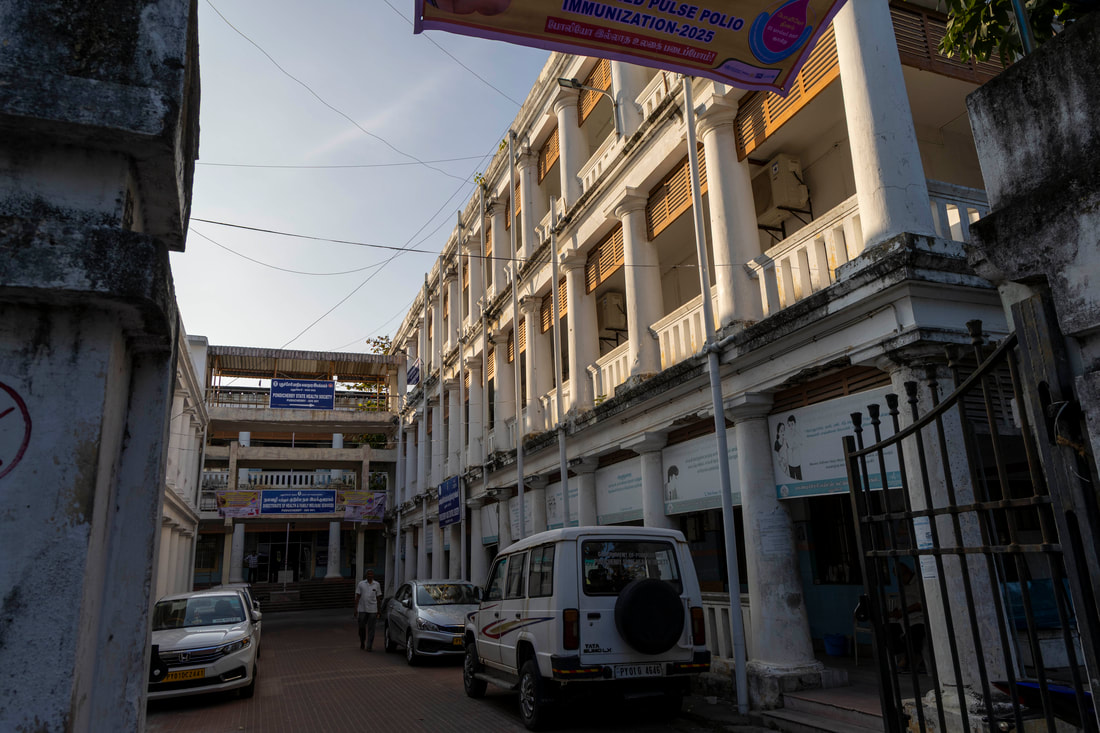
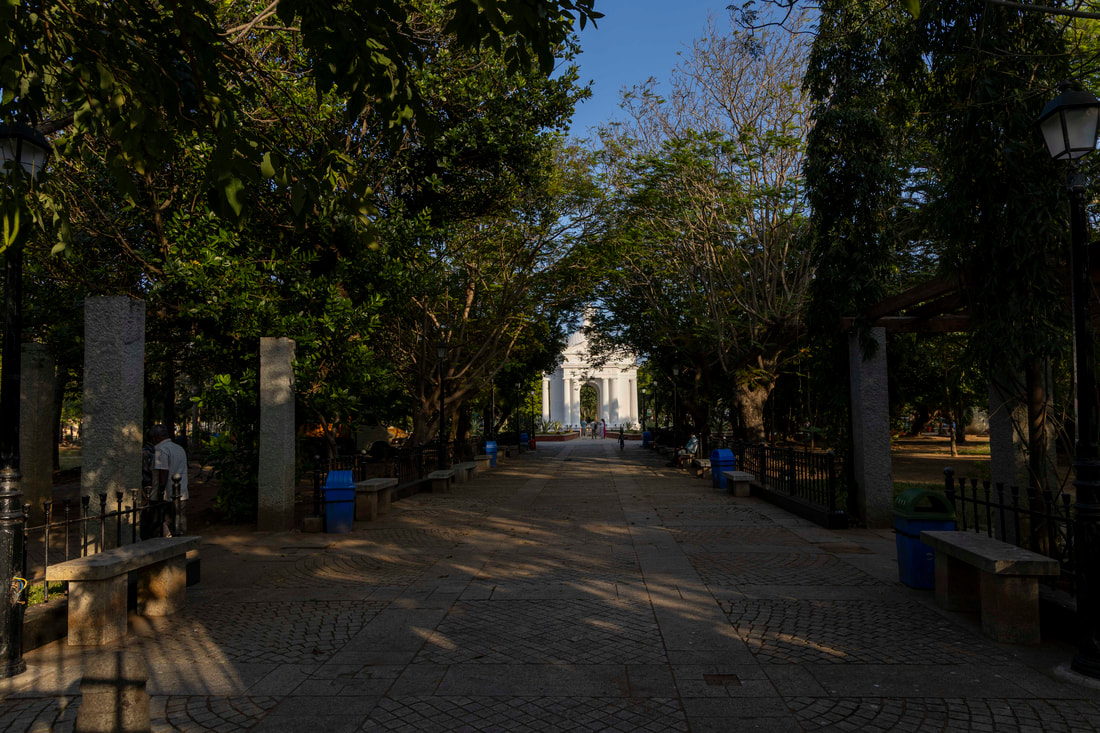
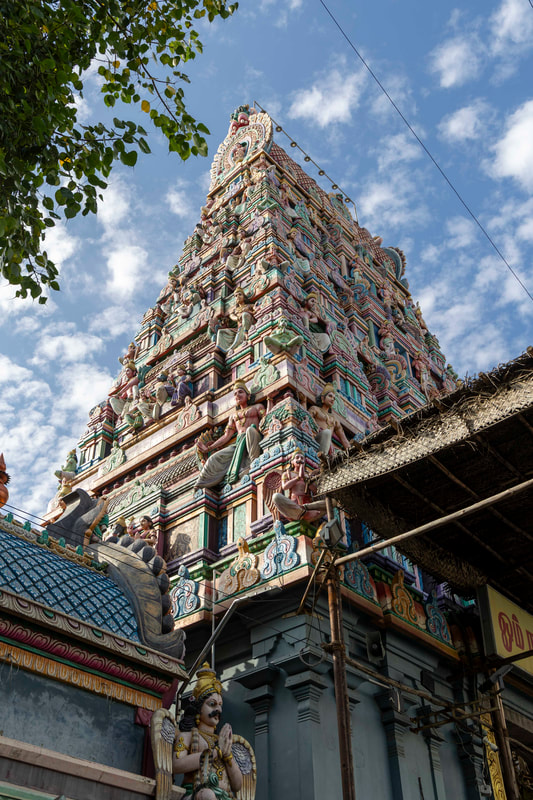
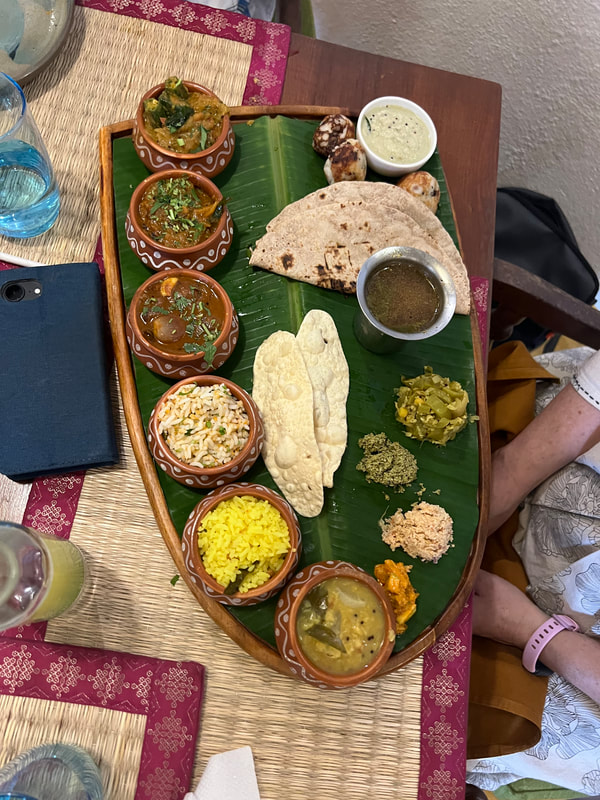
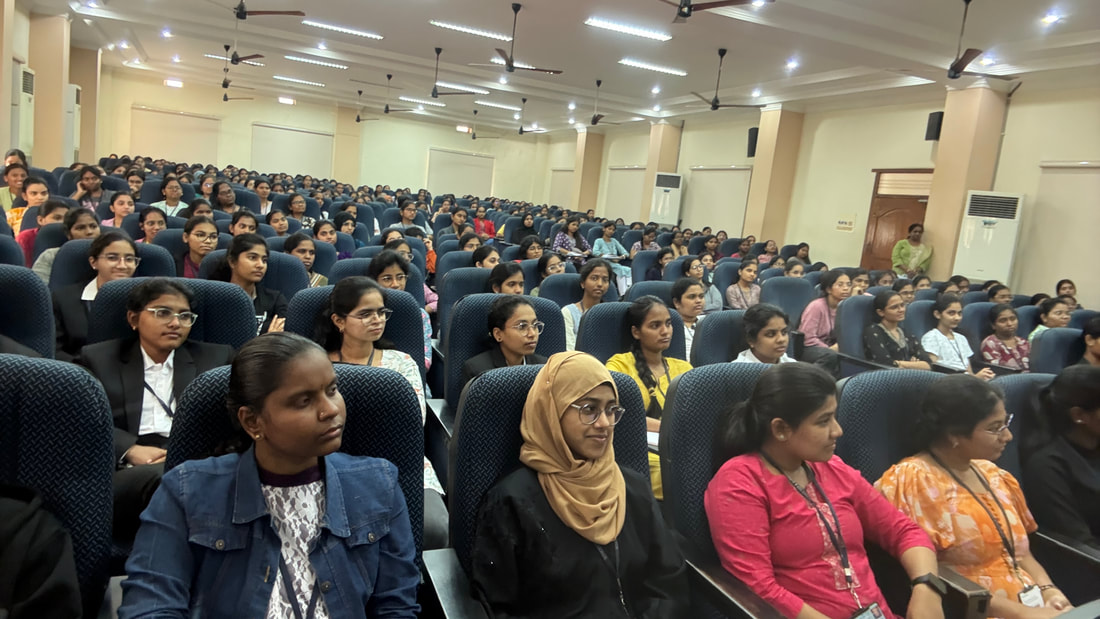
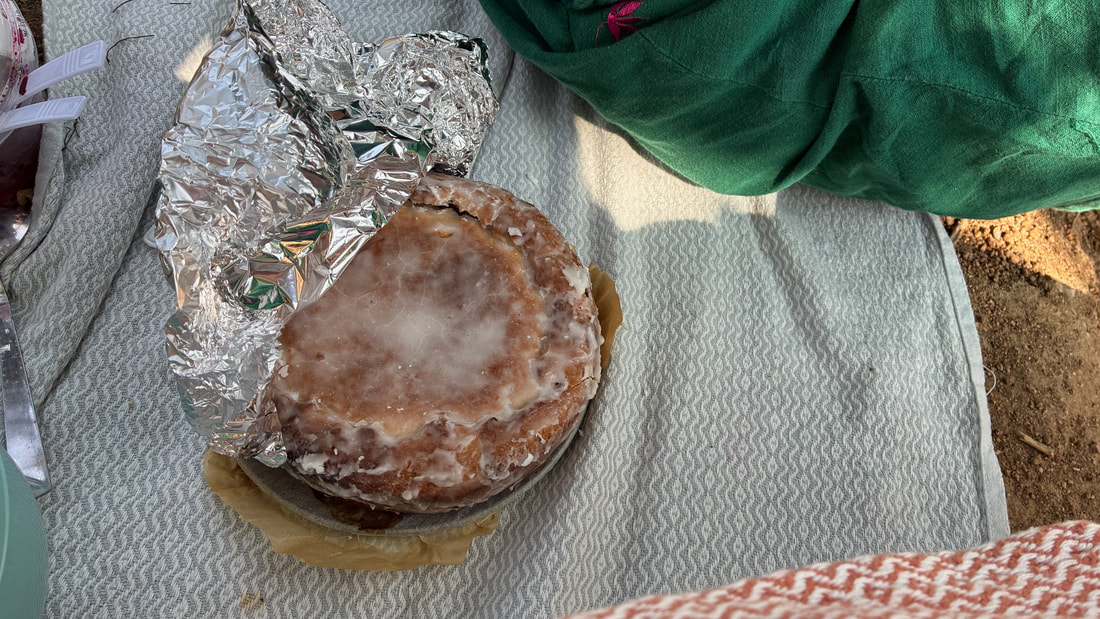
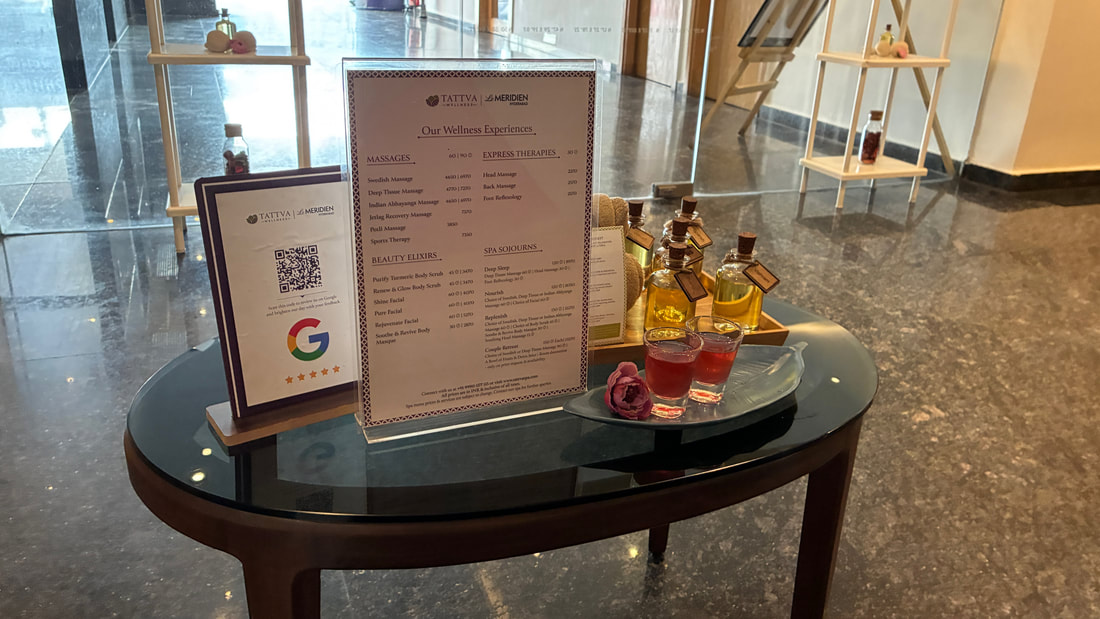
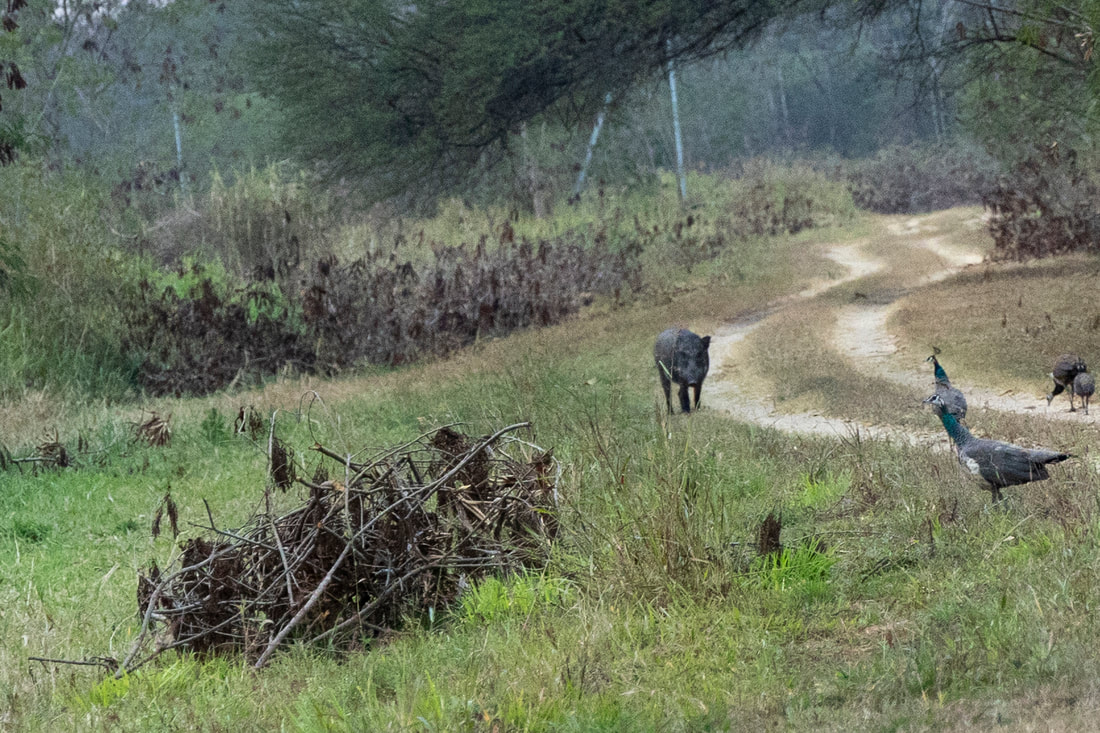
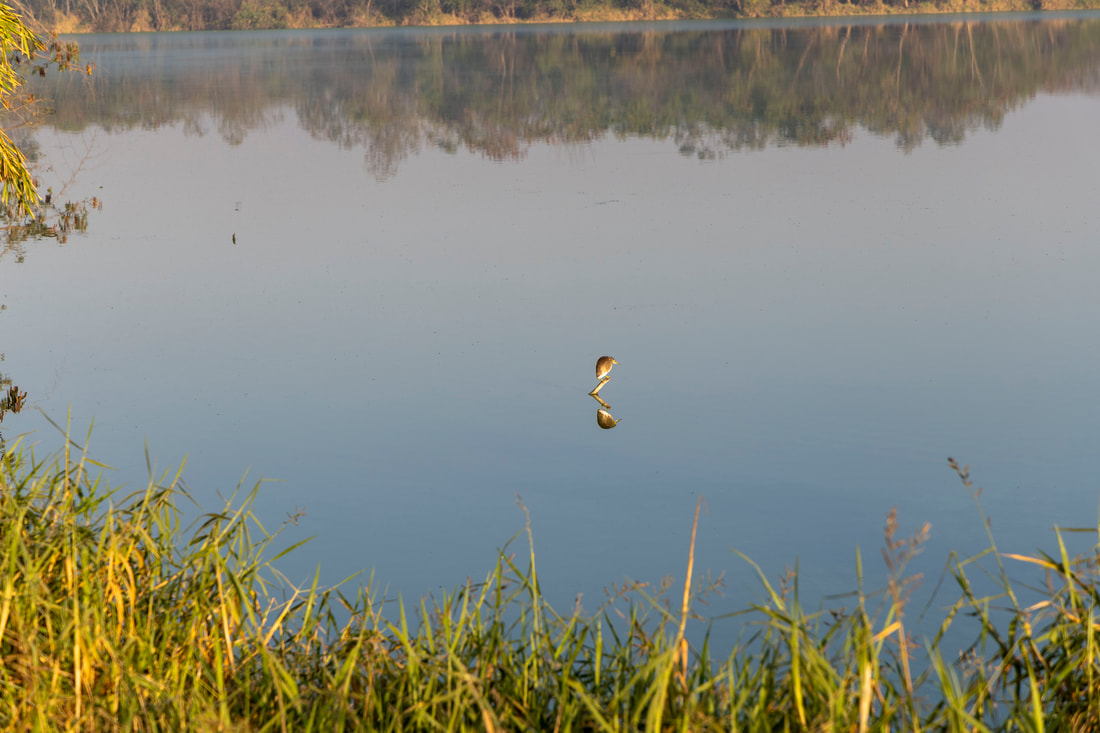
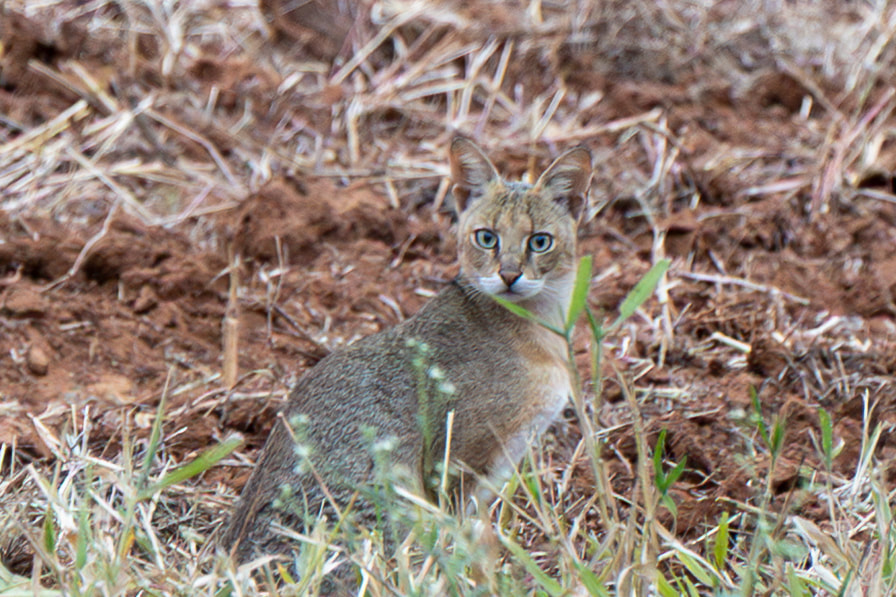
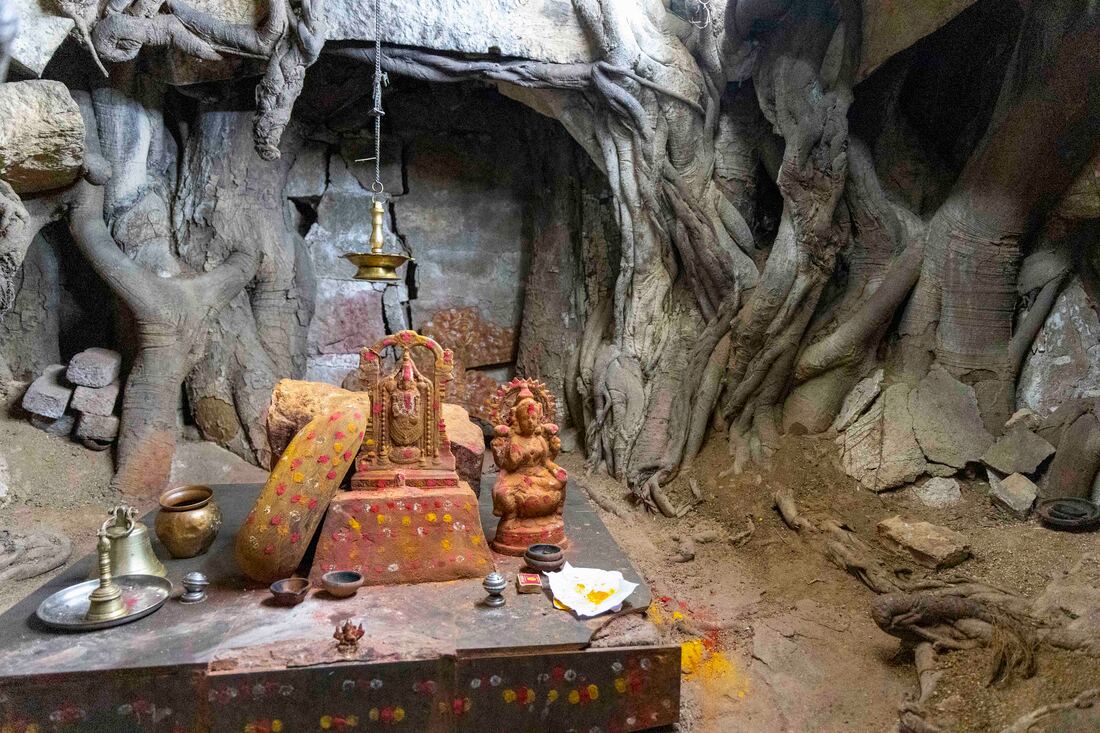
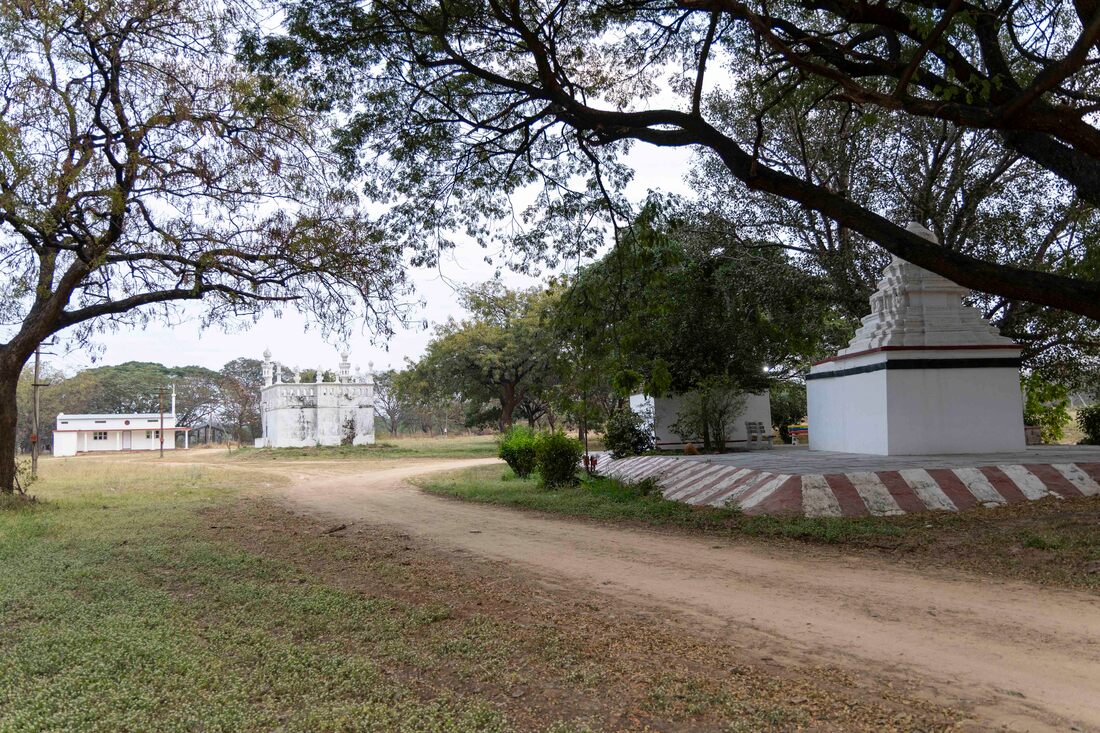
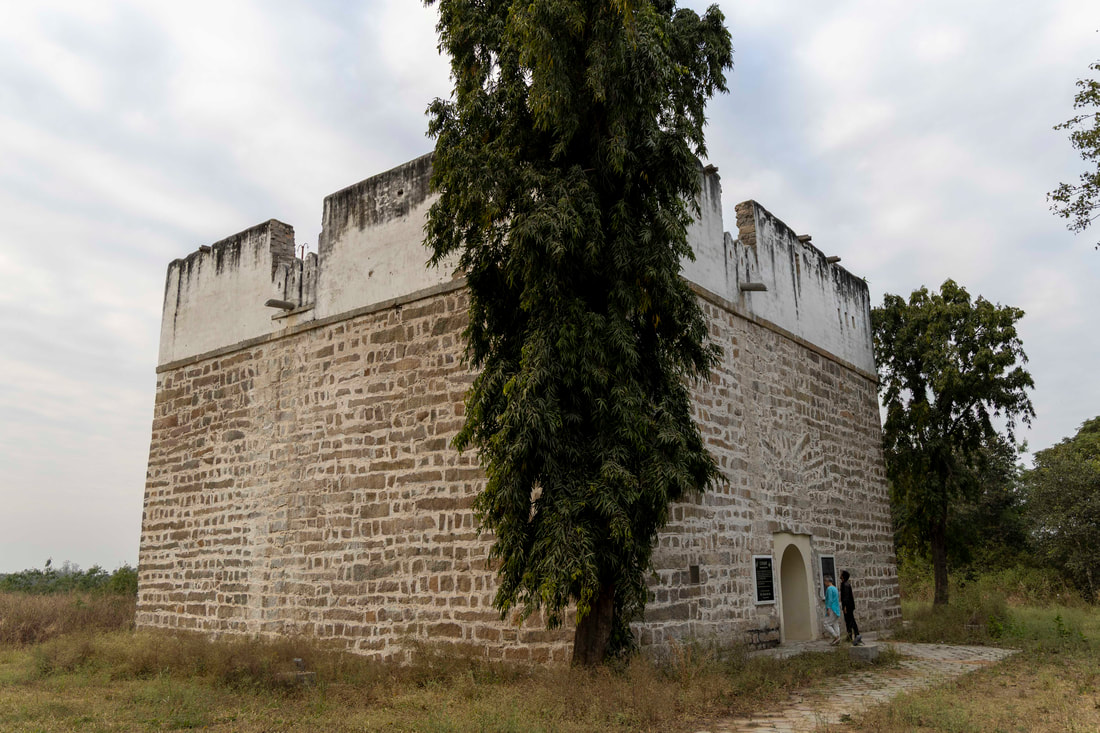
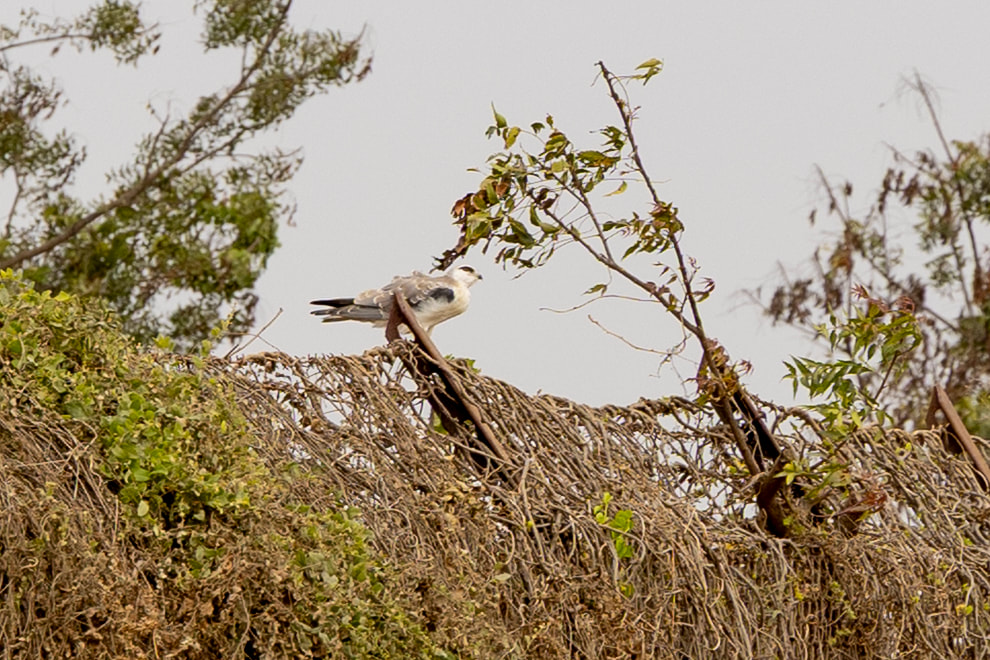
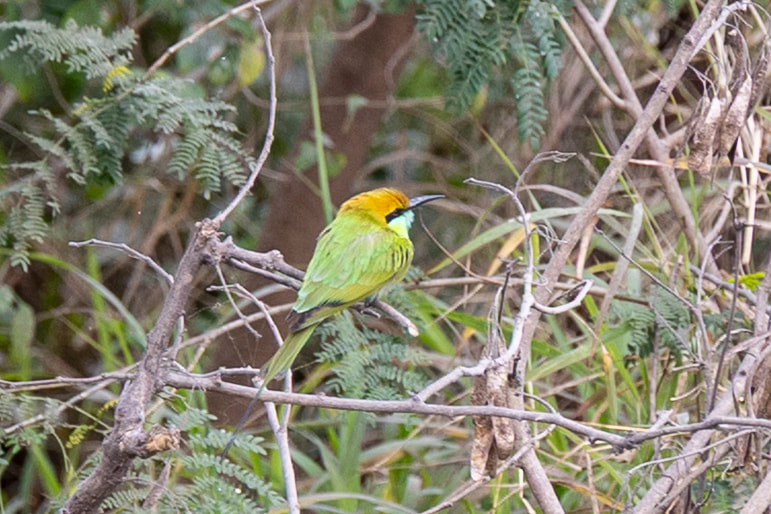
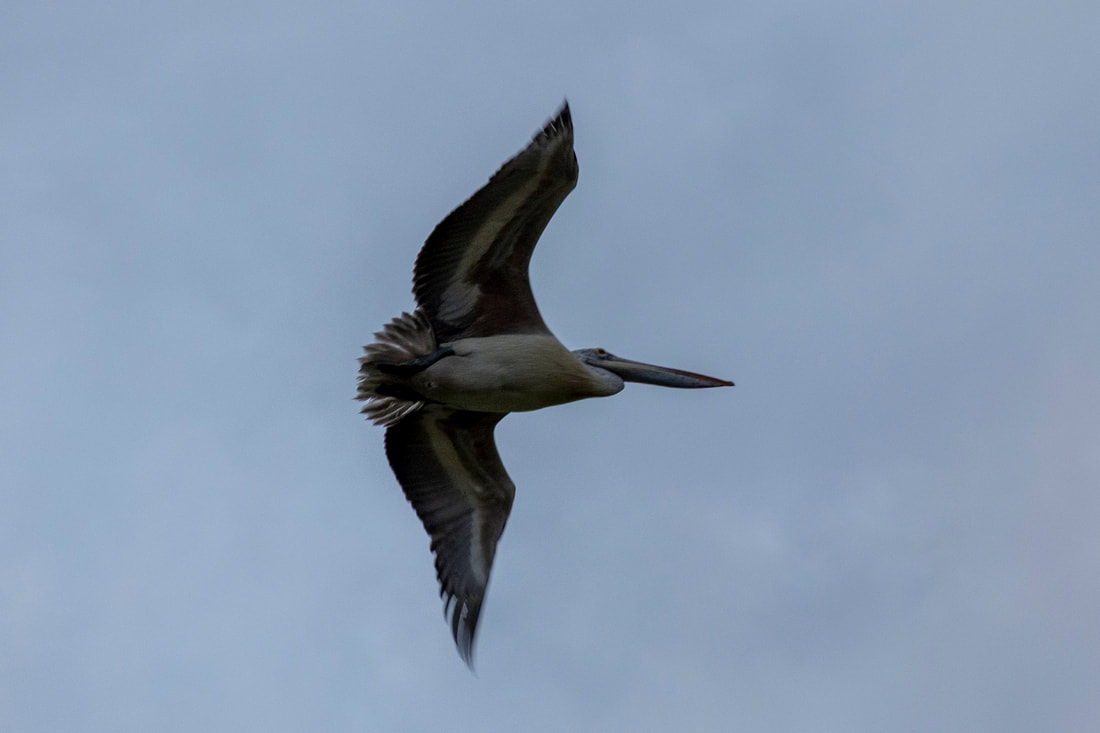
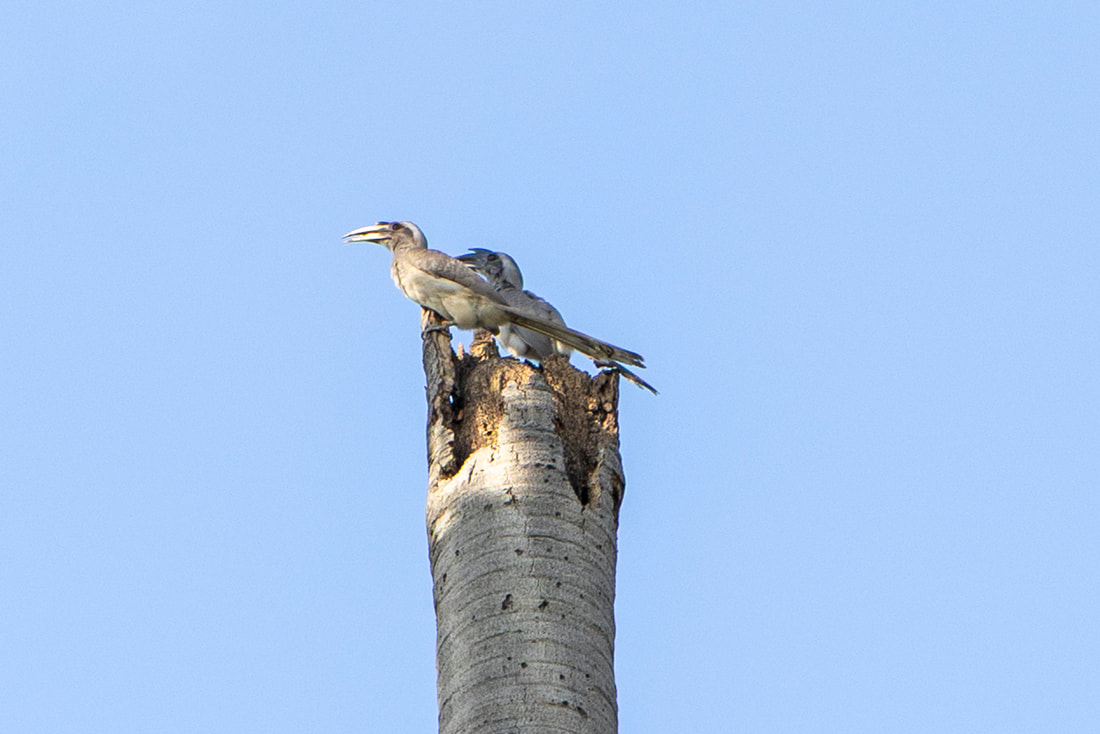
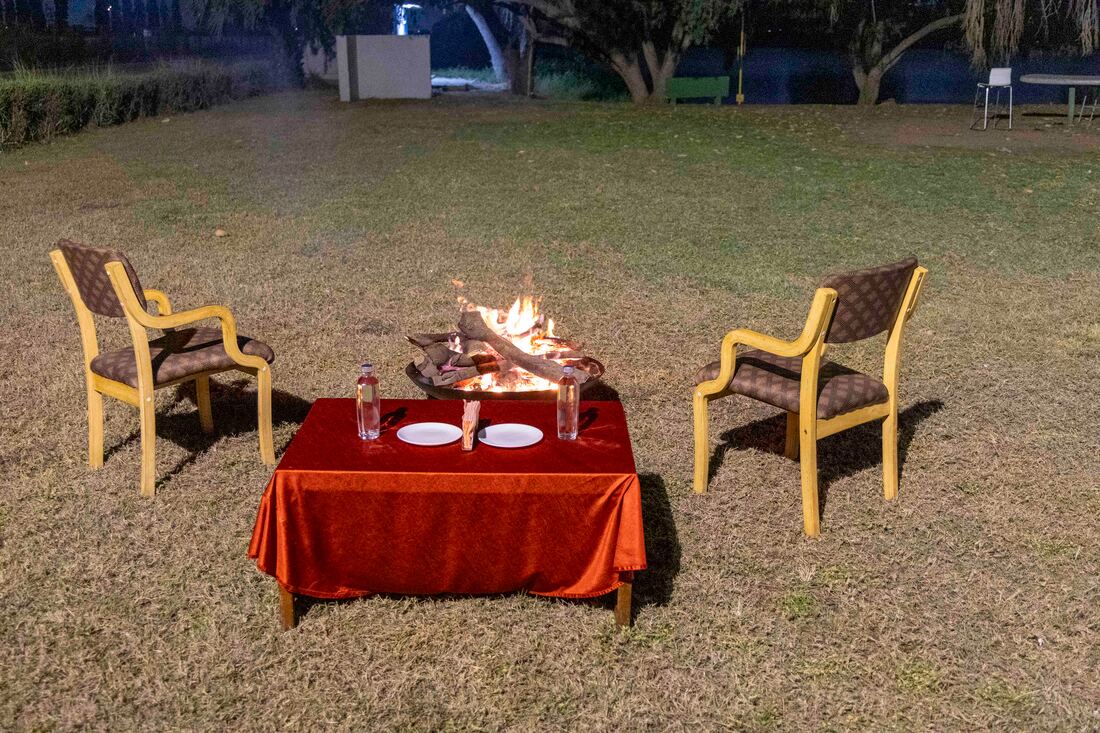
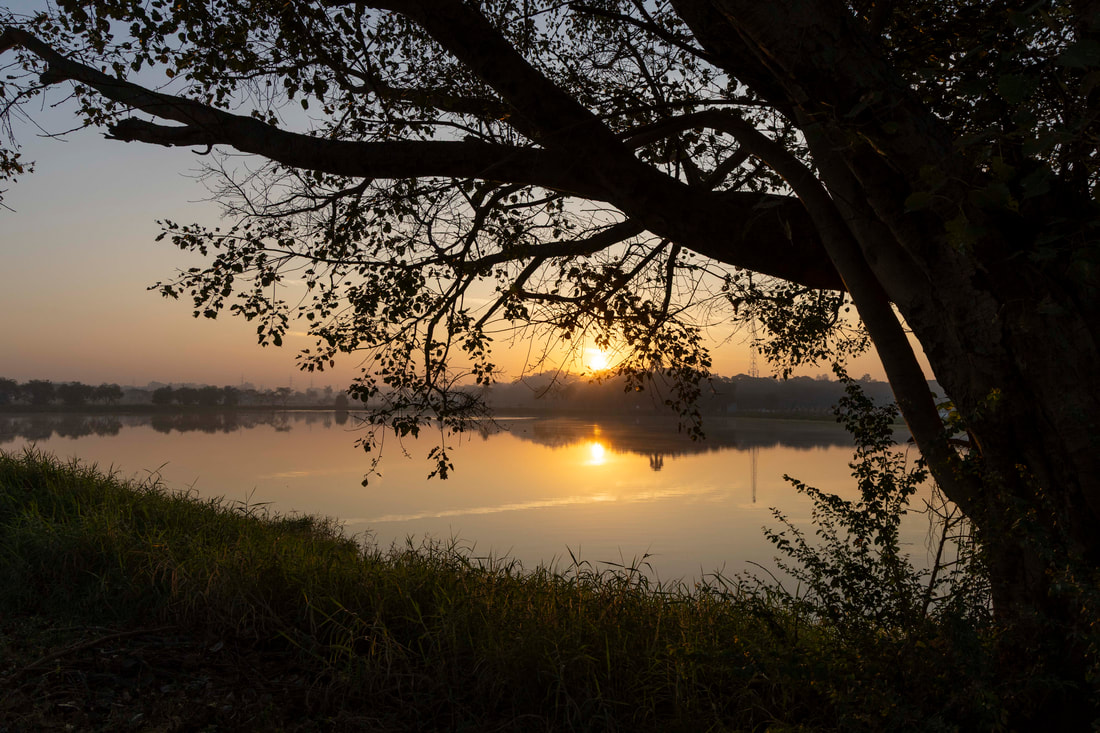
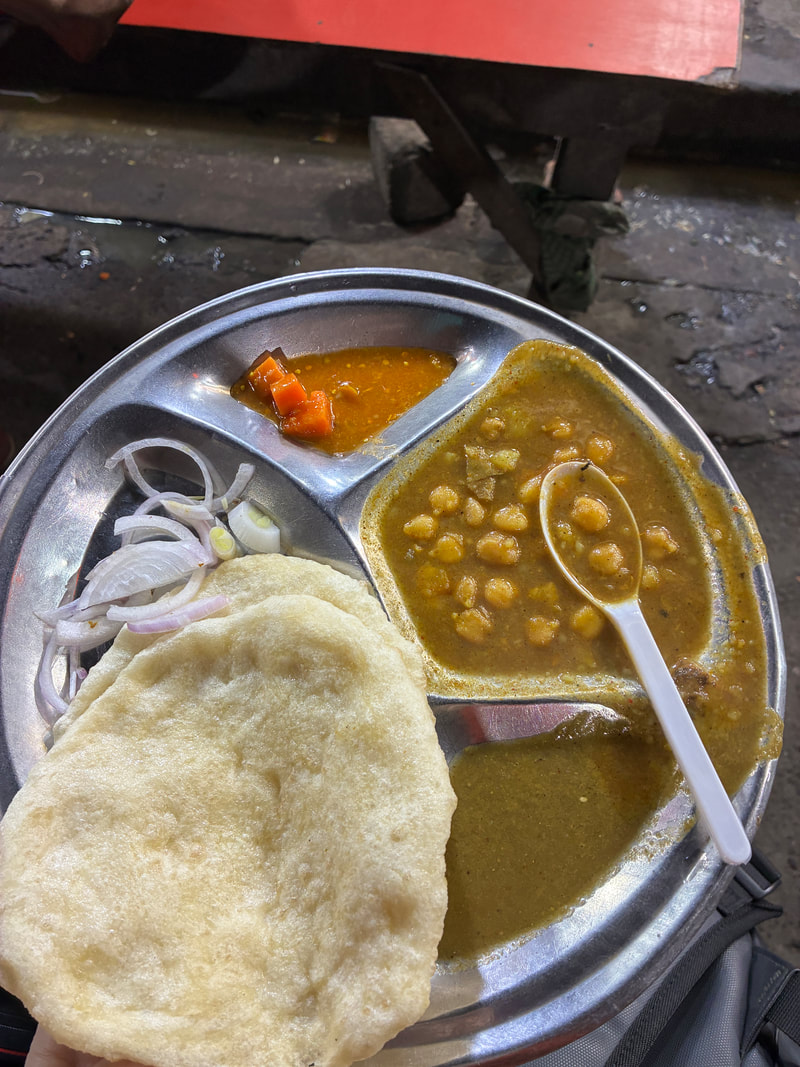
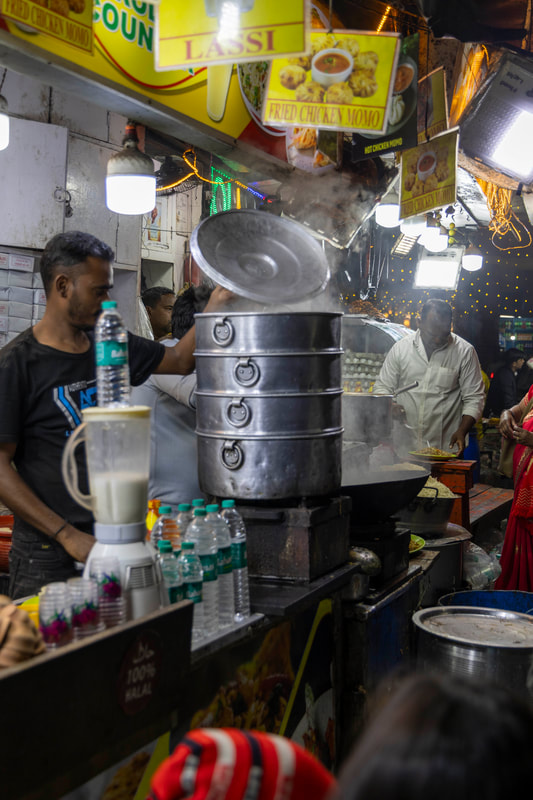
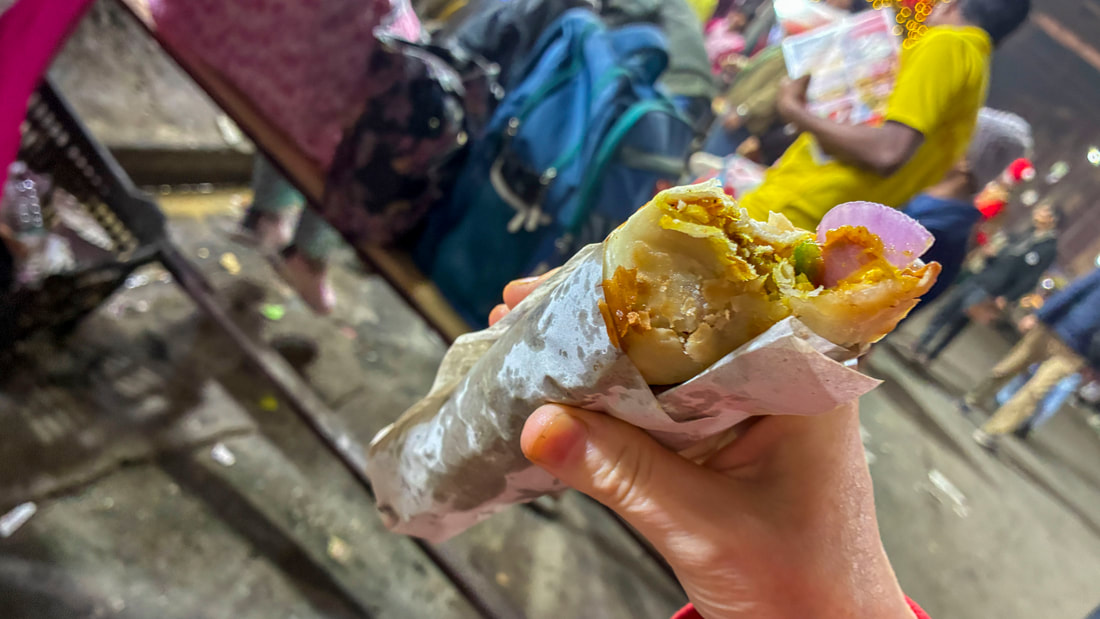
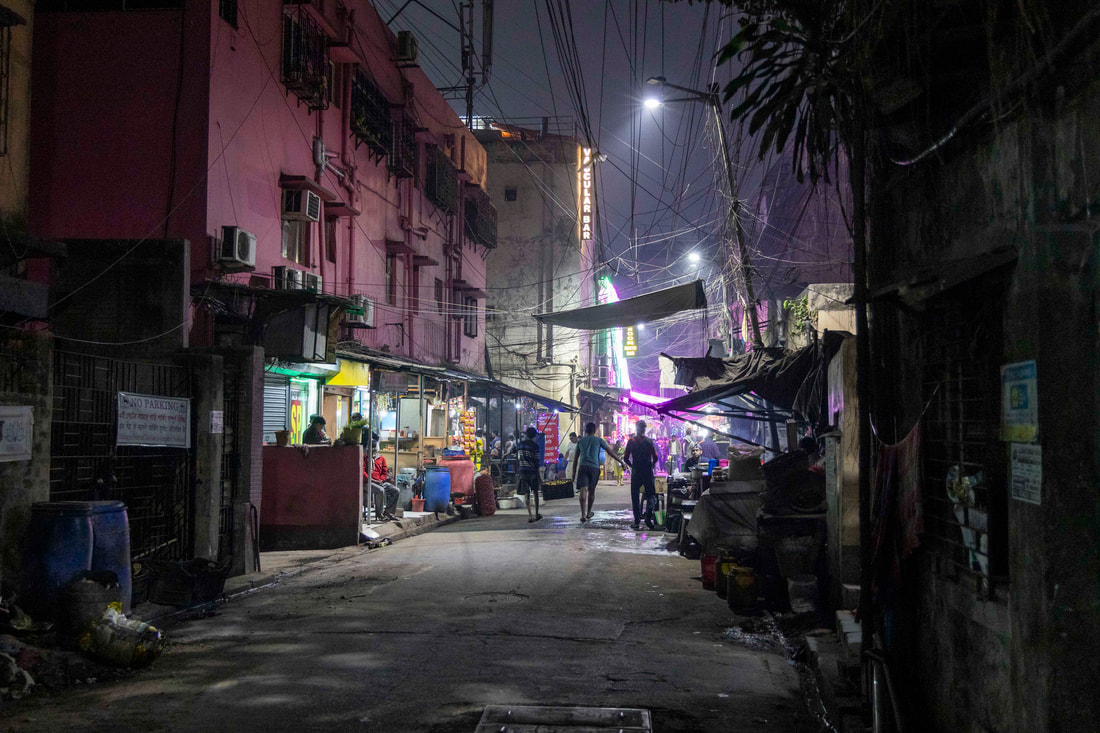
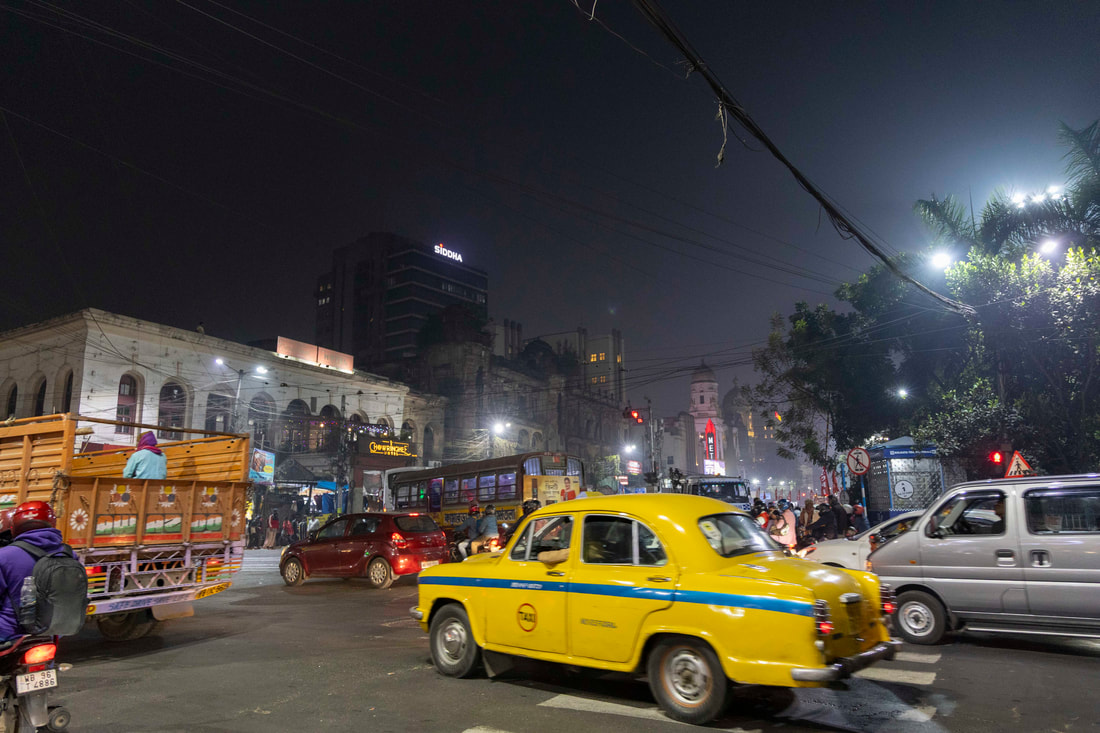
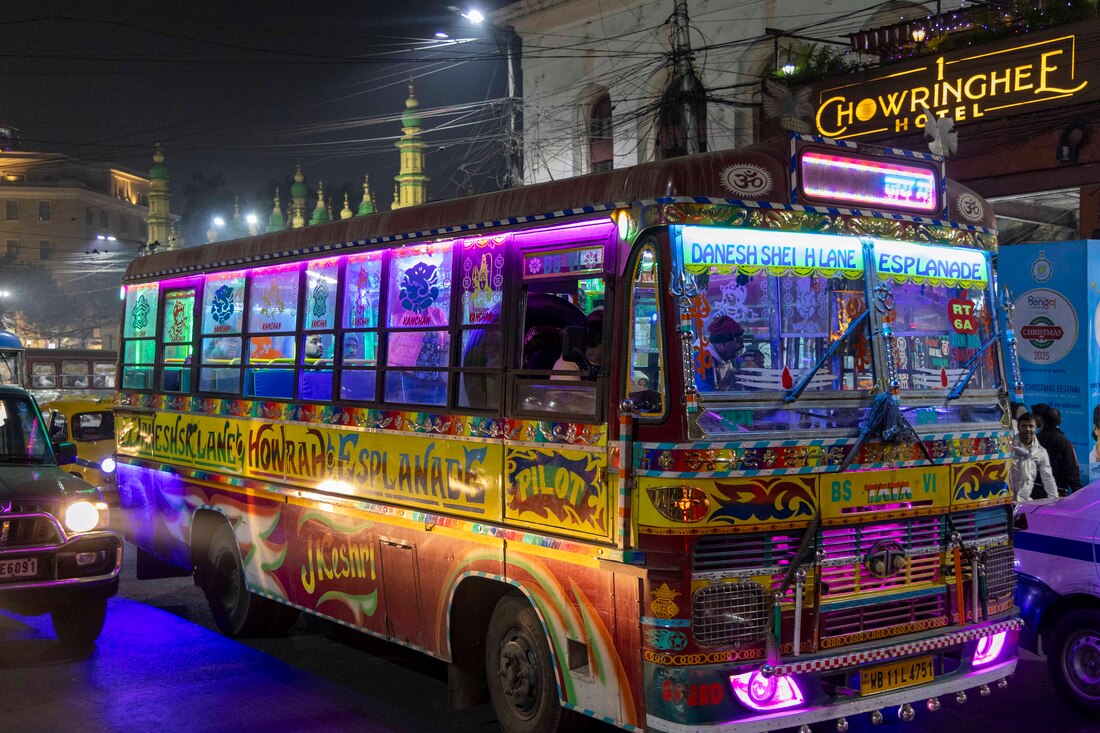
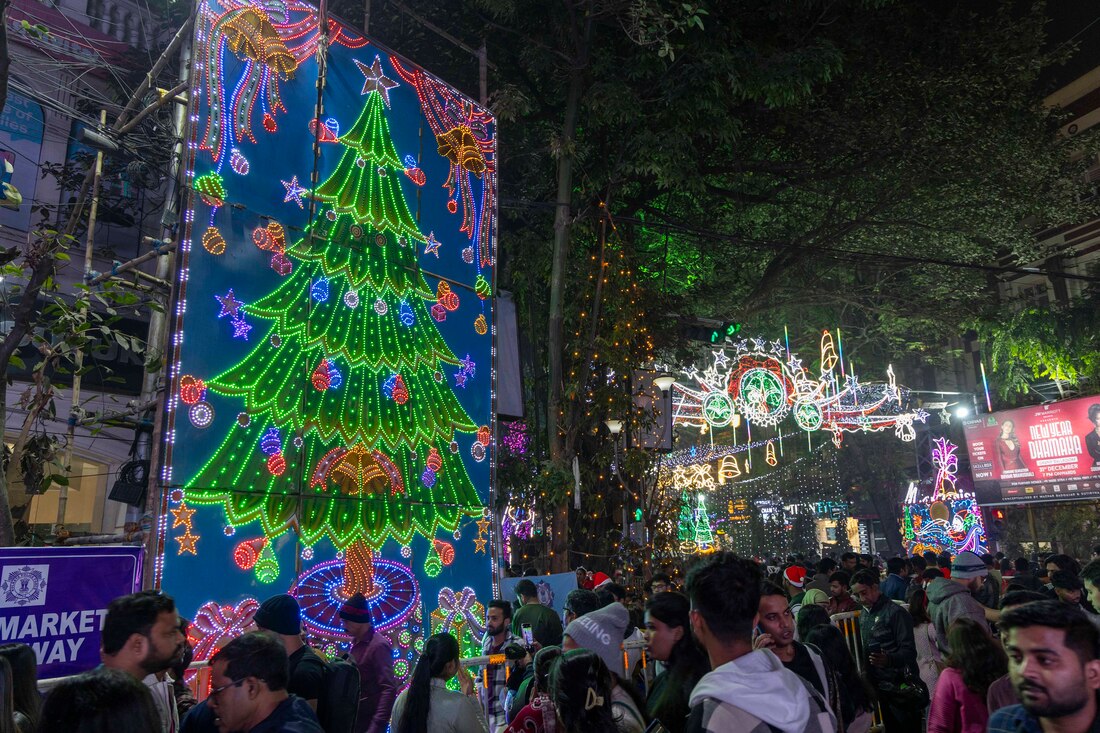
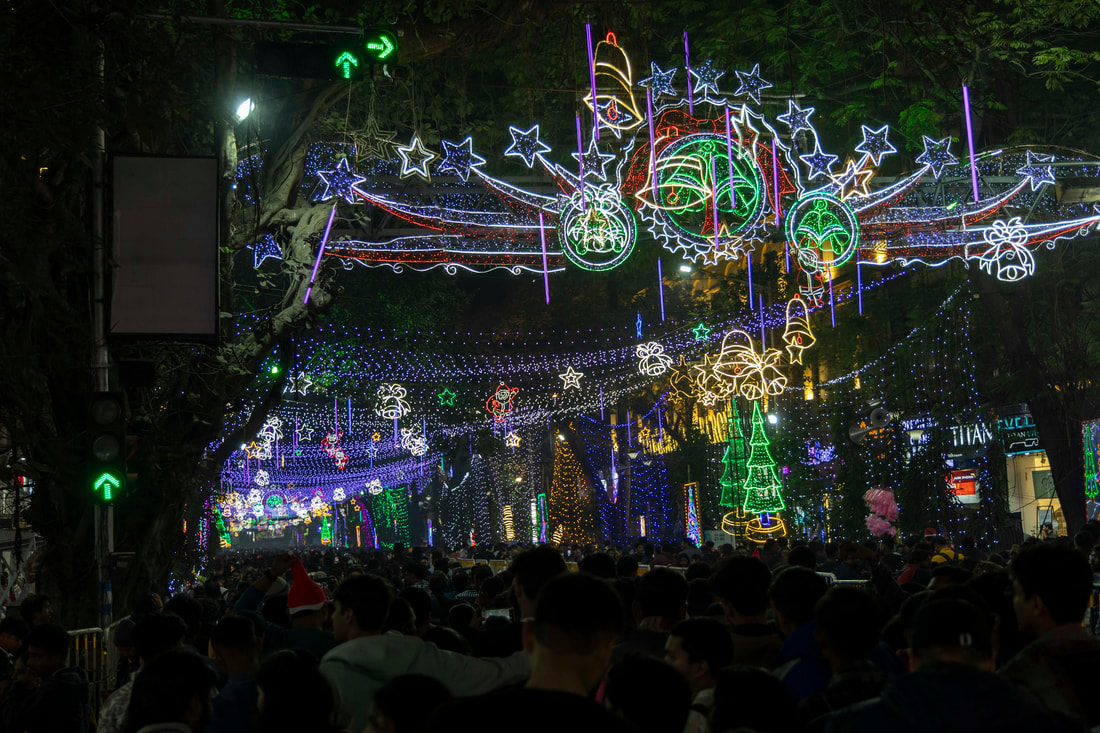
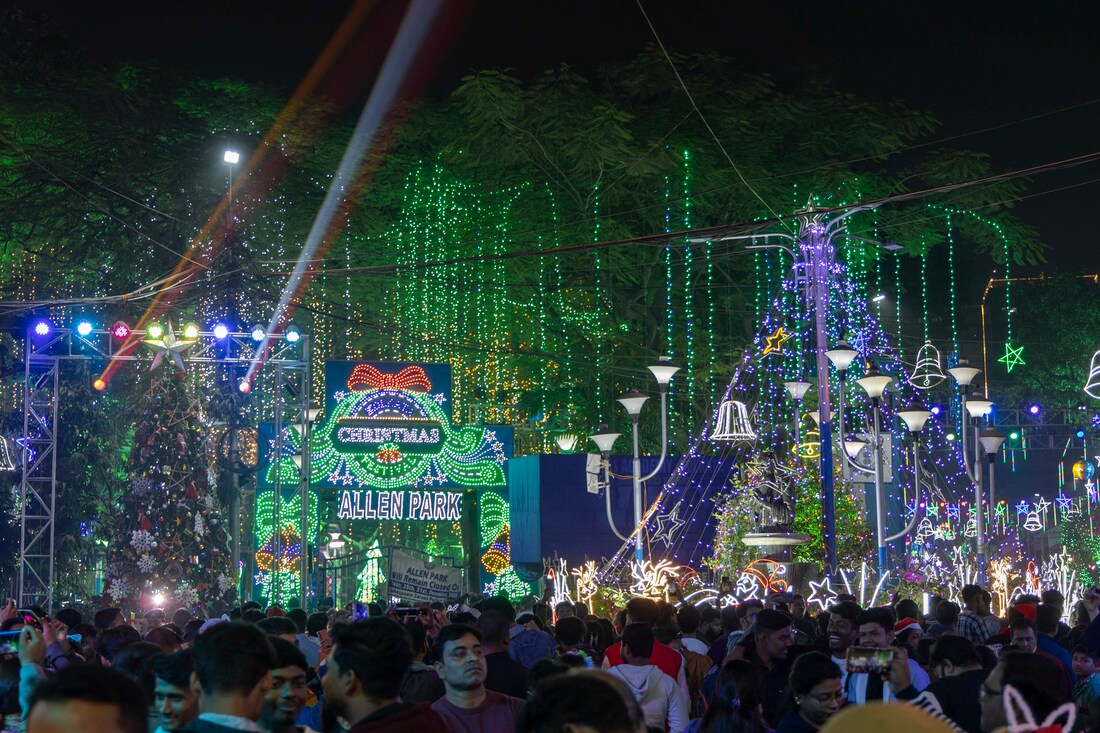
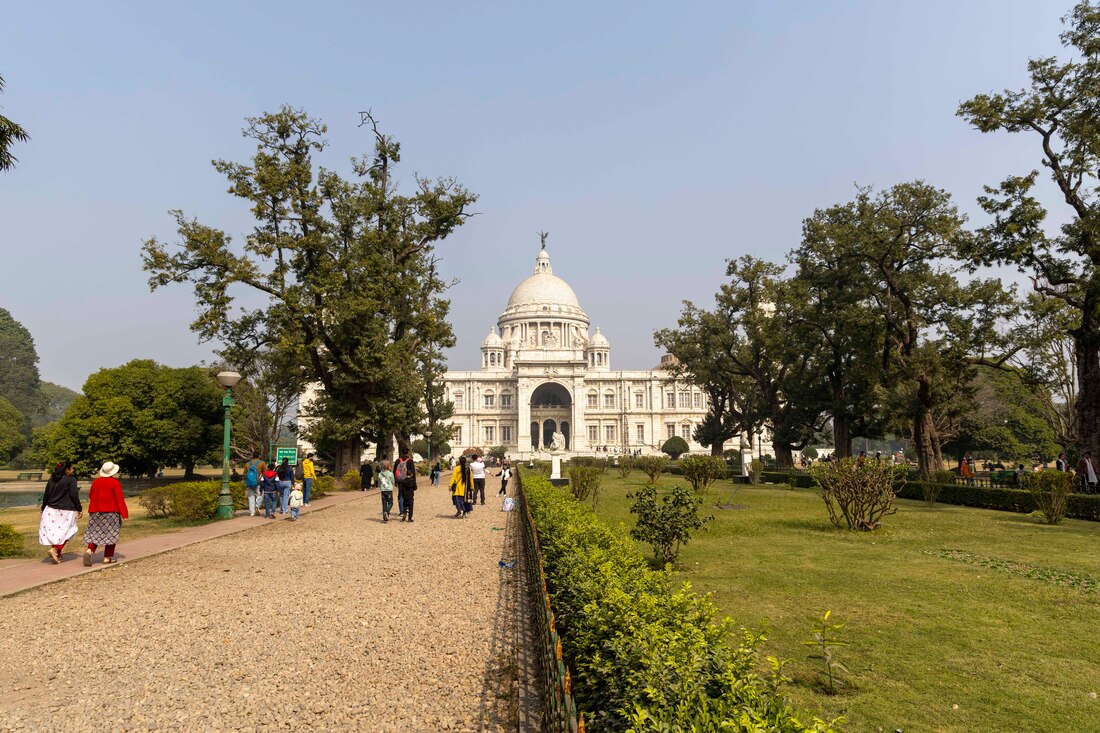
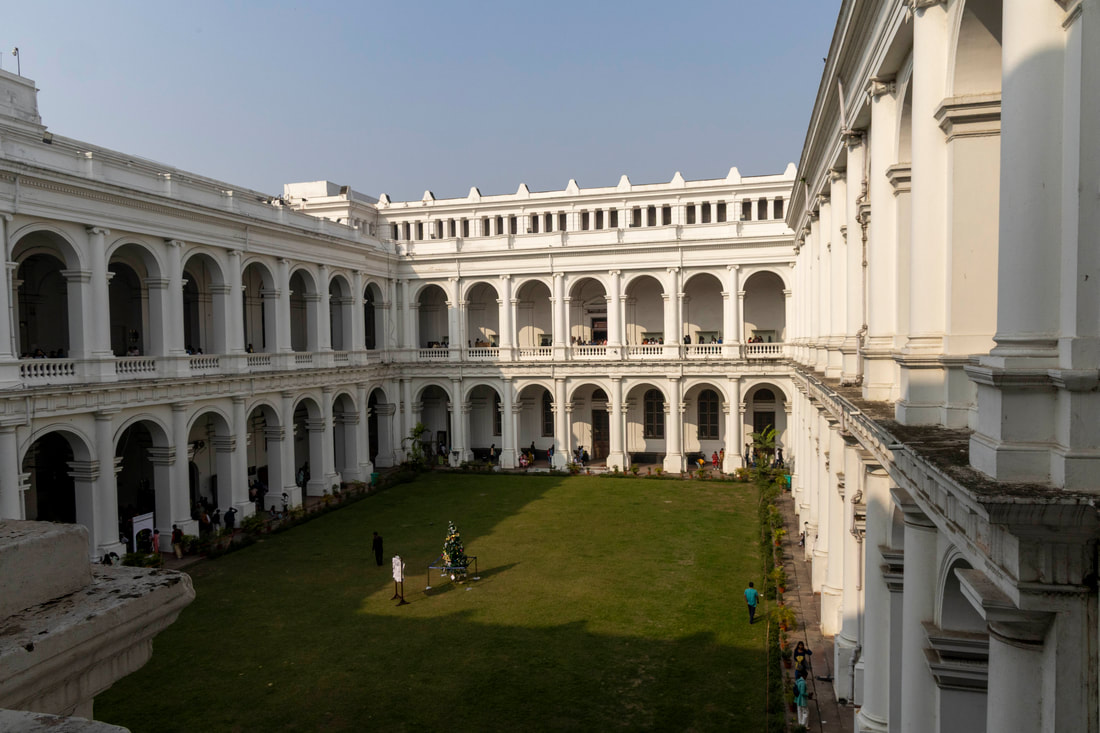
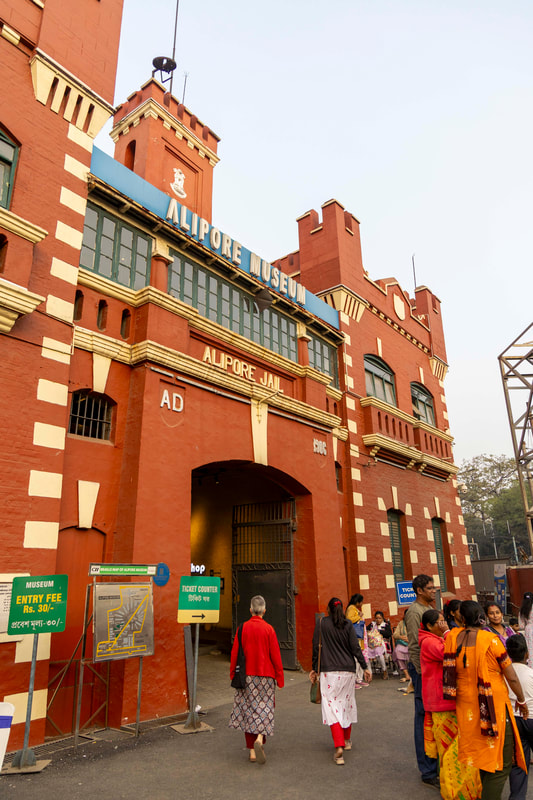
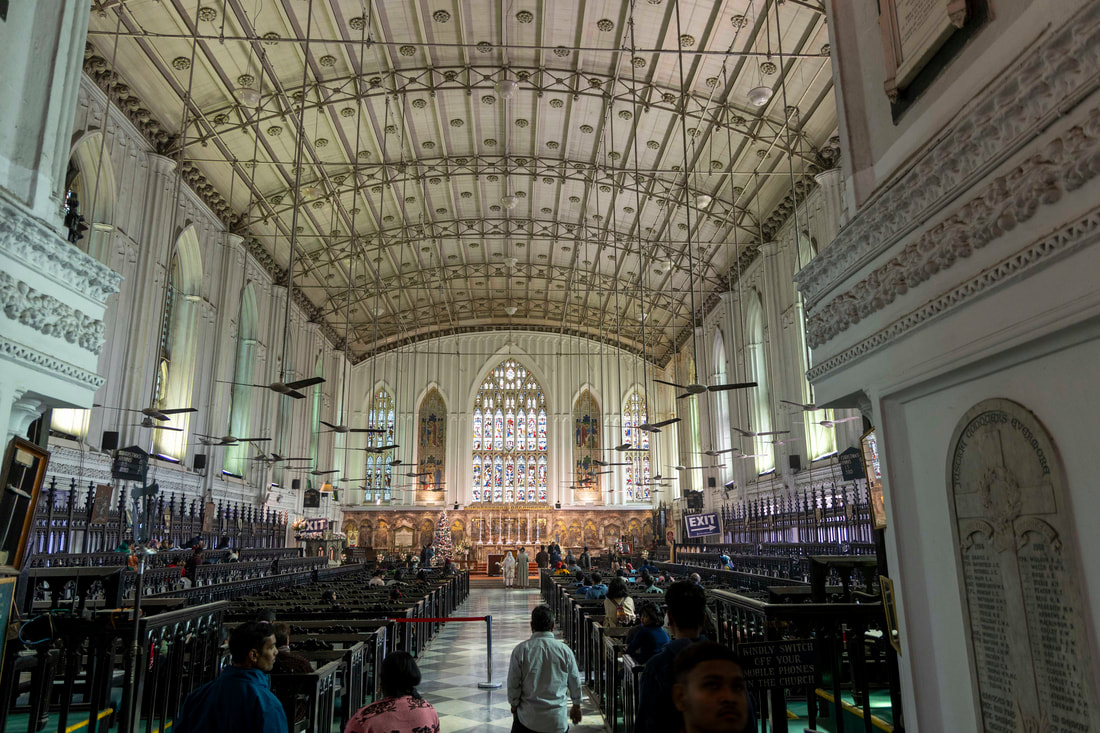
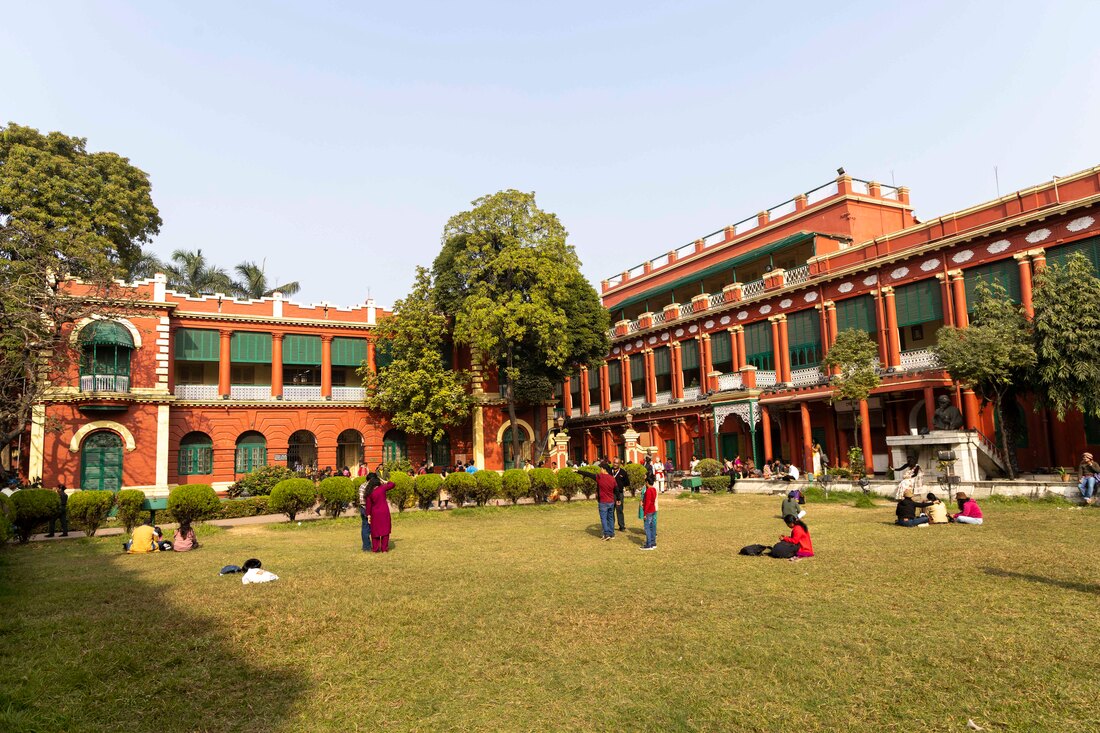
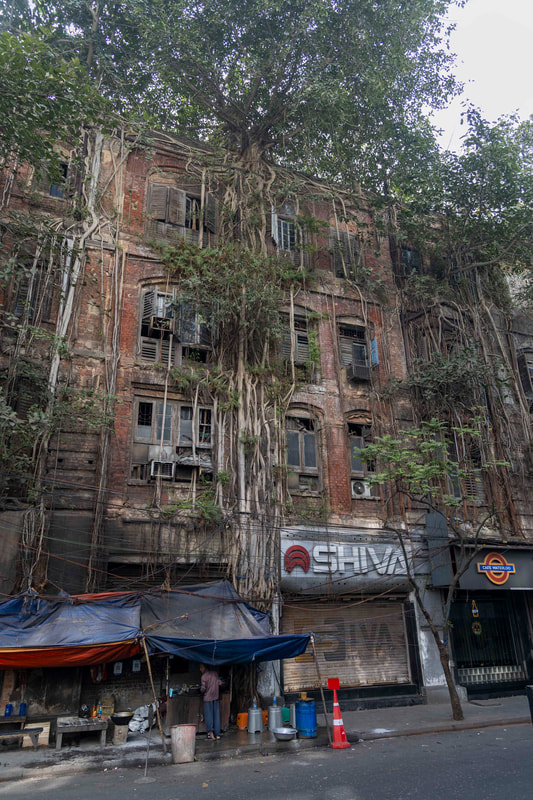
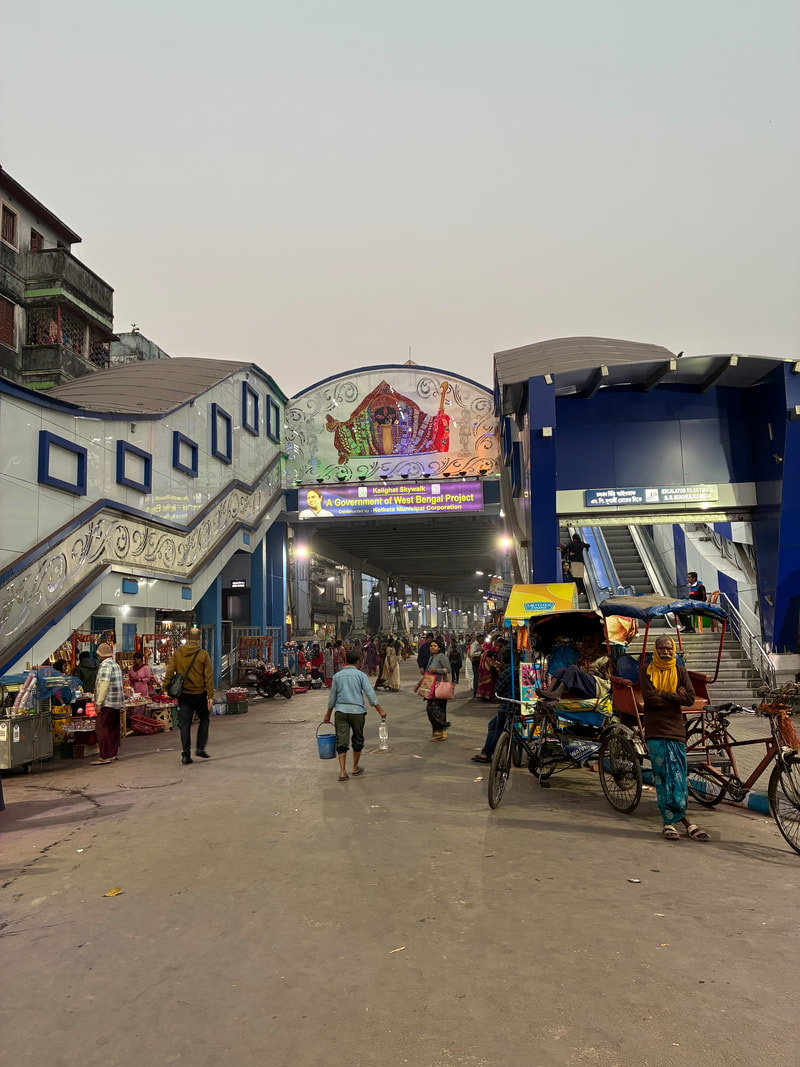
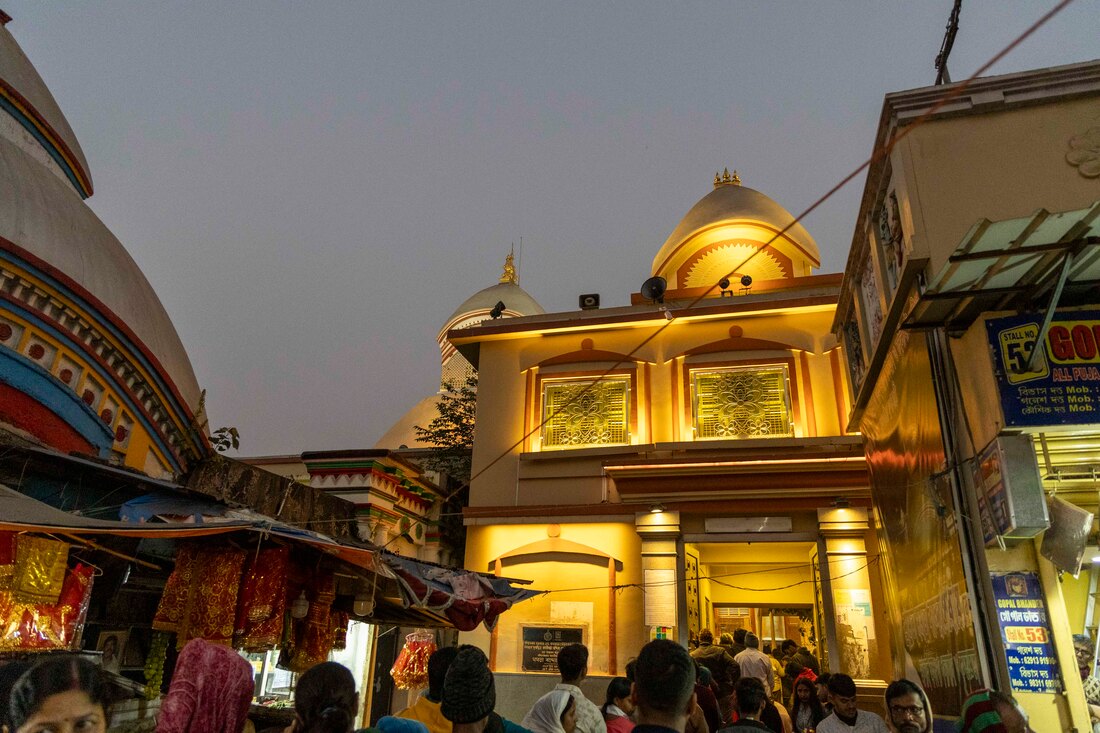
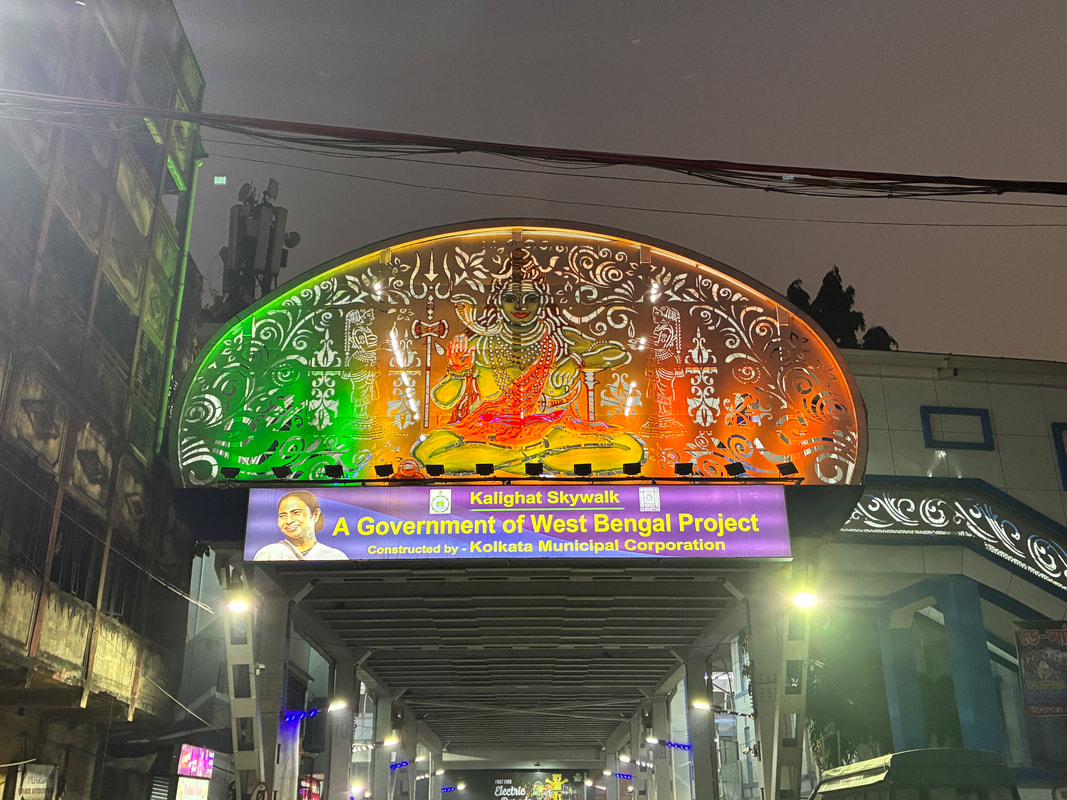
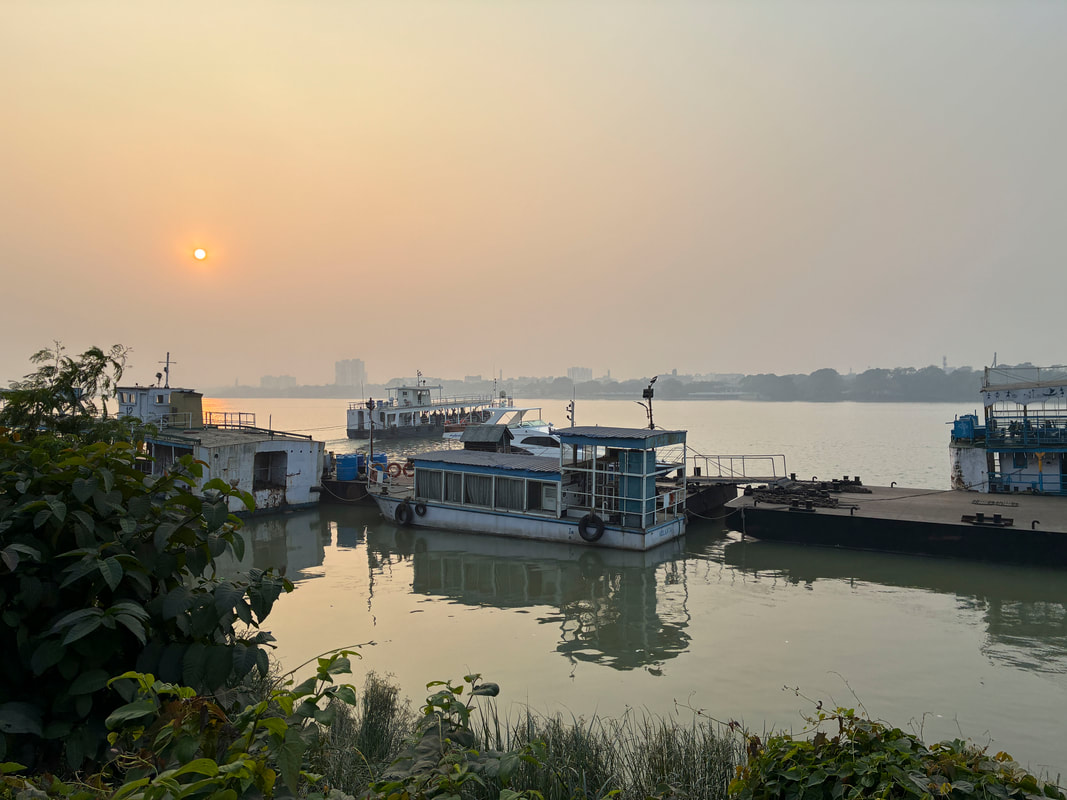
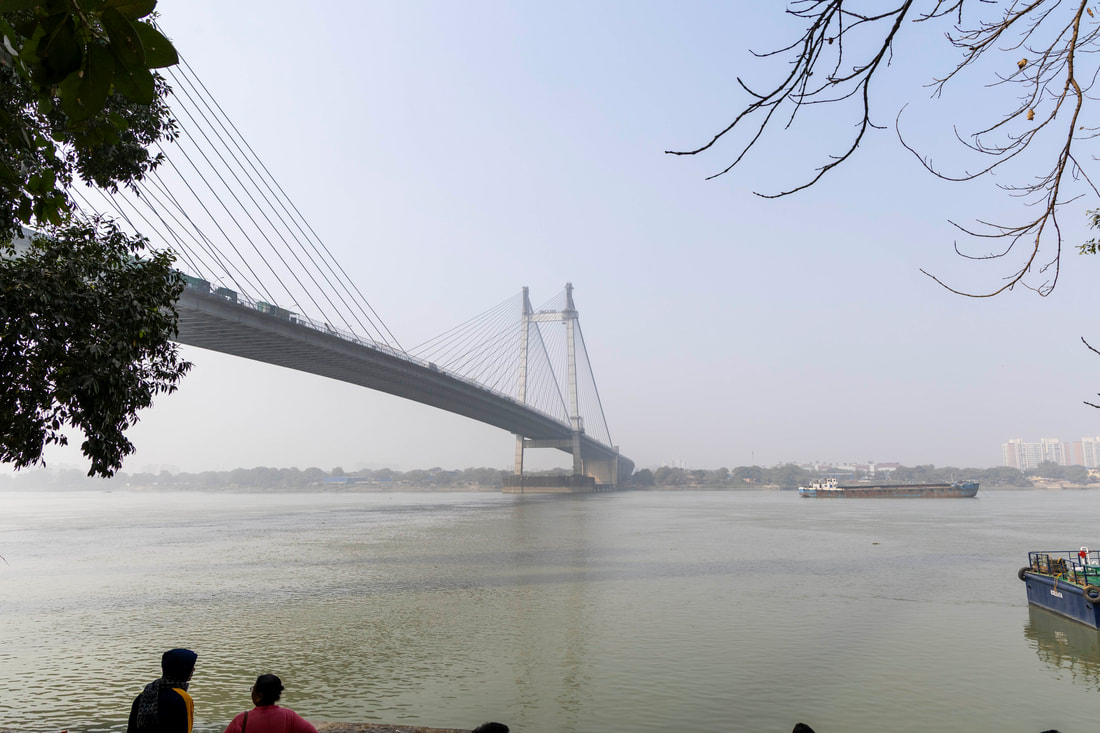
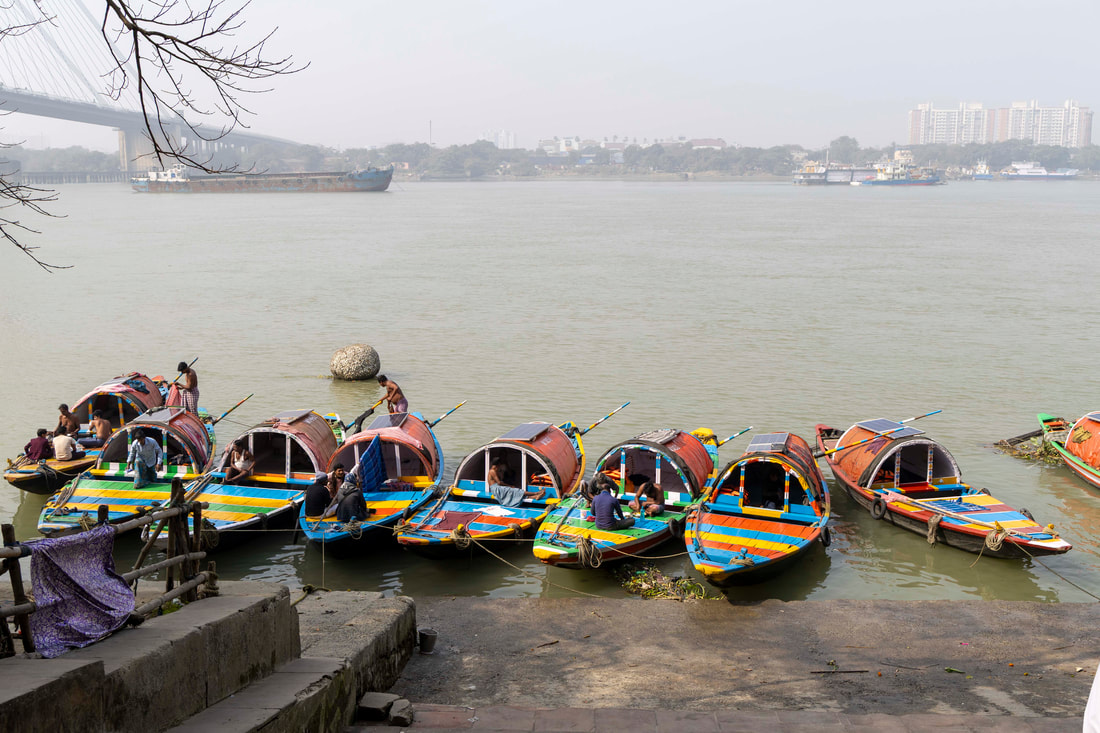
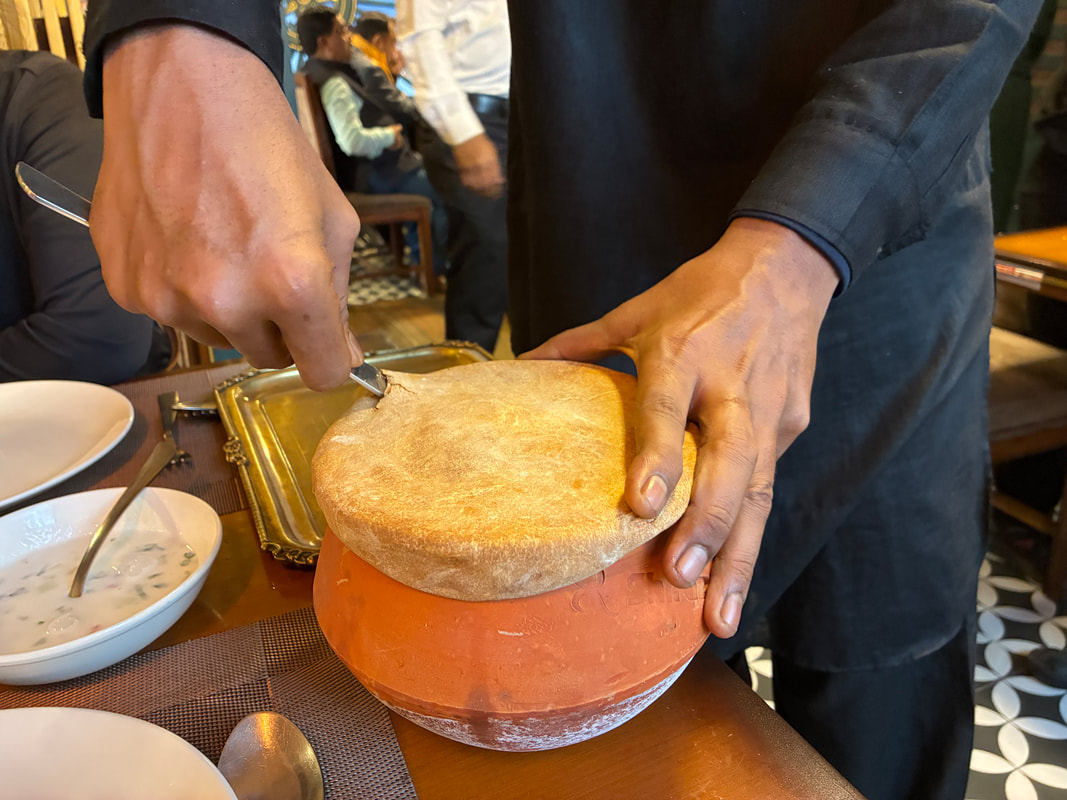
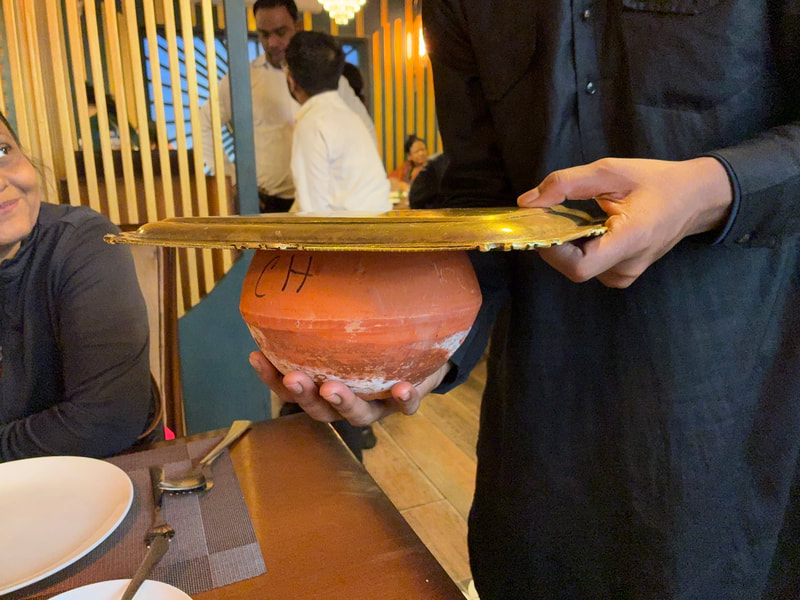
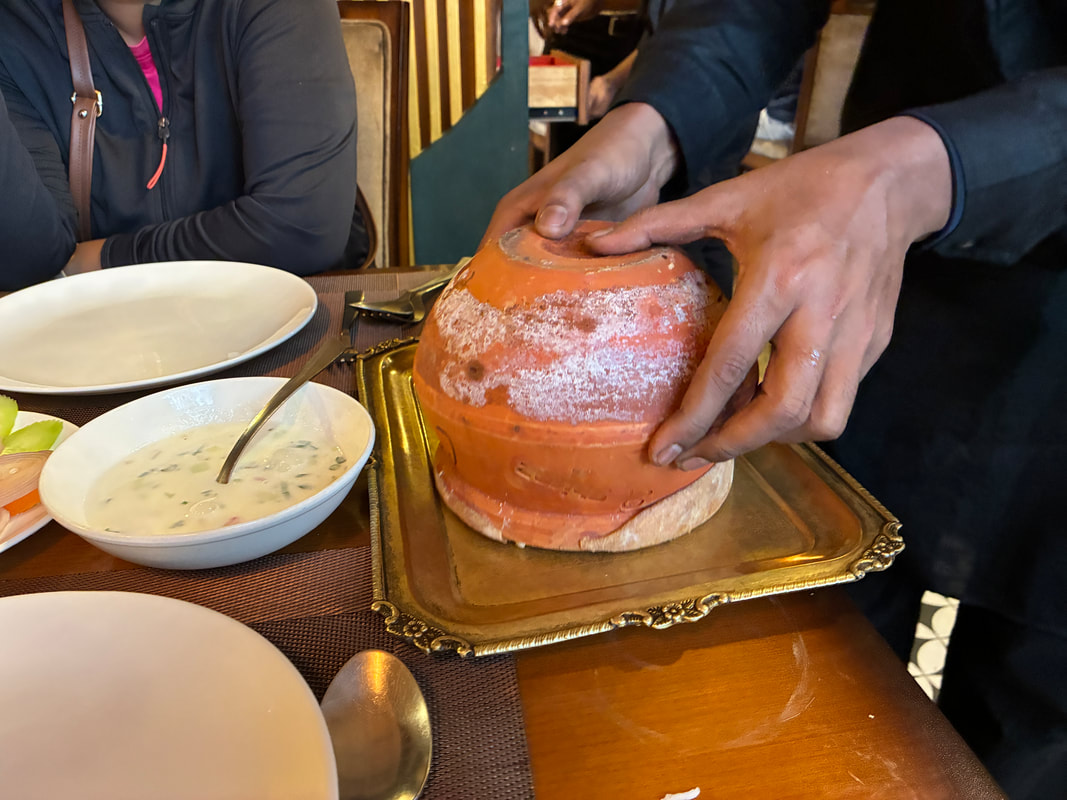
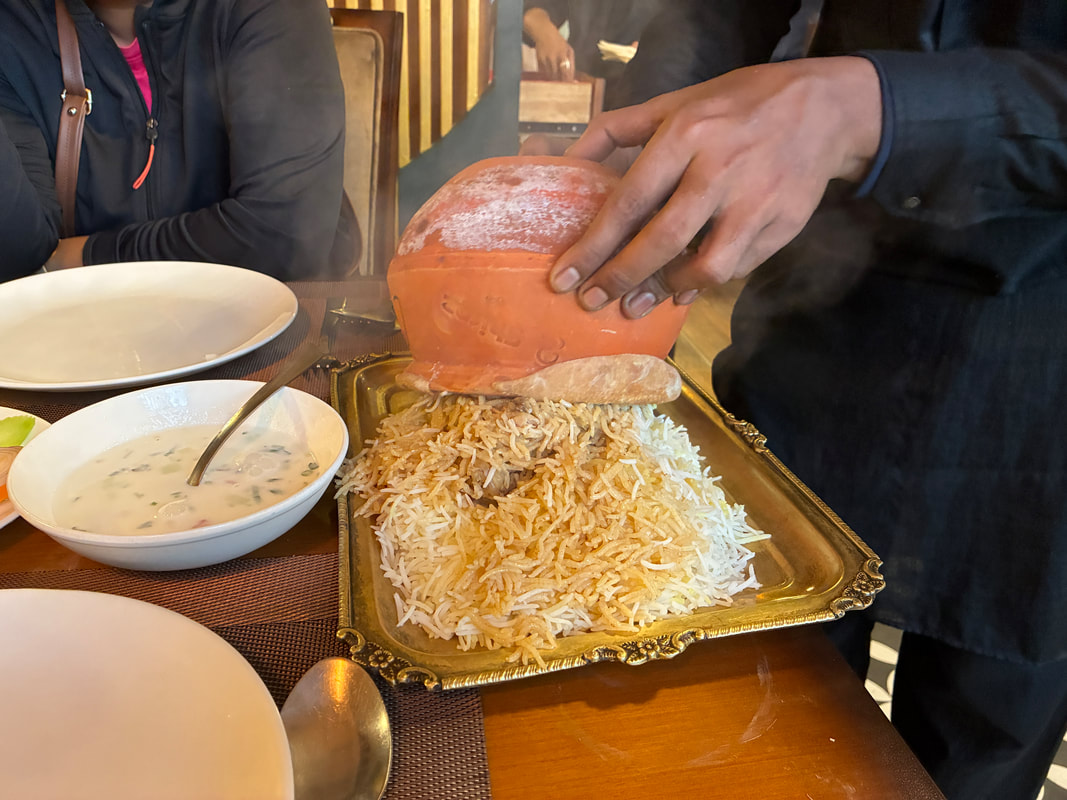
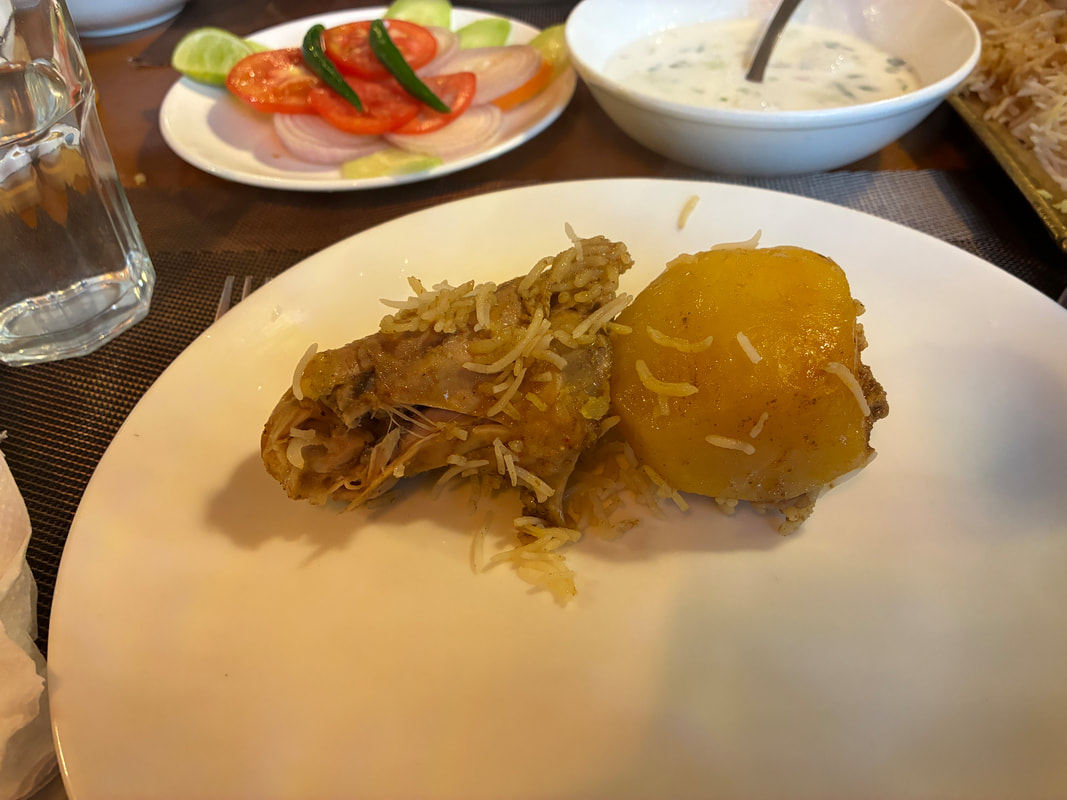
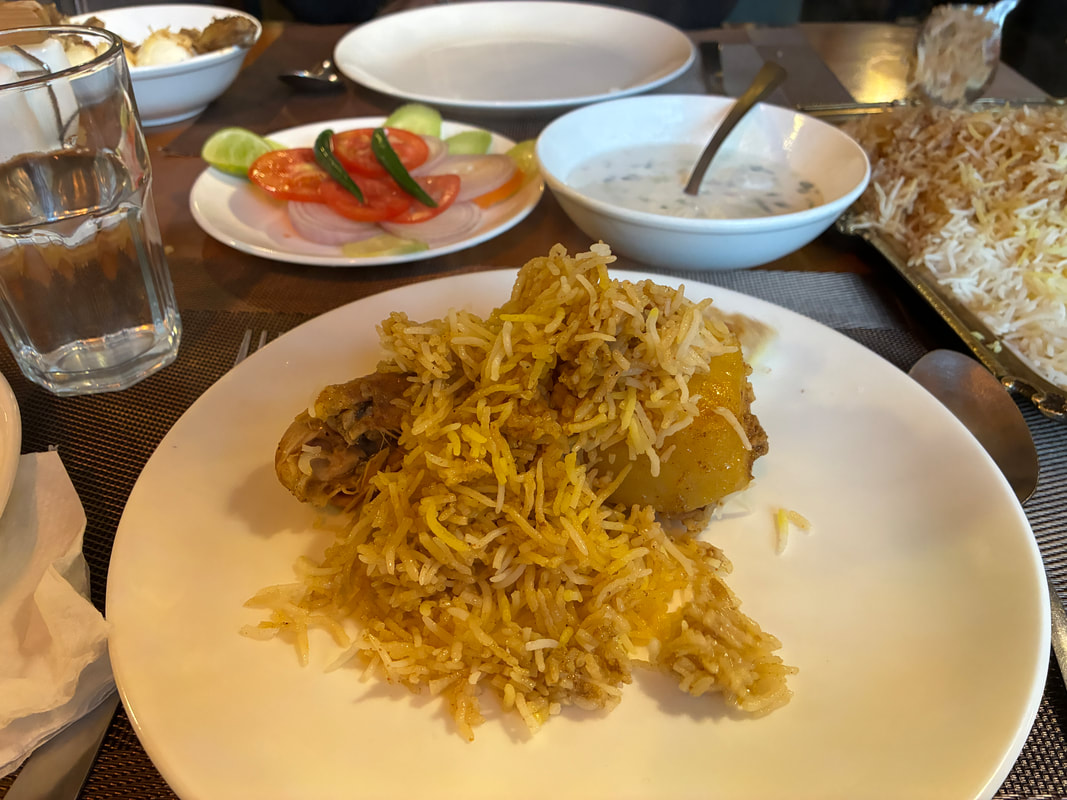
Pondicherry ist eine relativ kleine Stadt in Tamil Nadu, an der Ostküste, also am Golf von Bengalen. Wie so vieles in diesem Land, hat die Stadt leicht unterschiedliche Bezeichnungen: Puducherry ist seit 2006 der offizielle Name, bis dann hiess die Stadt Pondicherry. Sie wird oft einfach Pondy genannt. Ortsnamen werden geändert, aber viele Leute benützen die früheren Bezeichnungen. Zum Beispiel höre ich oft "Bombay" für "Mumbai". Wir müssen uns also noch mehr Namen merken 😅. Unser jüngerer Sohn und seine Freundin besuchen uns in Indien, und wir nützen das aus, um weitere Orte zu bereisen. So führt uns unsere erste dreitägige Reise nach Pondy, einer ehemals französischen Kolonie. Wir wohnen in einem wunderschönen, alten Kolonialhaus, das zu einem Hotel, bzw. Bed and Breakfast, mit vier Zimmern umgebaut wurde. Es ist mit antiken Möbeln eingerichtet, jedes Zimmer hat sein eigenes Thema; so wohnen Yashi und ich im chinesischen Zimmer, das in Rottönen mit chinesischen Bildern und Möbeln ausgestattet ist. Diese Art von Hotels sind eine Spezialität von Pondy. Die (eher) touristischen beiden Stadtteile sind zu Fuss gut zu erkunden. Es stehen noch viele Kolonialbauten, die meistens in gelber Farbe gestrichen und in sehr gutem Zustand sind. Es gibt auch einen "Ashram", also religiöse oder spirituelle Gemeinschaft, zu dem sehr viele Gebäude gehören. Diese sind grau gestrichen. Pondy ist lange französisch geblieben, bis nach der Entstehung der indischen Republik. Anscheinend trägt der französische Staat mit Geld immer noch zum Erhalt der Bauten bei und wir haben Einheimische französisch sprechen gehört. Wir flanieren an der Küste, besichtigen ein paar Tempel und Kirchen und geniessen die entspannte Stimmung. Es sind auch viele indische Gäste hier, die ebenfalls Ferien haben. Das Essen ist hervorragend, und wir entdecken wieder neue indische Speisen, wie zum Beispiel Lappa. Das ist ein indisches flaches Brot, das ähnlich wie Crêpes aussieht und mit Ei oder Fleisch gefüllt wird. Ich glaube, das gibt es auch in Sri Lanka. Leider haben wir kein Foto davon gemacht, dafür jedoch vom Thali, den wir am Ende unseres Aufenthaltes zu Mittag gegessen haben. Pondicherry is a relatively small city in Tamil Nadu, on the east coast, i.e. on the Bay of Bengal. Like so many things in this country, the city has slightly different names: Puducherry has been the official name since 2006, before that the city was called Pondicherry. It is often simply referred to as Pondy. Place names are changed, but many people still use the old names. For example, I often hear ‘Bombay’ instead of ‘Mumbai’. So we have to remember even more names 😅. Our younger son and his girlfriend are visiting us in India, and we are taking advantage of this to travel to new places. Our first three-day trip takes us to Pondy, a former French colony. We are staying in a beautiful old colonial house that has been converted into a hotel, or rather a bed and breakfast, with four rooms. It is furnished with antique furniture, and each room has its own theme; Yashi and I are staying in the Chinese room, which is decorated in shades of red with Chinese pictures and furniture. This type of hotel is a speciality of Pondy. The two (more) touristy parts of the city are easy to explore on foot. There are still many colonial buildings, most of which are painted yellow and in very good condition. There is also an ‘ashram’, a religious or spiritual community, which includes a large number of buildings. These are painted grey. Pondy remained French for a long time, until after the creation of the Indian Republic. Apparently, the French state still contributes money to the preservation of the buildings, and we heard locals speaking French. We stroll along the coast, visit a few temples and churches, and enjoy the relaxed atmosphere. There are also many Indian guests here who are also on holiday. The food is excellent, and we discover new Indian dishes, such as lappa. This is a flat Indian bread that looks similar to crêpes and is filled with egg or meat. I think it's also available in Sri Lanka. Unfortunately, we didn't take a photo of it, but we did take one of the thali we had for lunch at the end of our stay. Pondichéry est une ville relativement petite située dans le Tamil Nadu, sur la côte est, au bord du golfe du Bengale. Comme beaucoup d'autres choses dans ce pays, la ville porte plusieurs noms légèrement différents : Puducherry est son nom officiel depuis 2006, mais avant cela, elle s'appelait Pondichéry. On l'appelle souvent simplement Pondy. Les noms de lieux changent, mais beaucoup de gens continuent d'utiliser les anciens noms. Par exemple, j'entends souvent « Bombay » à la place de « Mumbai ». Il faut donc retenir encore plus de noms 😅. Notre fils cadet et sa partenaire nous rendent visite en Inde, et nous en profitons pour visiter d'autres endroits. Notre premier voyage de trois jours nous mène ainsi à Pondy, une ancienne colonie française. Nous logeons dans une magnifique maison coloniale ancienne qui a été transformée en hôtel, ou plutôt en bed and breakfast, avec quatre chambres. Elle est meublée avec des meubles anciens, chaque chambre a son propre thème ; Yashi et moi logeons ainsi dans la chambre chinoise, décorée dans des tons rouges avec des tableaux et des meubles chinois. Ce type d'hôtels est une spécialité de Pondy. Les deux quartiers (plutôt) touristiques peuvent être facilement explorés à pied. Il y a encore de nombreux bâtiments coloniaux, pour la plupart peints en jaune et en très bon état. Il y a également un « ashram », c'est-à-dire une communauté religieuse ou spirituelle, qui comprend de nombreux bâtiments. Ceux-ci sont peints en gris. Pondy est restée française longtemps, jusque après la création de la République indienne. Apparemment, l'État français continue de contribuer financièrement à l'entretien des bâtiments et nous avons entendu des habitants parler français. Nous flânons sur la côte, visitons quelques temples et églises et profitons de l'ambiance détendue. Il y a également beaucoup de touristes indiens qui sont eux aussi en vacances. La nourriture est excellente et nous découvrons de nouveaux plats indiens, comme le lappa : un pain plat indien qui ressemble à une crêpe et qui est fourré d'œufs ou de viande. Je crois qu'on en trouve aussi au Sri Lanka. Malheureusement, nous n'avons pas pris de photo, mais nous avons immortalisé le thali que nous avons mangé à la fin de notre séjour. Isa hat mich mit vielen Überraschungen zu meinem Geburtstag verwöhnt. Am Dienstagnachmittag habe ich dafür frei genommen. Morgens war ich mit ein paar KollegInnen an einem Engineering College hier in Hyderabad, um für Swiss Re Werbung zu machen. Es waren ca. 400 Studentinnen, es ist ein College nur für Frauen, im Raum. Zum Abschluss hat eine Kollegin erwähnt, dass ich heute Geburtstag habe, und der ganz Raum hat «Happy Birthday» für mich gesungen. Ein einmaliges Erlebnis! Isa holte mich danach mit unserem Fahrer ab und wir fuhren zu einem Park etwas ausserhalb, dem Forestrek Park. Dort haben wir uns ein Plätzchen im Schatten unter einem Baum gesucht und gepicknickt. Taboulé und Randensalat, Avocadomousse und Darvidas, und, die nächste Überraschung, einen Apfelkuchen, so wie ihn meine Mutter macht. Wohl genährt fuhren wir ins Hotel Le Meridien. Dort kein Essen , sondern Verwöhnprogramm im Spa mit 90 Minuten Massage. Das tat uns beiden sehr gut. Obwohl wir im selben Raum waren, unterhielten wir uns nicht, sondern genossen einfach nur die Massage. Abends feines Essen in unserem Lieblingsrestaurant «Exoctica», Chaat und Mutton Byriani, mit einem Glas Wein. Von dort können wir zu Fuss nach Hause, was wir immer gerne machen, ausser es ist Monsun ;-). Am Wochenende gab es noch mehr Überraschungen. Wir fuhren Samstagvormittag los, ich wusste nicht wohin, ausser dass es in Hyderabad ist. Unser Ziel war ICRISAT. Dies ist ein Internationales Forschungsinstitut für Nutzpflanzen in den tropischen und subtropischen Trockengebieten, und nicht öffentlich. Isa war mit ihrer Frauengruppe mal dort und konnte so das Wochenende für uns organisieren. Wir haben erfahren, dass wir die ersten waren, die dieses neue Programm gemacht haben, und sie es weiter anbieten wollen, aber nur auf Empfehlung. Für die Forschenden von ausserhalb, und die Angestellten, gibt es verschiedene Wohnquartiere oder Häuser, wir hatten ein Appartement im Guestel (Gästehaus). Nach dem Mittagessen hatten wir Zeit für uns um das Gelände um das Guestel etwas zu entdecken. Das ganze Gelände ist über 14 km² gross! Nach dem High Tea beim Ganesha Idol, eine über 1000 Jahre alte Ganesha Statue, die auf dem Gelände gefunden wurde, ging es auf eine Heritage Tour. Auf dem Gelände gibt es einen alten Tempel, auf dem ein Baum wächst, weiter einen Shiva Tempel mit einer Moschee und einer Kirche daneben, und einem alten Schloss, wo früher die Wertsachen der lokalen Bevölkerung aufbewahrt wurden. Den Sonnenuntergang gab es nicht, es war zu bedeckt. Vor dem Abendessen noch Night Safari, um Vögel, Wildkatzen und Wildschweine zu entdecken. Zum Abschluss noch ein Feuer in einem kleinen Park für uns. Sonntag war früh aufstehen angesagt, um Vögel mit einem Naturalisten zu beobachten. Wir haben auch hier viele verschiedene Vogelarten gesehen, und kommen auf den Geschmack für Vogelbeobachtung. Nach dem indischen Frühstück fahren wir mit Fahrrädern über die Feldwege, und sehen neben Vögeln auch ein Wildschwein. Mittagessen im Park, wo wir das Feuer hatten, bevor nach Hause fahren. Es war ein wunderbares Erlebnis für mich, mit vielen tollen Überraschungen! Isa spoiled me with lots of surprises for my birthday. I took Tuesday afternoon off work. In the morning, I was at an engineering college here in Hyderabad with a few colleagues to promote Swiss Re. There were around 400 students in the room – it's a women-only college. At the end, a colleague mentioned that it was my birthday, and the whole room sang ‘Happy Birthday’ to me. A unique experience! Isa picked me up afterwards with our driver and we drove to a park just outside the city, Forestrek Park. There we found a spot in the shade under a tree and had a picnic. Tabbouleh and beetroot salad, avocado mousse and Darvidas, and, the next surprise, an apple cake just like my mother makes. Well fed, we drove to the Le Meridien hotel. No food there, but a pampering programme at the spa with a 90-minute massage. This did us both a world of good. Although we were in the same room, we didn't talk, but just enjoyed the massage. In the evening, we had a fine meal at our favourite restaurant, ‘Exoctica’, chaat and mutton biryani, with a glass of wine. From there, we can walk home, which we always like to do, except when it's monsoon season ;-). There were even more surprises at the weekend. We set off in Saturday morning, I didn't know where we were going, except that it was in Hyderabad. Our destination was ICRISAT. This is an international research institute for crops in tropical and subtropical dry areas, and it is not open to the public. Isa had been there with her women's group and was able to organise the weekend for us. We learned that we were the first to do this new programme and that they want to continue offering it, but only on recommendation. For researchers from outside and employees, there are various residential quarters or houses; we had an apartment in the Guestel (guest house). After lunch, we had some free time to explore the grounds around the Guestel. The entire site covers over 14 km²! After high tea at the Ganesha Idol, a Ganesha statue over 1,000 years old that was found on the grounds, we went on a heritage tour. There is an old temple on the grounds with a tree growing on it, a Shiva temple with a mosque and a church next to it, and an old castle where the valuables of the local population used to be kept. There was no sunset as it was too overcast. Before dinner, we went on a night safari to spot birds, wild cats and wild boars. To round off the evening, we had a bonfire in a small park. On Sunday, we got up early to go bird watching with a naturalist. We saw many different species of birds here too, and are developing a taste for bird watching. After an Indian breakfast, we cycled along the dirt tracks and saw birds as well as a wild boar. We had lunch in the park where we had the bonfire before we drove home. It was a wonderful treat for me, with many great surprises! 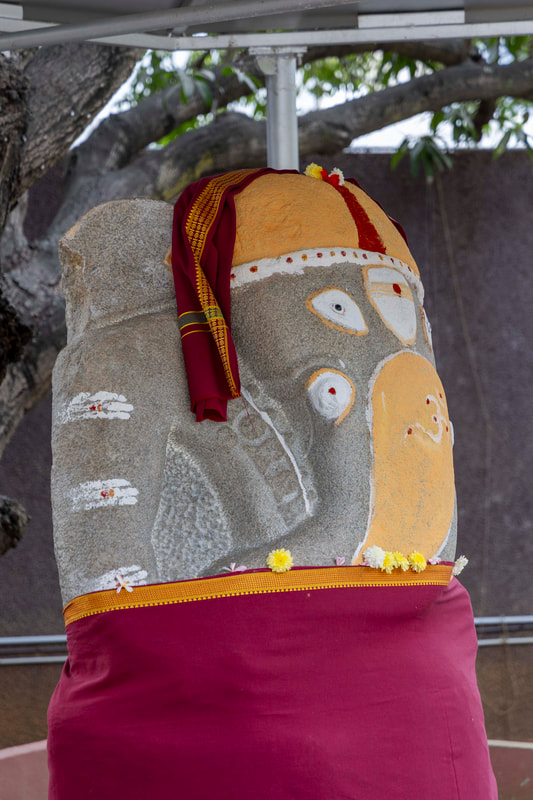 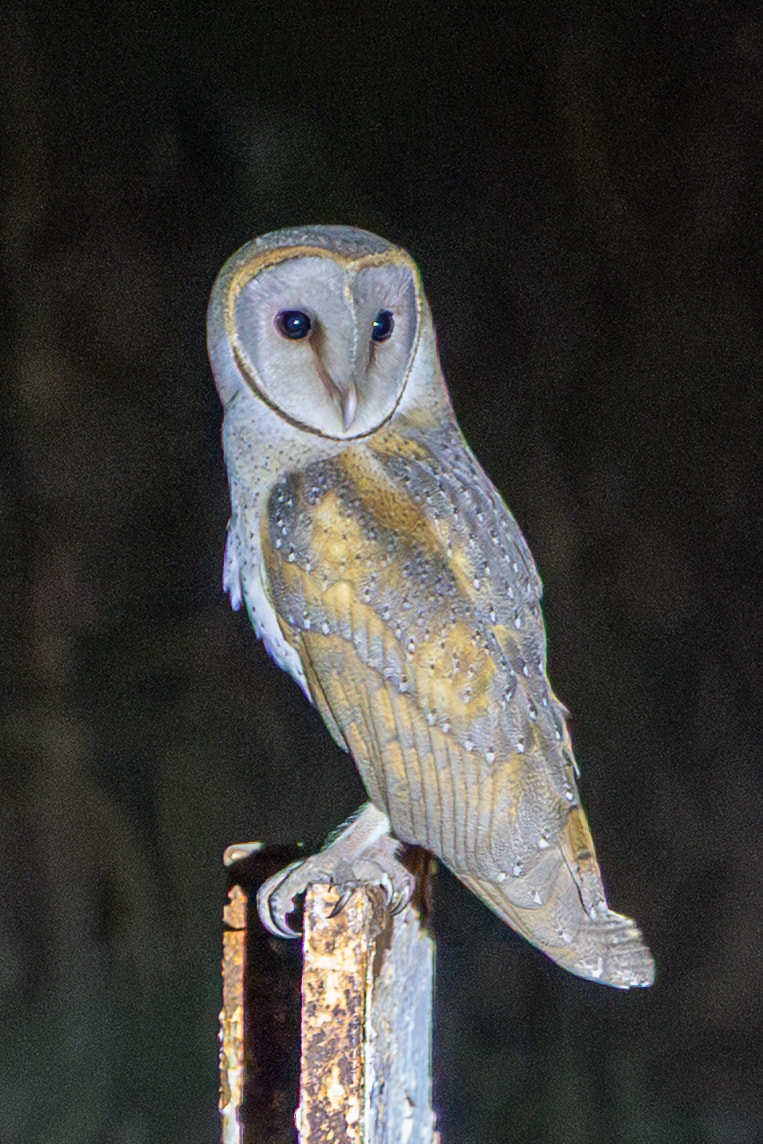 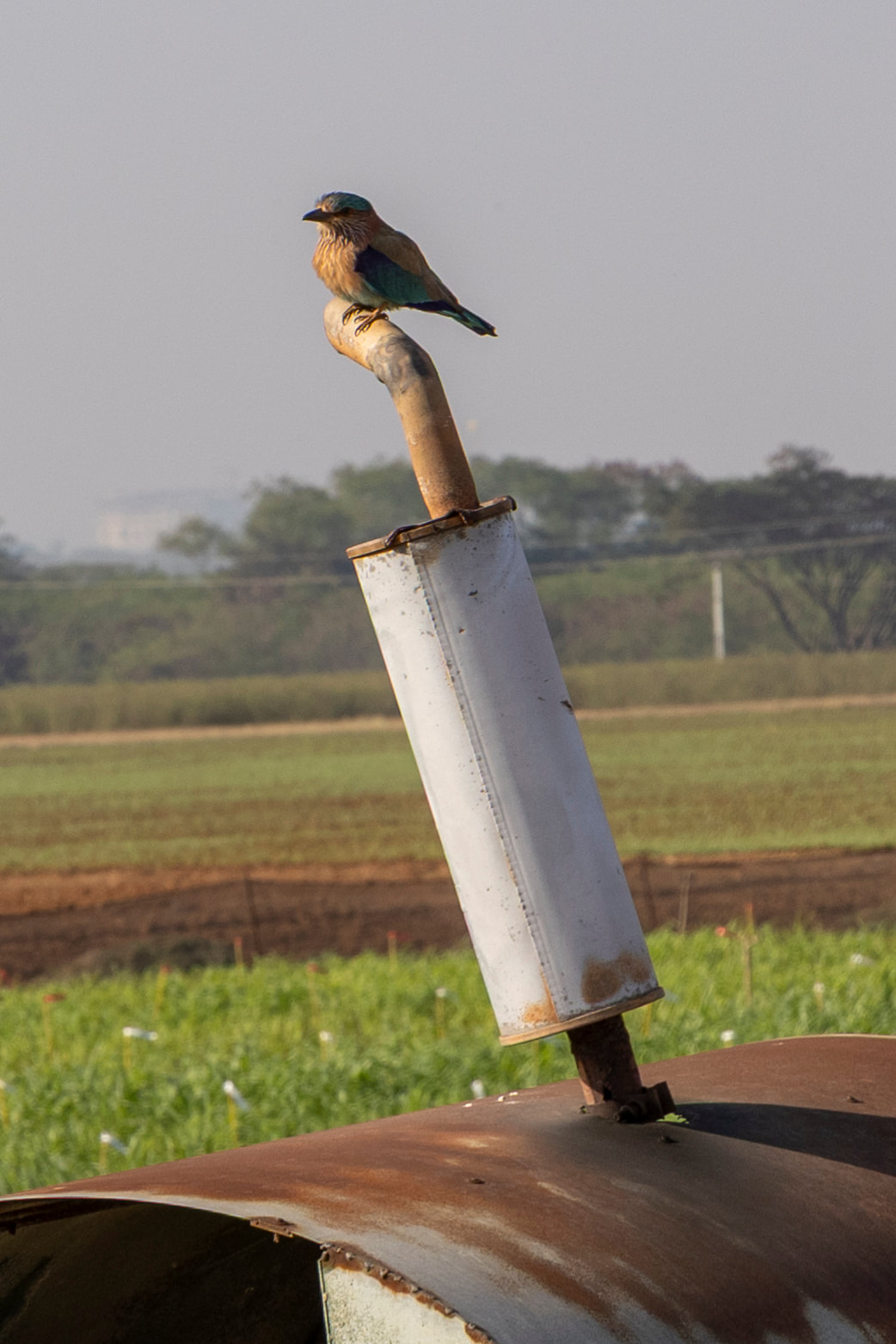 Isa m'a gâté avec plein de surprises pour mon anniversaire. J'ai pris mon mardi après-midi. Le matin, j'étais avec quelques collègues dans une école d'ingénieurs ici à Hyderabad pour faire de la promotion pour Swiss Re. Il y avait environ 400 étudiantes dans la salle – c'est une école réservée aux femmes. À la fin, une collègue a mentionné que c'était mon anniversaire et toute la salle m'a chanté «Happy Birthday». Une expérience unique! Isa est venue me chercher avec Ram et nous sommes allés dans un parc un peu à l'écart de la ville, le Forestrek Park. Nous avons trouvé un endroit à l'ombre sous un arbre et avons pique-niqué. Taboulé et salade de betteraves rouges, mousse d'avocat et Davidas, puis une autre surprise : une tarte aux pommes, exactement comme celle que fait ma mère. Bien repus, nous sommes allés à l'hôtel Le Méridien. Il n'y avait pas de repas, mais un programme de soins au spa avec un massage de 90 minutes. Cela nous a fait beaucoup de bien à tous les deux. Même si nous étions dans la même pièce, nous n'avons pas discuté, nous avons simplement profité du massage. Le soir, nous avons dîné dans notre restaurant préféré, «Exoctica», où nous avons mangé du chaat et du biryani d'agneau, accompagnés d'un verre de vin. De là, nous pouvons rentrer à pied à la maison, ce que nous aimons toujours faire, sauf pendant la mousson ;-). Le week-end m’a réservé d'autres surprises. Nous sommes partis le matin, je ne savais pas où nous allions, sauf que ce serait à Hyderabad. Notre destination était l'ICRISAT. Il s'agit d'un institut international de recherche sur les plantes cultivées dans les zones arides tropicales et subtropicales, qui n'est pas ouvert au public. Isa y était allée avec son groupe de femmes et avait pu organiser le week-end pour nous. Nous avons appris que nous étions les premiers à participer à ce nouveau programme et qu'ils souhaitaient le proposer à l'avenir, mais uniquement sur recommandation. Il existe différents quartiers résidentiels ou maisons pour les chercheurs extérieurs et les employés; nous avions un appartement dans le Guestel (maison d'hôtes). Après le déjeuner, nous avons eu un peu de temps libre pour explorer les environs du Guestel. L'ensemble du site s'étend sur plus de 14 km²! Après le High Tea au Ganesha Idol, une statue de Ganesha vieille de plus de 1000 ans trouvée sur le site, nous avons fait une visite culturelle. Le site comprend un ancien temple sur lequel pousse un arbre, un temple Shiva avec une mosquée et une église à côté, ainsi qu'un ancien château où étaient autrefois conservés les objets de valeur de la population locale. Le temps était trop nuageux pour admirer le coucher du soleil. Avant le dîner, nous avons fait un safari nocturne pour observer des oiseaux, des chats sauvages et des sangliers. Pour terminer la soirée, nous avons fait un feu de camp dans un petit parc. Le dimanche, nous nous sommes levés tôt pour observer les oiseaux avec un naturaliste. Là encore, nous avons vu de nombreuses espèces d'oiseaux différentes et nous commençons à développer un goût pour l'observation des oiseaux. Après un petit-déjeuner indien, nous avons roulé à vélo sur des chemins de terre et avons vu des oiseaux ainsi qu'un sanglier. Nous avons déjeuné dans le parc où nous avions fait le feu de camp avant de rentrer à la maison. Ce fut une expérience merveilleuse pour moi, avec beaucoup belles surprises! Heute starten wir mal mit Essen, nämlich mit Street Food. Kolkatas Strassen sind extrem belebt. Wir sind am Donnerstagnachmittag angekommen und waren spazieren, gefühlt in einem endlosen Bazaar und unglaublich viel Essensständen. Es war nicht ganz einfach auszusuchen, wo wir etwas nehmen sollten, aber wir haben uns dann für einen Stand entschieden. Wir haben nur gekochtes Essen genommen. Es gab auch überall aufgeschnittene Früchte und anderes, das uns gepasst hätte, aber wir haben uns nicht getraut. Später folgt noch mehr Essen. Abends haben wir in der Park Street (Kolkatas Hauptstrasse) gebummelt. Diese wird zur Weihnachtszeit beleuchtet - und wie !!! Super viele Lichter und Farben, blinkend und bleibend, es ist so lebendig und lustig wie Indien sein kann. Wir hatten einen Gedanken an die Zürcher Lucy (Weihnachtsbeleuchtung an der Bahnhofstrasse) und mussten lachen. So diskret geht es in Indien nicht. Ich habe mir sogar leuchtende Hasenohren gekauft, weil die Stimmung so ausgelassen war. 🤣 Am zweiten Tag haben wir mit Anisha, unserer Reiseführerin, einige Monumente und ikonische Orte besucht: Das Victoria Memorial, das Indian Museum (das älteste Museum Indiens), das berüchtigte Gefängnis, wo viele indische Freiheitskämpfer eingekerkert waren und den Kalitempel mit dem "Kalighat Skywalk", einer Überführung, die zum Tempel führt. Wir hatten auch einen bengalischen Thali zum Mittagessen. Am nächsten Tag waren wir krank, Magengeschichte, nicht sehr schlimm, aber genug, dass wir den grössten Teil des Tages im Bett verbracht haben. Wahrscheinlich war etwas von unserem Abendessen im tollen Hotel nicht gut, v.a. bei Yashi. Meine Konklusion: nicht mehr vom Buffet essen. Es ist nicht das erste Mal, dass uns das passiert. Oder war's doch der Thali? Wir sind dann doch zum Hooghly, dem Fluss, spaziert und haben dort die Sonne untergehen sehen. Zum Glück war unser Sonntagsflug erst Ende Nachmittag am Sonntag. So konnten wir noch einmal mit Anisha einiges sehen und unternehmen: Wir haben die St. Pauls Kathedrale besucht, eine kleine Bootsfahrt auf dem Hooghly gemacht und haben das Tagore-Haus gesehen. Die Familie Tagore waren "Zamindars", also Grossgrundbesitzer, und reich. Sie waren sehr aktiv in diversen Kunstrichtungen und haben viel zur Verbesserung der Verhältnisse in Bengal beigetragen: mit Schulen, sozialer und religiöser Reformation, Literatur, Musik und Kunst - und natürlich auch Politik. Rabindranath Tagore hat in 1913 den Nobelpreis in Literatur gewonnen, als erster nicht-Europäer. Danach hatten wir noch Zeit für ein bengalisches Biryani (mit 2 ganzen Kartoffeln drin) und sind dann nach Hause geflogen. Die Fotos sind ganz am Schluss dieses Beitrags. Fast habe ich vergessen zu erwähnen, dass man in Kolkata viel Senföl benützt; sehr lecker. Kolkata hat uns einen zwiespältigen Eindruck gelassen: einerseits ist das Strassenleben spannend, die ikonischen Gebäude (britisch) schön, der Fluss ist präsent und Wasser ist immer stimmungsvoll. Andererseits ist die Stadt sehr hektisch, laut, schmutzig (auch die Luft), und wir haben die Leute, v.a. den Verkehr, etwas aggressiv gefunden. Anisha war allerdings super entspannt und flexibel, auch sehr offen. So konnten wir viel mit ihr diskutieren und ihre Perspektive (die durchaus auch kritisch ist) kennenlernen. Today we'll start with food, namely street food. Kolkata's streets are extremely busy. We arrived on Thursday afternoon and went for a walk, feeling like we were in an endless bazaar with an incredible number of food stalls. It wasn't easy to choose where to eat, but we finally decided on one stall. We only had cooked food. There was also sliced fruit and other things everywhere that would have suited us, but we didn't dare try them. More about food will follow later. In the evening, we strolled along Park Street (Kolkata's main street). It is illuminated at Christmas time – and how !!! Lots of lights and colours, flashing and steady, it is as lively and fun as India can be. We thought of Lucy in Zurich (Christmas lights on Bahnhofstrasse) and had to laugh. Things aren't that discreet in India. I even bought myself some glowing rabbit ears because the atmosphere was so exuberant. 🤣 On the second day, we visited several monuments and iconic places with Anisha, our tour guide: the Victoria Memorial, the Indian Museum (the oldest museum in India), the notorious prison where many Indian freedom fighters were incarcerated and the Kali Temple with the Kalighat Skywalk, a footbridge leading to the temple. We also had a Bengali thali for lunch. The next day we were ill, stomach problems, nothing serious, but enough that we spent most of the day in bed. Probably something in our dinner at the actually great hotel wasn't good, especially for Yashi. My conclusion: no more eating from the buffet. It's not the first time this has happened to us. Or was it the thali after all? We finally managed nevertheless walking to the Hooghly, the river, and watched the sun go down there. Fortunately, our Sunday flight wasn't until late afternoon, so we had time to see and do a few more things with Anisha: we visited the St. Paul's Cathedral, took a short boat trip on the Hooghly and visited the Tagore House. The Tagore family were zamindars, or large landowners, and wealthy. They were very active in various art forms and contributed greatly to improving conditions in Bengal: with schools, social and religious reform, literature, music and art – and, of course, politics. Rabindranath Tagore won the Nobel Prize for Literature in 1913, the first non-European to do so. Afterwards, we had time for a Bengali biryani (with two whole potatoes in it) and then flew home. The photos are at the very end of this post. I almost forgot to mention: in Kolkata, mustard oil is largely used; delicious. Kolkata left us with mixed feelings: on the one hand, street life is exciting, the iconic (British) buildings are beautiful, the river is quite present and water is always atmospheric. On the other hand, the city is very hectic, loud, dirty (including the air), and we found the people, especially the traffic, to be somewhat aggressive. Anisha, however, was super relaxed and flexible, as well as very open. This allowed us to discuss many things with her and get to know her perspective (which is also quite critical). Aujourd'hui, nous commençons par la nourriture, plus précisément la cuisine de rue. Les rues de Kolkata sont extrêmement animées. Nous sommes arrivés jeudi après-midi et nous nous sommes promenés dans ce qui semblait être un bazar sans fin avec une quantité incroyable de stands de nourriture. Il n'était pas facile de choisir où manger, mais nous avons finalement opté pour un stand. Nous avons uniquement pris des plats cuits. Il y avait aussi partout des fruits coupés et d'autres choses qui nous auraient convenu, mais nous n'avons pas osé. Il y aura plus sur la nourriture plus tard. Le soir, nous avons flâné dans Park Street (la rue principale de Kolkata). Celle-ci est illuminée pendant la période de Noël, et comment !!! Il y a énormément de lumières et de couleurs, clignotantes ou fixes, c'est aussi vivant et joyeux que l'Inde peut l'être. Nous avons pensé à Lucy à Zurich (illuminations de Noël dans la Bahnhofstrasse) et avons éclaté de rire. En Inde, ce n'est pas aussi discret. J'ai même acheté des oreilles de lapin lumineuses, car l'ambiance était tellement amusante. 🤣 Le deuxième jour, nous avons visité plusieurs monuments et lieux emblématiques avec Anisha, notre guide : le Victoria Memorial, l'Indian Museum (le plus ancien musée d'Inde), la célèbre prison où de nombreux combattants pour la liberté indiens ont été incarcérés et le temple Kalighat avec le « Kalighat Skywalk », une passerelle qui mène au temple. Nous avons également dégusté un thali bengali pour le déjeuner. Le lendemain, nous étions malades, des problèmes d'estomac, rien de grave, mais suffisamment pour passer la majeure partie de la journée au lit. Probablement que quelque chose dans notre dîner dans ce superbe hôtel n'était pas bon, surtout pour Yashi. Ma conclusion : ne plus manger au buffet. Ce n'est pas la première fois que cela nous arrive. Ou était-ce le thali ? Nous avons finalement marché jusqu'à la Hooghly, la rivière, et y avons vu le coucher de soleil. Heureusement, notre vol du dimanche n'était prévu qu'en fin d'après-midi. Nous avons donc pu faire encore quelques visites et activités avec Anisha : nous avons visité la cathédrale de St. Paul, fait un petit tour en bateau sur la Hooghly et avons vu la maison Tagore. La famille Tagore était des « zamindars », c'est-à-dire de grands propriétaires terriens, et était riche. Elle était très active dans divers domaines artistiques et a beaucoup contribué à l'amélioration des conditions de vie au Bengale : avec des écoles, des réformes sociales et religieuses, la littérature, la musique et l'art – et bien sûr la politique. Rabindranath Tagore a remporté le prix Nobel de littérature en 1913, le premier non-Européen à recevoir cette distinction. Nous avons ensuite eu le temps de déguster un biryani bengali (avec deux pommes de terre entières dedans) avant de rentrer chez nous en avion. Les photos se trouvent à la fin de cet article. J'ai failli oublié: on utilise beaucoup d'huile de moutarde à Kolkata; délicieux. Kolkata nous a laissé une impression mitigée : d'un côté, la vie dans les rues est passionnante, les bâtiments emblématiques (britanniques) sont magnifiques, le fleuve est présent et l'eau est toujours évocatrice. D'un autre côté, la ville est très agitée, bruyante, sale (y compris l'air), et nous avons trouvé les gens, en particulier dans le traffic, quelque peu agressifs. Anisha était cependant très détendue et flexible, et aussi très ouverte. Nous avons ainsi bien pu discuter avec elle et découvrir son point de vue (qui est également critique). Biryani (here a Bengali Biryani with the potato)
|